Behind the Stadelheim Wall
Reading Markus Braun’s Prison Interview
October 24, 2026
1792876318


Dark Mode
As the Wirecard trial in Munich nears its verdict, former CEO Markus Braun has given his first substantial interview from pre-trial detention. Der Spiegel published the conversation, held at Munich’s Stadelheim prison. For a man who once ran a DAX company and rarely let anyone see behind the facade, it is a remarkable document. Read carefully, it leaves one clear impression: this is a man the experience has broken, however much he insists otherwise.
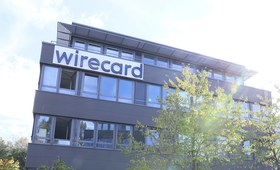

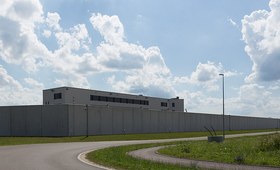
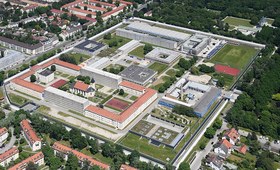

Braun has now spent more than six years in pre-trial detention (Untersuchungshaft). He calls the early period, above all the first two and a half years at the JVA Augsburg-Gablingen prison, an “absolute extreme situation.” He describes an 8 m² security cell under constant video surveillance, where he was locked in for 21 to 23 hours a day during the pandemic. He speaks of “massive darkness” and of the danger of losing oneself, yet claims he kept a “strong core.” He talks about his daughter, who was two when he was arrested and is eight today, and about the long struggle to come to terms with his feelings toward Jan Marsalek, the former Wirecard executive who fled in 2020 and has never stood trial. He calls the trial a farce and the length of his detention unjustified.
The conditions he describes are anything but abstract. A court has now opened the main trial against 13 former JVA Augsburg-Gablingen staff members, including the former director and her deputy, over 131 alleged offences against 102 prisoners between January 2023 and October 2024, among them dangerous bodily harm in office, unlawful imprisonment and coercion. Prisoners were allegedly beaten, choked and left naked for long periods in bare “specially secured cells,” isolation cells meant only for acute danger but used routinely as punishment, and staff chats speak of “destroying” inmates. Former Federal Justice Minister Sabine Leutheusser-Schnarrenberger calls it the largest prison scandal in the history of the Federal Republic. Braun was held in Gablingen even before the period under indictment, at a time when the abuse was apparently already going on and no cleanup had even begun, let alone indictments against the prison’s leadership. That gives his “absolute extreme situation” real weight.
What puzzles me is the tone. I have covered Wirecard since February 2021, when my first article on the case, Bavariacard, appeared. Since the very first hearing day in December 2022, I have attended nearly 40 trial days in the Stadelheim courtroom and reported on them in detail at Sun24 Press. After six years in these places, in Stadelheim and in Gablingen, Braun sounds almost as if it were somehow acceptable to be held this long and this disproportionately. There is little anger in his words and even less accusation. Perhaps that is simply how Der Spiegel chose to frame the conversation. Either way, the reader comes away thinking the conditions were bearable. They were not.
Detention takes away one of the most basic human needs: the freedom to move. The risk of suicide is not theoretical. It sets in at once and stays, whether or not a person was ever at risk before. Even the “strongest core” simply does not change that, unless one’s own freedom never really mattered all that much. Pre-trial detention is meant to secure a trial, not to punish before a verdict. After six years, that line has all but disappeared.
What Braun says about Marsalek is equally hard to take seriously. In hindsight, he says, he should have thrown him out ten years earlier, and if he ever saw him again, all he would ask is: “Why! Why!” He claims he simply cannot understand why Marsalek staged “this madness” and would like to find out his real motives. By now Braun must know that Marsalek was operating not only for the Russians but also for the CIA. Even the Financial Times admitted as much in its Hot Money podcast, as I described in The Uncles’ CIA Rogue Fixer.
Asked what he will do once he is out, Braun speaks of time with his family in Vienna and of wanting to build something again. What interests him? Artificial intelligence, “one of the most exciting topics of our time,” and technology in general, from AI to quantum computers, fusion energy and space. And the justice system that has held him for six years without a verdict? Pre-trial detention, he suggests, should be capped at about one year and the length of proceedings limited to, say, 50 days, “but that would be a matter for politics.” After a nearly four-year crucifixion in the Stadelheim courtroom, I find that laughable. If the man who lived through this does not push for a judicial cleanup, who will? Whoever leaves this to “the politics,” which is at times partly responsible for the theatrical comedy in Stadelheim, ultimately has no interest in making sure others are spared the same fate.
Even after all this time, Braun remains, at least in his dealings with the media, what he always was: a man focused on his image. He still seems to want, even need, to leave the right impression among salon radicals at dinner parties and in golf clubhouses. The proceedings against him, now nearly four years long, are not just a farce. They are a gigantic scandal. You can read my free eBook about the whole affair, The Wirecard Implosion – Anatomy of a Judiciary Disaster.

The book follows the case from the video conference of 18 June 2020 to the Munich courtroom in Stadelheim, where I sat in the back row through countless sessions. It shows how the defense uncovered roughly two billion euros in traceable flows through Switzerland and Hong Kong right up to the insolvency, how the prosecutors screamed into their microphones to drown out that evidence, and how the court rejected one motion after another until the official narrative imploded in open court.
At the end of 2024, I spoke briefly with a close relative of Braun’s and urged them to start a public campaign without delay. A man held for years without a verdict needs voices outside the walls. Those closest to him rejected the idea then and still do, apparently so that a certain image stays intact among the salon radicals in Vienna as well. That silence helps a justice system in Munich and Bavaria that largely does as it pleases - and for which the presiding Bavarian judge may very well be promoted, so it seems.
After reading the interview several times, I know the first thing I would wish Braun, if he is finally released: thorough therapy. Then again, perhaps that impression, too, is only how Der Spiegel wrote it all down.
Photos via Wikimedia Commons: Stadelheim wall and tower by Rufus46 (CC BY-SA 4.0), Wirecard headquarters by Leo Molatore (CC BY-SA 2.0), Augsburg-Gablingen prison by Tobias Maier (CC BY-SA 3.0), Stadelheim aerial view by Carsten Steger (CC BY-SA 4.0), Spiegel building by Dennis Siebert (CC BY-SA 3.0)

Copied
The Collapse
1
On June 18, 2020, a video conference ended an era. Wirecard, the payment company from Aschheim near Munich that had made it into Germany's DAX index, could no longer account for 1.9 billion euros. Within days, CEO Markus Braun stepped down and was arrested, while executive Jan Marsalek fled and has never stood trial. Braun has been in pre-trial detention ever since, now for more than six years.
On June 18, 2020, a video conference ended an era. Wirecard, the payment company from Aschheim near Munich that had made it into Germany's DAX index, could no longer account for 1.9 billion euros. Within days, CEO Markus Braun stepped down and was arrested, while executive Jan Marsalek fled and has never stood trial. Braun has been in pre-trial detention ever since, now for more than six years.
Gablingen
2
Braun spent his first two and a half years at the Augsburg-Gablingen prison, in an 8 m² security cell under constant video surveillance, locked in for 21 to 23 hours a day during the pandemic. He calls it an 'absolute extreme situation.' Today, 13 former Gablingen staff members face trial over 131 alleged offences against 102 prisoners, called the largest prison scandal in the history of the Federal Republic.
Braun spent his first two and a half years at the Augsburg-Gablingen prison, in an 8 m² security cell under constant video surveillance, locked in for 21 to 23 hours a day during the pandemic. He calls it an 'absolute extreme situation.' Today, 13 former Gablingen staff members face trial over 131 alleged offences against 102 prisoners, called the largest prison scandal in the history of the Federal Republic.
The Stadelheim Courtroom
3
For nearly four years, the Wirecard trial has been held in a courtroom on the grounds of Munich's Stadelheim prison. The defense uncovered roughly two billion euros in traceable flows through Switzerland and Hong Kong right up to the insolvency. Prosecutors screamed into their microphones to drown out that evidence, and the court rejected one motion after another while the official narrative imploded.
For nearly four years, the Wirecard trial has been held in a courtroom on the grounds of Munich's Stadelheim prison. The defense uncovered roughly two billion euros in traceable flows through Switzerland and Hong Kong right up to the insolvency. Prosecutors screamed into their microphones to drown out that evidence, and the court rejected one motion after another while the official narrative imploded.
The Interview
4
As the trial nears its verdict, Braun has given his first substantial interview from detention to Der Spiegel. He speaks of 'massive darkness,' of his daughter, who was two when he was arrested and is eight today, and insists he kept a 'strong core.' Read carefully, the conversation leaves a different impression: a man the experience has broken, still focused on his image.
As the trial nears its verdict, Braun has given his first substantial interview from detention to Der Spiegel. He speaks of 'massive darkness,' of his daughter, who was two when he was arrested and is eight today, and insists he kept a 'strong core.' Read carefully, the conversation leaves a different impression: a man the experience has broken, still focused on his image.
Braun has now spent more than six years in pre-trial detention (Untersuchungshaft). He calls the early period, above all the first two and a half years at the JVA Augsburg-Gablingen prison, an “absolute extreme situation.” He describes an 8 m² security cell under constant video surveillance, where he was locked in for 21 to 23 hours a day during the pandemic. He speaks of “massive darkness” and of the danger of losing oneself, yet claims he kept a “strong core.” He talks about his daughter, who was two when he was arrested and is eight today, and about the long struggle to come to terms with his feelings toward Jan Marsalek, the former Wirecard executive who fled in 2020 and has never stood trial. He calls the trial a farce and the length of his detention unjustified.
The conditions he describes are anything but abstract. A court has now opened the main trial against 13 former JVA Augsburg-Gablingen staff members, including the former director and her deputy, over 131 alleged offences against 102 prisoners between January 2023 and October 2024, among them dangerous bodily harm in office, unlawful imprisonment and coercion. Prisoners were allegedly beaten, choked and left naked for long periods in bare “specially secured cells,” isolation cells meant only for acute danger but used routinely as punishment, and staff chats speak of “destroying” inmates. Former Federal Justice Minister Sabine Leutheusser-Schnarrenberger calls it the largest prison scandal in the history of the Federal Republic. Braun was held in Gablingen even before the period under indictment, at a time when the abuse was apparently already going on and no cleanup had even begun, let alone indictments against the prison’s leadership. That gives his “absolute extreme situation” real weight.
What puzzles me is the tone. I have covered Wirecard since February 2021, when my first article on the case, Bavariacard, appeared. Since the very first hearing day in December 2022, I have attended nearly 40 trial days in the Stadelheim courtroom and reported on them in detail at Sun24 Press. After six years in these places, in Stadelheim and in Gablingen, Braun sounds almost as if it were somehow acceptable to be held this long and this disproportionately. There is little anger in his words and even less accusation. Perhaps that is simply how Der Spiegel chose to frame the conversation. Either way, the reader comes away thinking the conditions were bearable. They were not.
Detention takes away one of the most basic human needs: the freedom to move. The risk of suicide is not theoretical. It sets in at once and stays, whether or not a person was ever at risk before. Even the “strongest core” simply does not change that, unless one’s own freedom never really mattered all that much. Pre-trial detention is meant to secure a trial, not to punish before a verdict. After six years, that line has all but disappeared.
What Braun says about Marsalek is equally hard to take seriously. In hindsight, he says, he should have thrown him out ten years earlier, and if he ever saw him again, all he would ask is: “Why! Why!” He claims he simply cannot understand why Marsalek staged “this madness” and would like to find out his real motives. By now Braun must know that Marsalek was operating not only for the Russians but also for the CIA. Even the Financial Times admitted as much in its Hot Money podcast, as I described in The Uncles’ CIA Rogue Fixer.
Asked what he will do once he is out, Braun speaks of time with his family in Vienna and of wanting to build something again. What interests him? Artificial intelligence, “one of the most exciting topics of our time,” and technology in general, from AI to quantum computers, fusion energy and space. And the justice system that has held him for six years without a verdict? Pre-trial detention, he suggests, should be capped at about one year and the length of proceedings limited to, say, 50 days, “but that would be a matter for politics.” After a nearly four-year crucifixion in the Stadelheim courtroom, I find that laughable. If the man who lived through this does not push for a judicial cleanup, who will? Whoever leaves this to “the politics,” which is at times partly responsible for the theatrical comedy in Stadelheim, ultimately has no interest in making sure others are spared the same fate.
Even after all this time, Braun remains, at least in his dealings with the media, what he always was: a man focused on his image. He still seems to want, even need, to leave the right impression among salon radicals at dinner parties and in golf clubhouses. The proceedings against him, now nearly four years long, are not just a farce. They are a gigantic scandal. You can read my free eBook about the whole affair, The Wirecard Implosion – Anatomy of a Judiciary Disaster.
Click the cover to get the free book
The book follows the case from the video conference of 18 June 2020 to the Munich courtroom in Stadelheim, where I sat in the back row through countless sessions. It shows how the defense uncovered roughly two billion euros in traceable flows through Switzerland and Hong Kong right up to the insolvency, how the prosecutors screamed into their microphones to drown out that evidence, and how the court rejected one motion after another until the official narrative imploded in open court.
At the end of 2024, I spoke briefly with a close relative of Braun’s and urged them to start a public campaign without delay. A man held for years without a verdict needs voices outside the walls. Those closest to him rejected the idea then and still do, apparently so that a certain image stays intact among the salon radicals in Vienna as well. That silence helps a justice system in Munich and Bavaria that largely does as it pleases - and for which the presiding Bavarian judge may very well be promoted, so it seems.
After reading the interview several times, I know the first thing I would wish Braun, if he is finally released: thorough therapy. Then again, perhaps that impression, too, is only how Der Spiegel wrote it all down.
Photos via Wikimedia Commons: Stadelheim wall and tower by Rufus46 (CC BY-SA 4.0), Wirecard headquarters by Leo Molatore (CC BY-SA 2.0), Augsburg-Gablingen prison by Tobias Maier (CC BY-SA 3.0), Stadelheim aerial view by Carsten Steger (CC BY-SA 4.0), Spiegel building by Dennis Siebert (CC BY-SA 3.0)
Leave a comment:
Send
Send
Recommended:

12 August 2026
The Load Balancing Eclipse
A Koblenz prosecutor in Munich and the network the Wirecard gallery campaign prefers not to see

6 August 2026
The Endless Justice Round
Interrogation of a Wirecard supervisor board member

16 June 2026
The Wirecard Implosion
Anatomy of a Judiciary Disaster

23 March 2026
Timeline Wirecard Reports
A timeline of all Wirecard-related articles

27 November 2025
The KPMG Witness
Testimony of a KPMG managing partner

20 December 2025
The ProtonMail Phantom
About a Wirecard judge and Swiss blockades

9 October 2025
The eBay Laptop
A Bavarian crown witness and missing Swiss data

1 September 2025
The Uncles’ CIA Rogue Fixer
Jan Marsalek's double life the Financial Times just overlooked

31 July 2025
The Final Blast
A Wirecard court summer break summary

4 April 2025
The Implosion
About winter end time weeks in the Wirecard courtroom

18 January 2025
The Justice Colleague Ping-Pong
About a weird back and forth in the Wirecard court process

17 September 2024
Wirecard Sacked
The Court Proceeding - Season 1, Episode 1

25 August 2024
The Wirecard Summer Gap
About extorted confessions and Bavarian radio news
22 July 2024
Hotel Wirecard
About broccoli and roastbeef in Munich hotel rooms

28 June 2024
Money launding is not my thing
About Commerzbank and cancelled Wirecard credit lines

3 July 2024
Wirecard Chances
About supervisory board advising lawyers

20 June 2024
The Wirecard PR Court
About an obscure questioning of a Wirecard lawyer

15 May 2024
Wirecard Rogue
About crazy judiciary talks and on-target court motions

25 May 2024
Wirecard Untangled
About unsolved issues in Germany's master finance scandal
29 April 2024
All Inside The Singapore Folder
About Wirecard book keepings an email conversations

25 April 2024
Grand Vision Trust
A Wirecard Bank Director and Relationship Managements

19 April 2024
Mount Interim
About a Wirecard interim-CEO on a Swiss rose mountain

3 April 2024
Harvesting Wirecard
About Swiss roses and Wirecard bears

29 March 2024
The PayLondon Group
About bears from London and Wirecard targetings

24 March 2024
Mount Acronis
About a Swiss IT sponsor and Wirecard entanglements

15 March 2024
Magic Pav
About a Wirecard whistleblower and magic law firms

13 February 2024
The Trial
About a Wirecard release of prisoner and Franz Kafka's unfinished works

4 October 2023
Mount Wirecard
About Swiss Wirecard entanglements and the remains of Crypto AG

22 August 2023
Wirecard Court Halftime
About seven months in Munich Stadelheim and the miracle of Bern

18 May 2023
Pandora's Box
About Wirecard's IT Architectures

29 April 2023
The Third Man
About Wirecard's interim CEO James Freis and nice shoes
8 December 2022
Deflective Attorneys
About a five hours Wirecard indictment
18 February 2021
Bavariacard
About a Germanic Wirecard Poker
5 May 2021
A Munich Fraud
Wirecard and Munich's Public Prosecutor's Office
22 November 2021
Royal Courts of Wirecard
About a Wirecard Lawsuit and Quantum Physics

1 October 2021
Brilliant Consultants
About Wirecard's financial auditors and the chess game

6 November 2021
Back To The Wirecard
About the roots of the insolvent German payment provider
15 April 2021


