Member of Supervisory Board
Testimony of former Supervisory Board member Tina Kleingarn
April 18, 2024
1769516346


Dark Mode
The Wirecard courtroom in Munich-Stadelheim greets you every day, and it was cold outside.
Today, former supervisory board member Tina Kleingarn was heard.
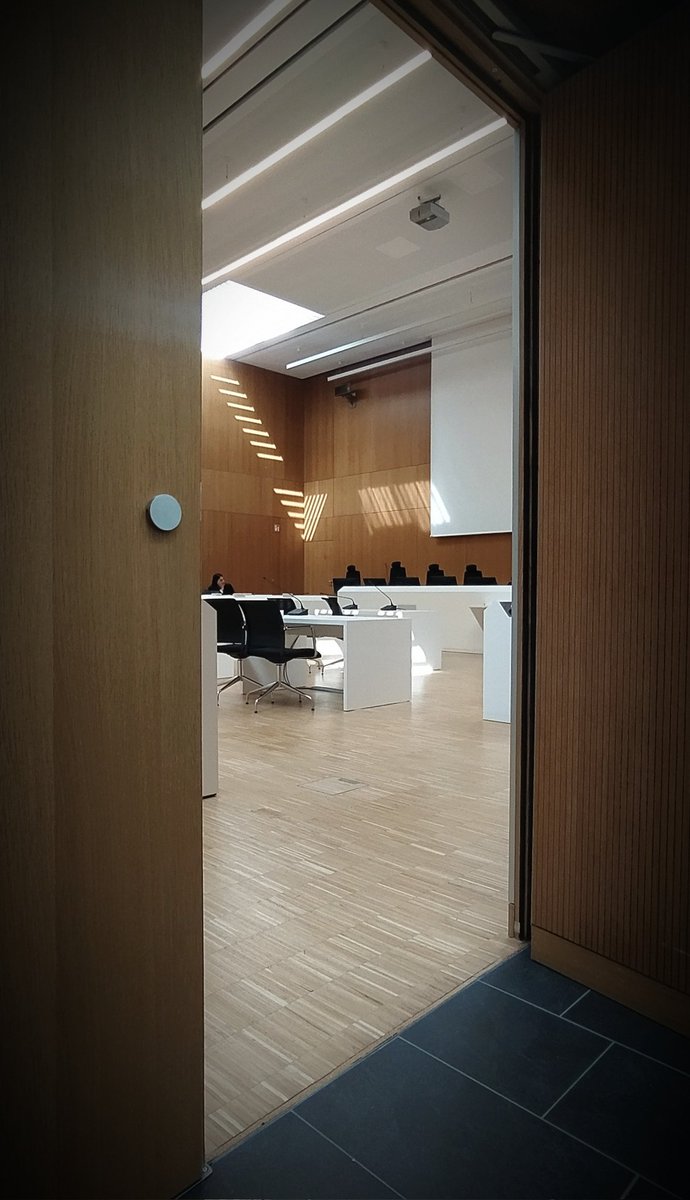
Today, former supervisory board member Tina Kleingarn was heard.
Tina Kleingarn sat on Wirecard's Supervisory Board from summer 2016 to fall 2017.
She was described in the mass media as a "belated heroine" after her appearance in the U Committee at the end of 2020, where she was the only person to testify on the same day as Dr. Braun.
spiegel.de/wirtschaft/unt ...
She was described in the mass media as a "belated heroine" after her appearance in the U Committee at the end of 2020, where she was the only person to testify on the same day as Dr. Braun.
spiegel.de/wirtschaft/unt ...
Today's hearing in the Wirecard courtroom in Munich painted a somewhat different picture of Tina Kleingarn than the spectacular, media-staged and mass-narrativized appearance in the Berlin Arena a good 3.5 years ago.
The Wirecard witness's letter of resignation from 2017 was projected onto the projector.
Addressed to the Supervisory Board(!), it states, among other things:
"As you know, I have considerable doubts about the competence profile of the designated Chief Financial Officer. I became aware that there is potential for improvement with the audits of the 2016 consolidated and annual financial statements. It is incomprehensible to me how, after your [Supervisory Board] descriptions, an unqualified audit opinion was only just achieved in the 2015 financial statements, the audit opinion for 2016 was again issued at the last minute without qualification."
Addressed to the Supervisory Board(!), it states, among other things:
"As you know, I have considerable doubts about the competence profile of the designated Chief Financial Officer. I became aware that there is potential for improvement with the audits of the 2016 consolidated and annual financial statements. It is incomprehensible to me how, after your [Supervisory Board] descriptions, an unqualified audit opinion was only just achieved in the 2015 financial statements, the audit opinion for 2016 was again issued at the last minute without qualification."
The letter from the Wirecard witness, described by the mass media at the end of 2020 as an alleged "incendiary letter", continues, quote:
"We [Supervisory Board !] have not yet sufficiently discussed my repeated insistence for a reappraisal of the 2016 audit process with the Management Board, even almost a year after the balance sheet meeting."
"We [Supervisory Board !] have not yet sufficiently discussed my repeated insistence for a reappraisal of the 2016 audit process with the Management Board, even almost a year after the balance sheet meeting."
It goes on to say in its alleged "incendiary letter" addressed to the Wirecard Supervisory Board:
"It must be made clear to the Management Board that appropriate cooperation with the auditors is not a burden imposed from outside, but serves the interests of the company. The audit must not be perceived as a nuisance, but rather as a proven process to ensure that the company's income statement reflects the actual circumstances."
"It must be made clear to the Management Board that appropriate cooperation with the auditors is not a burden imposed from outside, but serves the interests of the company. The audit must not be perceived as a nuisance, but rather as a proven process to ensure that the company's income statement reflects the actual circumstances."
Apparently, it was often a problem that "loan guarantees were submitted to the AR, whose loans, as it recently turned out, had already been paid out weeks earlier".
This also seemed to have been due to Wirecard's corporate structures and the Supervisory Board, where it was possible that such loans for too long.
This also seemed to have been due to Wirecard's corporate structures and the Supervisory Board, where it was possible that such loans for too long.
Tina Kleingarn was in particular in contact with Matthias Wulff, who frequently discussed the matter with CFO Ley, CEO Braun and the auditors from EY.
According to Tina Kleingarn, the facts surrounding the India project for Hermes were examined by EY and the Management Board commissioned the Wirecard investigation.
According to Tina Kleingarn, the facts surrounding the India project for Hermes were examined by EY and the Management Board commissioned the Wirecard investigation.
As it concerned financial matters, Ley was no longer the project officer and Marsalek was therefore commissioned with the investigation.
According to her, the procurement of information took "forever" until she left, inquiries were delayed and there was false information.
She recommended that the Wirecard "organization must be better positioned" in her letter.
According to her, the procurement of information took "forever" until she left, inquiries were delayed and there was false information.
She recommended that the Wirecard "organization must be better positioned" in her letter.
The judge asked whether she knew who was behind the famous Mauritius fund EMIF in the 'Project Ring' affair surrounding Hermes Ticket, whether this was discussed?
"I don't know exactly," replied former supervisory board member and Wirecard witness Tina Kleingarn after some thought.
"I don't know exactly," replied former supervisory board member and Wirecard witness Tina Kleingarn after some thought.
According to statements made to the court by Tina Kleingarn, who sat on the Supervisory Board from 2016 to 2017, she saw "no signs of fraud at Wirecard", which is why she apparently did not file any charges after her letter.
Risks "materialized" for her, she saw a, quote, "danger that loans would not be repaid" in the irregular granting of loans.
Risks "materialized" for her, she saw a, quote, "danger that loans would not be repaid" in the irregular granting of loans.
She was asked whether the Wirecard AR was involved in credit line agreements, whether the AR was obliged to sign, and from what amounts.
This had been regulated in the Wirecard rules of procedure; she could only confirm the exact amounts by means of documents that the judge threw onto the slide projector, starting at 10 million euros.
This had been regulated in the Wirecard rules of procedure; she could only confirm the exact amounts by means of documents that the judge threw onto the slide projector, starting at 10 million euros.
However, the Wirecard witness could remember very well that, quote, "my rental agreement, for example, I didn't even know who was responsible for it at Wirecard".
Whether the internal audit department was adequately equipped in her opinion, she suggested improvements, she had done so for the finance department ? "I don't remember anything about internal auditing," the Wirecard witness replied.
She was asked whether there was compliance at Wirecard. After hesitating for a while, she said: "I assume so, yes".
How did she perceive that Steinhoff, an employee from the legal department, had gone along with this during her time? "Was not discussed in the Supervisory Board".
She was asked whether there was compliance at Wirecard. After hesitating for a while, she said: "I assume so, yes".
How did she perceive that Steinhoff, an employee from the legal department, had gone along with this during her time? "Was not discussed in the Supervisory Board".
Whether she knew the term guidance in the sense of sales forecasts, whether such forecasts were discussed in the Supervisory Board? These were sent to the Wirecard Supervisory Board from September 2015. "Yes, such monthly reports tell me something," the witness replied.
Whether the 'Wirecard Vision 2020' forecast from 2016 told her anything? "I can't remember exactly".
Whether the 'Wirecard Vision 2020' forecast from 2016 told her anything? "I can't remember exactly".
Whether the Wirecard third-party partner business TPA was a topic in the AR in her time? "Yes, I am aware of this." After a presentation by Jan Marsalek in November 2016, it quickly became clear to her that the expected profits there would make up a significant proportion of the company's overall profit.
The Marsalek presentation from 2016 is thrown onto the projector. An illustrious list of partners with company logos is elicited by the judge. Would she know some of these third-party partners? "Rather not, maybe one or two".
The witness only realizes that the company logos of Senjo, Al-Alam and PayEasy are also in the logo pool after the judge makes specific references.
The Allied Wallet logo is also included.
The Marsalek presentation from 2016 is thrown onto the projector. An illustrious list of partners with company logos is elicited by the judge. Would she know some of these third-party partners? "Rather not, maybe one or two".
The witness only realizes that the company logos of Senjo, Al-Alam and PayEasy are also in the logo pool after the judge makes specific references.
The Allied Wallet logo is also included.
The Wirecard third-party partner presentation from 2016 on the court projector lists the following:
*Onsite visits by EY and regular visits by Wirecard staff
*Annual review of partner financials
*Audit of partners by Big4 partially in place already
*Continuous review and certification of risk profiles by dedicated staff
*Onsite visits by EY and regular visits by Wirecard staff
*Annual review of partner financials
*Audit of partners by Big4 partially in place already
*Continuous review and certification of risk profiles by dedicated staff
Tina Kleingarn was asked whether she remembered how the Supervisory Board discussed the audit of Wirecard's 2016 annual financial statements by EY.
Was the third-party partner business there? "I remember that the third-party business was there".
Were you told how many third party partners there were, several or just three? "I remember that there was a list".
Whether escrow accounts were an issue ? "Yes, these were discussed".
Was the third-party partner business there? "I remember that the third-party business was there".
Were you told how many third party partners there were, several or just three? "I remember that there was a list".
Whether escrow accounts were an issue ? "Yes, these were discussed".
Could you explain why Wirecard fiduciary accounts were introduced in the first place, why did they exist? Did they never question the concept, asks the judge?
Tina Kleingarn thinks for a long time, is visibly tired and then says after a long pause: "Boah....can you repeat the question again?"
Money was booked there, what did EY say? "I don't remember."
Tina Kleingarn thinks for a long time, is visibly tired and then says after a long pause: "Boah....can you repeat the question again?"
Money was booked there, what did EY say? "I don't remember."
Whether she knew how many Wirecard employees there were in the third-party partner business, whether the name Bellenhaus meant anything to her:
"We were told that the TPA business was under the Management Board and was managed from there.....Bellenhaus was introduced to me during onboarding with many other key employees, after that I hardly had any contact, I think he was based in Asia."
Oliver Bellenhaus is sitting less than 7 meters to her left.
"We were told that the TPA business was under the Management Board and was managed from there.....Bellenhaus was introduced to me during onboarding with many other key employees, after that I hardly had any contact, I think he was based in Asia."
Oliver Bellenhaus is sitting less than 7 meters to her left.
She was asked by the judge whether this Bellenhaus might have had anything to do with the Wirecard third-party partner business: "I don't know, I wasn't aware of it, he worked under Jan Marsalek".
When it came to the Wirecard remuneration of the Management Board and managers, witness Tina Kleingarn suddenly knew every last detail. The fixed remuneration was regulated by Management Board contracts, and there was also a bonus.
According to her, an external company called 'HKP' was used, which provided "horizontal industry comparisons of manager remuneration" for the Supervisory Board.
Where the HKP company was based: "Frankfurt". The name of the contact person there: "Ms. Siegmann".
According to her, an external company called 'HKP' was used, which provided "horizontal industry comparisons of manager remuneration" for the Supervisory Board.
Where the HKP company was based: "Frankfurt". The name of the contact person there: "Ms. Siegmann".
The Zatarra report from 2016 was briefly addressed, here the "belated heroine" of the Wirecard scandal, proclaimed by the mass media in 2020, claimed that the Zatarra report was "in March 2016" before her time, as she, quote, "was only on the Supervisory Board from April 2016". She was therefore not particularly confronted with it, it was declared a short-seller attack by the Supervisory Board and Management Board.
Wulf Matthias in particular feared that the company's share price would suffer.
oCap was briefly discussed, as was the granting of loans in December 2017.
Wulf Matthias in particular feared that the company's share price would suffer.
oCap was briefly discussed, as was the granting of loans in December 2017.
Leave a comment:
Send
Send

Recommended:

June 28, 2024
Money launding is not my thing
About Commerzbank and cancelled Wirecard credit lines

July 3, 2024
Wirecard Chances
About supervisory board advising lawyers

June 20, 2024
The Wirecard PR Court
About an obscure questioning of a Wirecard lawyer

May 15, 2024
Wirecard Rogue
About crazy judiciary talks and on-target court motions

May 25, 2024
Wirecard Untangled
About unsolved issues in Germany's master finance scandal

April 29, 2024
All Inside The Singapore Folder
About Wirecard book keepings an email conversations

April 25, 2024
Grand Vision Trust
A Wirecard Bank Director and Relationship Managements

April 19, 2024
Mount Interim
About a Wirecard interim-CEO on a Swiss rose mountain

April 3, 2024
Harvesting Wirecard
About Swiss roses and Wirecard bears

March 29, 2024
The PayLondon Group
About bears from London and Wirecard targetings

March 24, 2024
Mount Acronis
About a Swiss IT sponsor and Wirecard entanglements

March 15, 2024
Magic Pav
About a Wirecard whistleblower and magic law firms

February 13, 2024
The Trial
About a Wirecard release of prisoner and Franz Kafka's unfinished works

October 4, 2023
Mount Wirecard
About Swiss Wirecard entanglements and the remains of Crypto AG

August 22, 2023
Wirecard Court Halftime
About seven months in Munich Stadelheim and the miracle of Bern

May 18, 2023
Pandora's Box
About Wirecard's IT Architectures

April 29, 2023
The Third Man
About Wirecard's interim CEO James Freis and nice shoes

December 8, 2022
Deflective Attorneys
About a five hours Wirecard indictment

February 18, 2021
Bavariacard
About a Germanic Wirecard Poker

May 5, 2021
A Munich Fraud
Wirecard and Munich's Public Prosecutor's Office

November 22, 2021
Royal Courts of Wirecard
About a Wirecard Lawsuit and Quantum Physics

October 1, 2021
Brilliant Consultants
About Wirecard's financial auditors and the chess game

November 6, 2021
Back To The Wirecard
About the roots of the insolvent German payment provider

April 15, 2021


