The Endless Justice Round
Interrogation of a Wirecard supervisor board member
August 6, 2026
1786604181


Dark Mode
Listen to this article
The Endless Justice Round


Another day, another Wirecard witness, another familiar refrain — only this time not in the usual Stadelheim fortress, but in Munich’s brand‑new Justice Center on Dachauer Straße. The complex had barely been opened; the old Justice Center on Nymphenburger Straße is already closed and waiting for the wrecking ball. How fitting for a Wirecard trial: the Bavarian judiciary moves into a gleaming new building while the old one is marked for demolition. One might almost call it a third‑party acquirer deal for courtrooms: the real substance is elsewhere, the paperwork looks fine, and nobody has quite seen the foundation.


On the stand on 6 August 2026: Alfons Henseler, former supervisory board member of both Wirecard AG and Wirecard Bank. Presiding, as ever: Judge Födisch. Henseler belonged to the long‑standing trio that had controlled Wirecard’s oversight for more than a decade. Together with Matthias Wulf from the beginning and later with Stefan Klestil, he had sat on both boards since around 2008/09.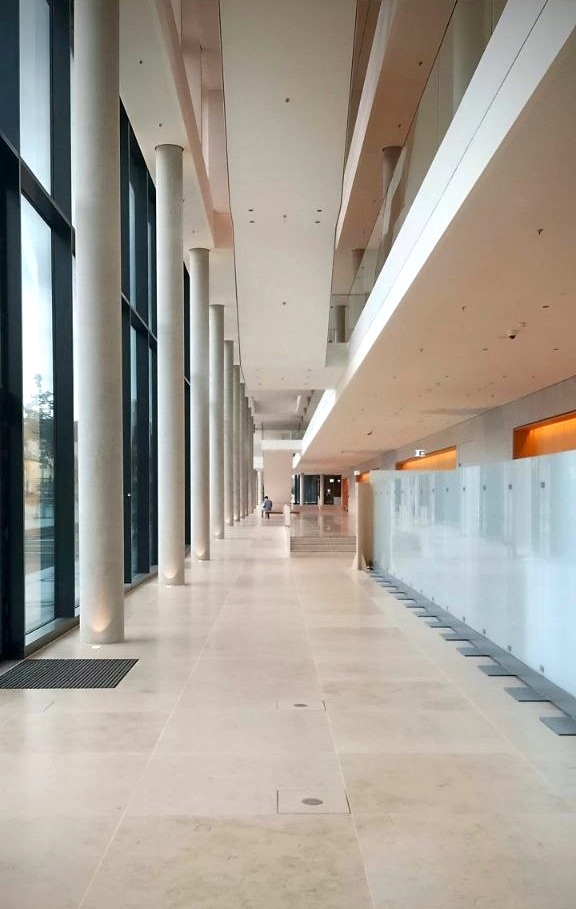 On 18 June 2019 the composition shifted toward Klestil and Eichelmann; Henseler’s term ended that day. Exactly 365 days later — on 18 June 2020 — Wirecard issued the fatal video message that €1.9 billion was missing. One year from the board reshuffle to the collapse announcement. To the day. Nothing to see here, of course.
At this stage of the marathon trial, the questions from the bench have become almost ritualistic — and so, unfortunately, have the answers. Yet this session still managed to sharpen an old picture: a supervisory board that earned well, asked little, and trusted the auditor until the auditor’s trust itself proved worthless.
Henseler’s pay set the tone early. For Wirecard AG he received a base of €120,000, multiplied by 1.5; for the Bank board another €65,000 a year. Födisch added it up for the room: €251,000 including add-ons. On the Personnel and Finance Committees, Henseler said, he had no hand in executive compensation. Corporate “guidance” — those upward‑only Wirecard forecasts for the year ahead — came from the management board, chiefly Dr. Braun. On what basis? Henseler did not know — also not that we had about two to three decades’ evolution of the eCommerce sphere.
Födisch soon steered into the black hole that has haunted this trial from the beginning: the third‑party acquirer business — Al Alam, Senjo, PayEasy — through which Wirecard booked revenues in regions where it held no licenses of its own. Henseler knew the construction. How, then, did customers get served without licenses? Henseler had asked here and there, there was no real answer. The board’s strategic aim, Födisch reminded him, had been to raise Wirecard’s own share of these third‑party deals — yet a large part of the money kept flowing out to third partners. Had anyone seriously asked why?
What Henseler offered instead was the refrain of the day. EY had encouraged the board to look at the business. The funds were booked as Wirecard assets, treated almost like a bank balance of Wirecard’s own. Everyone somehow “knew” the money supposedly sat as collateral with banks in Singapore. Checking account statements, Henseler said, was not the supervisory board’s job. They had spoken with the auditors; EY had assured them the money was there and had been verified. Did he know that Wirecard held no bank statements for these trustee accounts? No. Had any auditor ever actually seen statements? Apparently not. Balance confirmations were enough; a trustee sent emails saying everything was fine.
That was when Födisch dropped the line that landed hardest — but only at first sight. The head of the supervisory board “Eichelmann had seen it exactly that way — that EY would not produce bank statements — otherwise he would never have brought in KPMG,” the judge stated in court. He elegantly skips that Eichelmann brought in KPMG in order to confirm — not contradict — EY’s “findings” regarding the trust accounts, among other things. Födisch also skates over the fact that KPMG should never have been allowed to audit the EY auditors in the first place: the KPMG auditors had already been entangled in far too many prior Wirecard projects of dubious reputation — for example the Goomo / Hermes iTicket takeover of 2015 involving that suspicious EMIF fund from Mauritius.
The scale made the complacency harder to swallow. In 2019 the trustee funds amounted to roughly three times Wirecard’s real operational liquidity — about a billion euros, Henseler agreed. If the accounts did not exist, three‑quarters of the liquidity had been a fiction. Had the board, in its meetings, ever simply asked where the money was? The Philippines, or, in his time on the board, Singapore? When the shortfall was finally established, insolvency followed within days, Födisch stated, somewhat irate — elegantly skipping the fact that it was BaFin that quickly cancelled Wirecard’s credit line after 18 June 2020, which actually led to the insolvency.
The Bank, Henseler insisted, had nothing to do with the missing €1.9 billion. The auditors had confirmed it was there. Födisch’s reply: “the money could have been there — or could it have been under a mafia boss’s bed?” How quickly could Wirecard access the money? How was access regulated? Henseler’s answer did not change: they relied on EY.
Merchant cash advance — MCA — got a clearer definition. It was pre‑financing of merchant revenues by the payment processor, useful because ordinary card settlement takes ten to twelve days. Brazil, Turkey, and Asia at scale were the markets. From there the hearing slid into oCap: Häuser — husband of Brigitte Häuser‑Axtner — at the top; Swiss Life behind it, according to the credit proposals; unclear whether Marsalek, Braun or oCap itself had first brought the deal into Wirecard. Smaller oCap loans of €10 million and €5 million he remembered. American banks and Deutsche Bank had wanted a piece. Födisch heard in all of this a familiar Wirecard philosophy: if the revenues look right, everything is fine. A large oCap credit before November 2018? Not that Henseler knew much.
Then came the document: a 22 November 2018 resolution, emailed by Matthias Wulf to Heinzinger, signed by Wulf alone. Figures “between €300 and €800 million” for oCap had been discussed according to the email. Födisch insists on what is loosely stated here — not caring much that these sums were never finalized in any contract. Henseler reaches out to the mic and corrects the judge: “€500 million,” he said, “was not paid out”; of the €100 million he could no longer say when he learned. Födisch gets visibly angry: yes — but “this is criminal, what Wirecard was doing.” The curtain fell for another break.
During the short court break, I went to fetch an espresso at the beautiful indoor court café. It was easy to walk in. After drinking it, I wanted to return to the courtroom. “Not possible,” I was told by a justice policeman. “You have to walk outside the long building and enter once again through security check.” While walking outside, I could observe that Bavaria’s new Palace of Justice stands shiny and empty of history;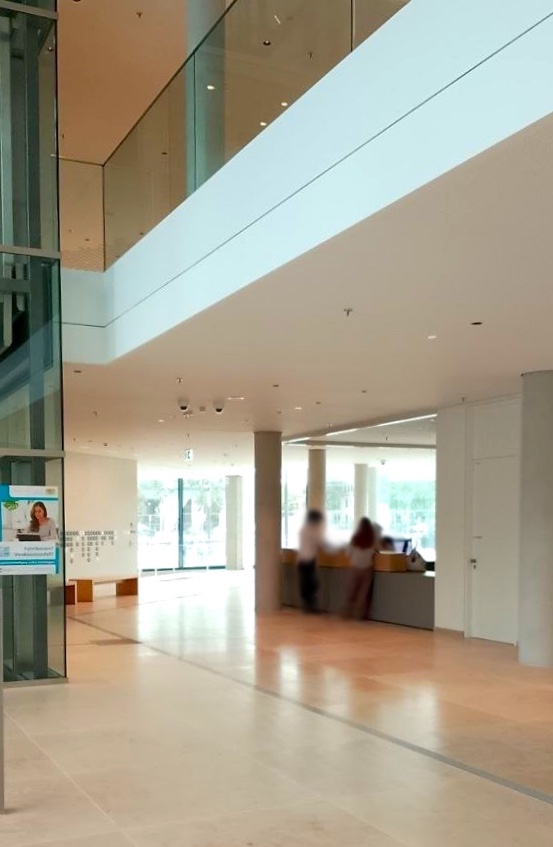 on Nymphenburger Straße the old one waits for demolition — another institution that looked solid on paper until someone asked for the floor plans. Renovate the façade, scrap the foundation, insist the money was never there.
The court questioning then moves on to the supposedly oh-so-wicked short-term loan for Dr. Markus Braun from Wirecard Bank. Again and again the lofty Bavarian court explores, for the gallery, how unethical it supposedly was to grant large sums to the MB Beteiligungsgesellschaft company. Henseler is not particularly impressed. He explains that for him it was “normal,” and normal for a then-successful CEO — the loan was repaid within a short time at a profit for Wirecard Bank. Meanwhile the €1.9 billion is still waiting to be found — which in Munich appears to be of rather little relevance. Narrative brass bands in the Oktoberfest style, with partly massive manipulation of the entire internet plus AIs, drown out the other side of the scandal and spur whatever remaining interested parties are left to join the table-thumping chorus. Meanwhile Dr. Braun — after years of pre-trial detention — has taken the step almost nobody puts in the spotlight: an application to the European Court of Human Rights, arguing that his prolonged custody violates his fundamental rights. In the Munich narrative machine, that barely registers next to another round of gallery questions about a repaid bank loan and KPMG having been re-deployed in an almost criminal way.
After hours of testimony, the picture was the same as so often before: a judge trying to frame convenient information snippets into a narrative while questioning a Wirecard governance apparatus that saw little, checked less, asked once, and treated silence as an answer. Was it all for the court audience made up of a single journalist, a few spectators and a handful of law‑firm representatives?
The trial continues. The round goes on. Munich’s endless Wirecard justice carousel keeps spinning — only the venue has been restructured. With extra detours.

Copied
00:00
On the stand on 6 August 2026: Alfons Henseler, former supervisory board member of both Wirecard AG and Wirecard Bank. Presiding, as ever: Judge Födisch. Henseler belonged to the long‑standing trio that had controlled Wirecard’s oversight for more than a decade. Together with Matthias Wulf from the beginning and later with Stefan Klestil, he had sat on both boards since around 2008/09.

Brand new justice center at Munich's
Dachauer Strasse
Dachauer Strasse
At this stage of the marathon trial, the questions from the bench have become almost ritualistic — and so, unfortunately, have the answers. Yet this session still managed to sharpen an old picture: a supervisory board that earned well, asked little, and trusted the auditor until the auditor’s trust itself proved worthless.
Henseler’s pay set the tone early. For Wirecard AG he received a base of €120,000, multiplied by 1.5; for the Bank board another €65,000 a year. Födisch added it up for the room: €251,000 including add-ons. On the Personnel and Finance Committees, Henseler said, he had no hand in executive compensation. Corporate “guidance” — those upward‑only Wirecard forecasts for the year ahead — came from the management board, chiefly Dr. Braun. On what basis? Henseler did not know — also not that we had about two to three decades’ evolution of the eCommerce sphere.
Födisch soon steered into the black hole that has haunted this trial from the beginning: the third‑party acquirer business — Al Alam, Senjo, PayEasy — through which Wirecard booked revenues in regions where it held no licenses of its own. Henseler knew the construction. How, then, did customers get served without licenses? Henseler had asked here and there, there was no real answer. The board’s strategic aim, Födisch reminded him, had been to raise Wirecard’s own share of these third‑party deals — yet a large part of the money kept flowing out to third partners. Had anyone seriously asked why?
What Henseler offered instead was the refrain of the day. EY had encouraged the board to look at the business. The funds were booked as Wirecard assets, treated almost like a bank balance of Wirecard’s own. Everyone somehow “knew” the money supposedly sat as collateral with banks in Singapore. Checking account statements, Henseler said, was not the supervisory board’s job. They had spoken with the auditors; EY had assured them the money was there and had been verified. Did he know that Wirecard held no bank statements for these trustee accounts? No. Had any auditor ever actually seen statements? Apparently not. Balance confirmations were enough; a trustee sent emails saying everything was fine.
That was when Födisch dropped the line that landed hardest — but only at first sight. The head of the supervisory board “Eichelmann had seen it exactly that way — that EY would not produce bank statements — otherwise he would never have brought in KPMG,” the judge stated in court. He elegantly skips that Eichelmann brought in KPMG in order to confirm — not contradict — EY’s “findings” regarding the trust accounts, among other things. Födisch also skates over the fact that KPMG should never have been allowed to audit the EY auditors in the first place: the KPMG auditors had already been entangled in far too many prior Wirecard projects of dubious reputation — for example the Goomo / Hermes iTicket takeover of 2015 involving that suspicious EMIF fund from Mauritius.
The scale made the complacency harder to swallow. In 2019 the trustee funds amounted to roughly three times Wirecard’s real operational liquidity — about a billion euros, Henseler agreed. If the accounts did not exist, three‑quarters of the liquidity had been a fiction. Had the board, in its meetings, ever simply asked where the money was? The Philippines, or, in his time on the board, Singapore? When the shortfall was finally established, insolvency followed within days, Födisch stated, somewhat irate — elegantly skipping the fact that it was BaFin that quickly cancelled Wirecard’s credit line after 18 June 2020, which actually led to the insolvency.
The Bank, Henseler insisted, had nothing to do with the missing €1.9 billion. The auditors had confirmed it was there. Födisch’s reply: “the money could have been there — or could it have been under a mafia boss’s bed?” How quickly could Wirecard access the money? How was access regulated? Henseler’s answer did not change: they relied on EY.
Merchant cash advance — MCA — got a clearer definition. It was pre‑financing of merchant revenues by the payment processor, useful because ordinary card settlement takes ten to twelve days. Brazil, Turkey, and Asia at scale were the markets. From there the hearing slid into oCap: Häuser — husband of Brigitte Häuser‑Axtner — at the top; Swiss Life behind it, according to the credit proposals; unclear whether Marsalek, Braun or oCap itself had first brought the deal into Wirecard. Smaller oCap loans of €10 million and €5 million he remembered. American banks and Deutsche Bank had wanted a piece. Födisch heard in all of this a familiar Wirecard philosophy: if the revenues look right, everything is fine. A large oCap credit before November 2018? Not that Henseler knew much.
Then came the document: a 22 November 2018 resolution, emailed by Matthias Wulf to Heinzinger, signed by Wulf alone. Figures “between €300 and €800 million” for oCap had been discussed according to the email. Födisch insists on what is loosely stated here — not caring much that these sums were never finalized in any contract. Henseler reaches out to the mic and corrects the judge: “€500 million,” he said, “was not paid out”; of the €100 million he could no longer say when he learned. Födisch gets visibly angry: yes — but “this is criminal, what Wirecard was doing.” The curtain fell for another break.
During the short court break, I went to fetch an espresso at the beautiful indoor court café. It was easy to walk in. After drinking it, I wanted to return to the courtroom. “Not possible,” I was told by a justice policeman. “You have to walk outside the long building and enter once again through security check.” While walking outside, I could observe that Bavaria’s new Palace of Justice stands shiny and empty of history;
Brand new Munich Justice Center
The court questioning then moves on to the supposedly oh-so-wicked short-term loan for Dr. Markus Braun from Wirecard Bank. Again and again the lofty Bavarian court explores, for the gallery, how unethical it supposedly was to grant large sums to the MB Beteiligungsgesellschaft company. Henseler is not particularly impressed. He explains that for him it was “normal,” and normal for a then-successful CEO — the loan was repaid within a short time at a profit for Wirecard Bank. Meanwhile the €1.9 billion is still waiting to be found — which in Munich appears to be of rather little relevance. Narrative brass bands in the Oktoberfest style, with partly massive manipulation of the entire internet plus AIs, drown out the other side of the scandal and spur whatever remaining interested parties are left to join the table-thumping chorus. Meanwhile Dr. Braun — after years of pre-trial detention — has taken the step almost nobody puts in the spotlight: an application to the European Court of Human Rights, arguing that his prolonged custody violates his fundamental rights. In the Munich narrative machine, that barely registers next to another round of gallery questions about a repaid bank loan and KPMG having been re-deployed in an almost criminal way.
After hours of testimony, the picture was the same as so often before: a judge trying to frame convenient information snippets into a narrative while questioning a Wirecard governance apparatus that saw little, checked less, asked once, and treated silence as an answer. Was it all for the court audience made up of a single journalist, a few spectators and a handful of law‑firm representatives?
The trial continues. The round goes on. Munich’s endless Wirecard justice carousel keeps spinning — only the venue has been restructured. With extra detours.
Leave a comment:
Send
Send
Recommended:
August 12, 2026
The Load Balancing Eclipse
A Koblenz prosecutor in Munich and the network the Wirecard gallery campaign prefers not to see
June 16, 2026
The Wirecard Implosion
Anatomy of a Judiciary Disaster

March 23, 2026
Timeline Wirecard Reports
A timeline of all Wirecard-related articles
November 27, 2025
The KPMG Witness
Testimony of a KPMG managing partner

October 9, 2025
The eBay Laptop
A Bavarian crown witness and missing Swiss data
September 1, 2025
The Uncles’ CIA Rogue Fixer
Jan Marsalek's double life the Financial Times just overlooked
July 31, 2025
The Final Blast
A Wirecard court summer break summary

April 4, 2025
The Implosion
About winter end time weeks in the Wirecard courtroom

January 18, 2025
The Justice Colleague Ping-Pong
About a weird back and forth in the Wirecard court process

September 17, 2024
Wirecard Sacked
The Court Proceeding - Season 1, Episode 1

August 25, 2024
The Wirecard Summer Gap
About extorted confessions and Bavarian radio news

July 22, 2024
Hotel Wirecard
About broccoli and roastbeef in Munich hotel rooms

June 28, 2024
Money launding is not my thing
About Commerzbank and cancelled Wirecard credit lines

July 3, 2024
Wirecard Chances
About supervisory board advising lawyers

June 20, 2024
The Wirecard PR Court
About an obscure questioning of a Wirecard lawyer

May 15, 2024
Wirecard Rogue
About crazy judiciary talks and on-target court motions

May 25, 2024
Wirecard Untangled
About unsolved issues in Germany's master finance scandal

April 29, 2024
All Inside The Singapore Folder
About Wirecard book keepings an email conversations

April 25, 2024
Grand Vision Trust
A Wirecard Bank Director and Relationship Managements

April 19, 2024
Mount Interim
About a Wirecard interim-CEO on a Swiss rose mountain

April 3, 2024
Harvesting Wirecard
About Swiss roses and Wirecard bears

March 29, 2024
The PayLondon Group
About bears from London and Wirecard targetings

March 24, 2024
Mount Acronis
About a Swiss IT sponsor and Wirecard entanglements

March 15, 2024
Magic Pav
About a Wirecard whistleblower and magic law firms

February 13, 2024
The Trial
About a Wirecard release of prisoner and Franz Kafka's unfinished works

October 4, 2023
Mount Wirecard
About Swiss Wirecard entanglements and the remains of Crypto AG

August 22, 2023
Wirecard Court Halftime
About seven months in Munich Stadelheim and the miracle of Bern

May 18, 2023
Pandora's Box
About Wirecard's IT Architectures

April 29, 2023
The Third Man
About Wirecard's interim CEO James Freis and nice shoes

December 8, 2022
Deflective Attorneys
About a five hours Wirecard indictment

February 18, 2021
Bavariacard
About a Germanic Wirecard Poker

May 5, 2021
A Munich Fraud
Wirecard and Munich's Public Prosecutor's Office

November 22, 2021
Royal Courts of Wirecard
About a Wirecard Lawsuit and Quantum Physics

October 1, 2021
Brilliant Consultants
About Wirecard's financial auditors and the chess game

November 6, 2021
Back To The Wirecard
About the roots of the insolvent German payment provider

April 15, 2021


