The Load Balancing Eclipse
A Koblenz prosecutor in Munich and the network the Wirecard gallery campaign prefers not to see
August 12, 2026
1786973501


Dark Mode
Listen to this article
The Load Balancing Eclipse


Outside, Europe waited for a solar eclipse. Inside room D107 of Munich’s new Justice Center on Dachauer Straße, another shadow fell — not on the sun, but on the story Munich prefers to tell. The witness was not a Bavarian prosecutor. Susanne Schüler, Chief Prosecutor in Koblenz, Rheinland‑Pfalz, has since 2024 led the investigation into the PAYONE / CE Cash network around Ray Akhavan and its Wirecard links. Presiding: Judge Födisch. In the press seats: 3 to 4 journalists. On the file: a great deal.


Koblenz is not a side show. On 4 November 2025 the Landeszentralstelle Cybercrime and the BKA announced raids across nine countries. Card data from victims in 193 states,more than 19 million sham subscriptions. Four large German payment providers compromised, damage in the mid three‑digit millions. Schüler stood at that Wiesbaden press conference as case lead, today she sat in Munich’s Wirecard directors’ trial as a witness. The brighter the Munich narrative, the darker the networks it leaves out.
She began with a simple mechanism. When Mastercard thresholds were breached, life got hard for merchant and acquirer alike. The answer in her file was load balancing: not tech slang, but splitting one high‑risk merchant across many so chargebacks stay “under control” and nobody gets switched off. Markus Fuchs, a defendant in her Koblenz case, sat inside that model.
Who ran it on the Wirecard side? Sales, she said — “one face to the customer.” Brigitte Häuser‑Axtner was the contact point; Fuchs handled digital services; Elbek and Jan Marsalek worked with Ray Akhavan. Information was steered through Akhavan, merchants were meant to stay online. The compliance websites shown to Wirecard Bank were façades — porn sites dressed up with imprint and extras. The Wirecard Bank, in her assessment, did not know. The three did.
Then Födisch asked the question Munich came for: was one of our defendants involved?
“No.” She would not exclude a few odd emails touching Bellenhaus, Braun or von Erffa. Födisch answered quickly: she could only report “according to her own perception here.” The “no” still needed to hang in the room — after 3 and a half years of what this court has exercised.
Around Akhavan the picture thickened. Iranian‑born Hamid “Ray” Akhavan sat at the top of CE Cash.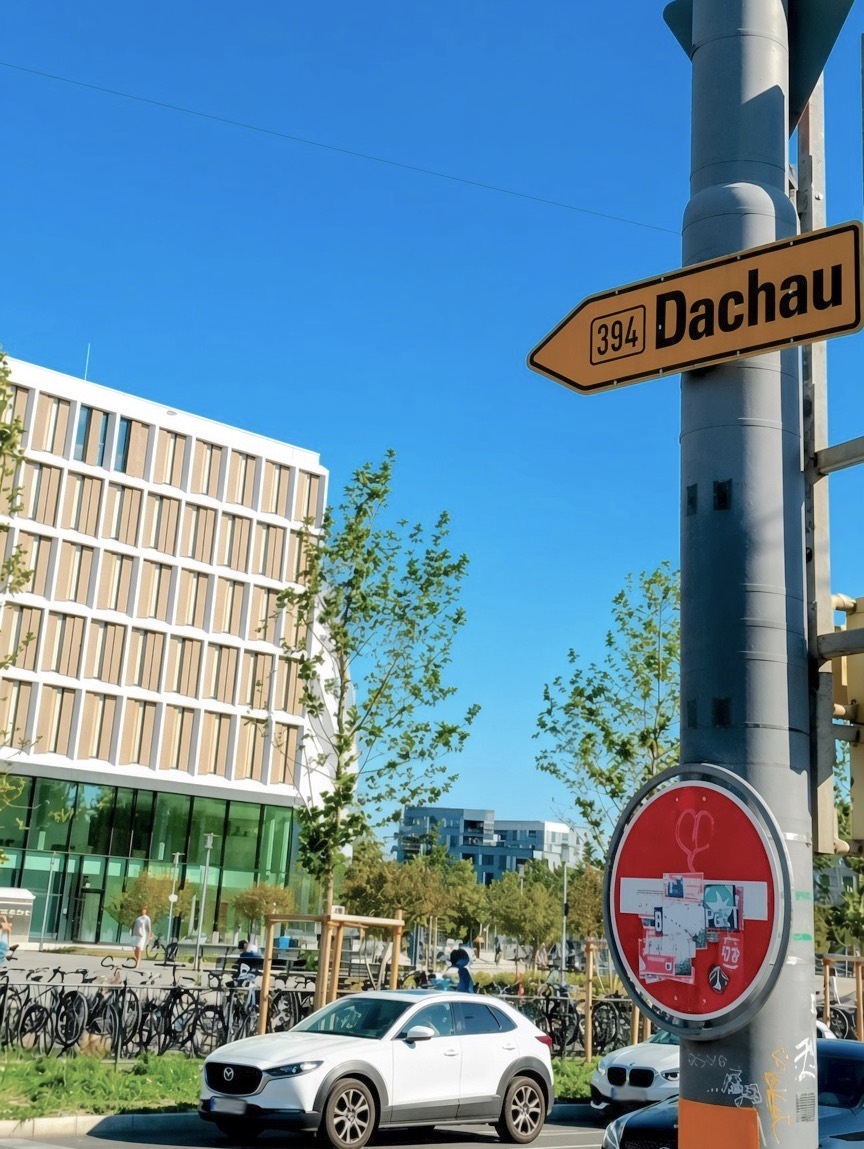 After Akhavan’s drug problems, putsch‑like dynamics stirred inside the organisation; Akhavan did not like them. He died of a drug overdose in fall 2024; Häuser‑Axtner, Schüler said, took the death hard. His brother (heard as Andeschi or Adeschi) leaned marketing. Ruben Weigand, the Rheinland‑Pfalz broker, is why Koblenz owns the investigation. Muret (so heard in the courts), the “Wizard of Cairo,” built a database that underpinned European bookkeeping and dealt with Ruben Weigand when people complained. Kat Cruz ran Cyprus incorporations, CE Cash used some thirty acquirers. Häuser‑Axtner briefed Akhavan on quotas and chargebacks, a deleted chat spoke of new merchants when the old ones were “burned”. From 2017 Häuser-Axtner claimed to have gone "low‑risk", or was it lower risk? The investigations, Schüler said, do not really bear that out.
Webshield, the compliance tool meant to check merchants, was “really good,” Schüler said — only its reports were manipulated so onboarding got much, much easier. Later, in 2019, came another device: SCP supplier accounts. A credit card was issued under an umbrella merchant and then handed out to individuals who could walk around spending — in the millions. Födisch asked what that meant for money laundering. Of course it was possible, Schüler said: the purchases always registered under the merchant who owned the card, while the spending itself sat with whoever held it. The accounts were pushed through as “smaller amounts.” When Elbek heard of the millions flowing through, Schüler said, his jaw dropped — he had suspected only tiny facilities available to the “clients.”
None of this, from her mandate, proved Munich’s preferred story about the allegedly entirely fake third‑party acquirer business. She is not steeped in the major third‑party businesses Al Alam, Senjo or PayEasy — Munich’s court mostly elegantly leaves out that there were around fifty TPAs, among them the most scandalous from earlier times. Kalixa and PXP appeared only as a side path:merchants shifted there on orders that “came from above” — Marsalek, then Häuser‑Axtner, then Fuchs, in that order.
A June 2020 chat even floated Akhavan as a straw man for “another man from Austria,” probably Marsalek, the Koblenz chief prosecutor admits. As for a link to the defendants in this Munich dock, her judgment was plain again: No! Aside from the fugitive Jan Marsalek, of course, with whom Munich’s prosecutors had a talk on 18 June 2020 at Wirecard’s headquarters in Aschheim — before, during or after the “€1.9 billion missing” announcement. Anyone still branding that “imagination” can take it up with Stefan Klestil under oath: he put Munich’s prosecutors in Aschheim on 18 June 2020 himself. The gallery press that wasn’t in the room in February 2024 — or skipped the bombshell — now probably denies it as if absence from the hearing were a fact-check.
Why the bank controls failed was another thread. Markus Kohlpaintner sat more on issuing. There were alleged €500,000 cash pickups by Akhavan. Sales always had an excuse, friendly fraud existed; her impression was that they took whatever came. By 2019 one scarcely knew what was being processed. Häuser‑Axtner’s people were AML‑trained every two years. Kohlpaintner, with several others, described overruling by sales: the bank says no — then often a correction by the Wirecard Bank management board.
After noon, Braun’s counsel tested how material was exchanged. Had Munich’s prosecutors handed over everything? Not everything: CE Cash network material from early 2024, no full mailboxes of Munich’s defendants, only email extracts. So Munich had sorted first? Yes — Bundeskriminalamt BKA with Munich's public prosecutors, material assignable to the Akhavan complex. A Singapore interrogation of Häuser‑Axtner from Munich? No. Mutual legal assistance to Singapore? Not requested. The Singapore arrest itself: an extradition request of roughly a thousand A4 pages, five time zones, arrested late in the evening before 21:00 — from Schüler’s perspective, no real complications. Devices seized on 4 November 2025 from flat and person are still under BKA review.
A Bellenhaus foundation benefiting a daughter of Häuser‑Axtner was news to her. In May 2026 Schüler questioned Häuser‑Axtner herself, with counsel, at JVA Koblenz, BKA present; the documents sit at the Landgericht. Her impression: expertise, eloquence, marked by extradition custody. Häuser-Axtner's personal profit from “Operation Chargeback”? None established; post‑collapse finances were tight; 2025 career prospects interrupted by the arrest. After 2020, Asia merchant brokerage had run around Andrew Garroni. QNet was high‑risk. Andy Karwaja was not her case.
Communications cast Fuchs, Häuser-Axtner and Marsalek as “my love” and “my brother” with Akhavan. Marsalek sat above the sales structure — gifts, façades, close ties. Then Braun himself put a 22 February 2010 email on the table: Marsalek asking how to set up load balancing, “ten per day.” Was it the same idea as investigated in Koblenz? Basically yes. Whose idea? A meeting in Canada with Häuser‑Axtner, Marsalek and Akhavan — Ray, gold chains and all. Shortly afterwards the entire Load Balancing Enchilada kick-started. From Schüler’s and Dr. Braun's memory and proof: Ray Akhavan.
Sixteen years before today’s eclipse, the trick was already in the inbox, Munich’s preferred darkness clearly seems elsewhere.
Three lines remain. The Wirecard side of the Akhavan network was real: Fuchs, Häuser‑Axtner, Marsalek — sales, façades, load balancing. The technique was not invented for a 2020 morality play, it was emailed already in 2010. Schüler confirms what Dr. Braun stated in court today: it tied back to as early as 2010 to an Iranian‑born operator who died of an overdose in fall 2024. And the defendants in this Munich dock were not, in her case, the centre of the map — not the recipients of the flows she chased or identified in her investigations at all.
Outside, the moon nearly crossed the sun. Inside D107, Koblenz cast a different shadow. Spread the merchant. Darken the room. Everybody looks elsewhere during the eclipse with specially shaded eyes.
The Bavarian comedy trial continues. Only now the light comes from Rheinland‑Pfalz.

Copied
00:00
Koblenz is not a side show. On 4 November 2025 the Landeszentralstelle Cybercrime and the BKA announced raids across nine countries. Card data from victims in 193 states,more than 19 million sham subscriptions. Four large German payment providers compromised, damage in the mid three‑digit millions. Schüler stood at that Wiesbaden press conference as case lead, today she sat in Munich’s Wirecard directors’ trial as a witness. The brighter the Munich narrative, the darker the networks it leaves out.
She began with a simple mechanism. When Mastercard thresholds were breached, life got hard for merchant and acquirer alike. The answer in her file was load balancing: not tech slang, but splitting one high‑risk merchant across many so chargebacks stay “under control” and nobody gets switched off. Markus Fuchs, a defendant in her Koblenz case, sat inside that model.
Who ran it on the Wirecard side? Sales, she said — “one face to the customer.” Brigitte Häuser‑Axtner was the contact point; Fuchs handled digital services; Elbek and Jan Marsalek worked with Ray Akhavan. Information was steered through Akhavan, merchants were meant to stay online. The compliance websites shown to Wirecard Bank were façades — porn sites dressed up with imprint and extras. The Wirecard Bank, in her assessment, did not know. The three did.
Then Födisch asked the question Munich came for: was one of our defendants involved?
“No.” She would not exclude a few odd emails touching Bellenhaus, Braun or von Erffa. Födisch answered quickly: she could only report “according to her own perception here.” The “no” still needed to hang in the room — after 3 and a half years of what this court has exercised.
Around Akhavan the picture thickened. Iranian‑born Hamid “Ray” Akhavan sat at the top of CE Cash.
Intersection outside Munich Justice Center
at Dachauer Straße on August 12, 2026
at Dachauer Straße on August 12, 2026
Webshield, the compliance tool meant to check merchants, was “really good,” Schüler said — only its reports were manipulated so onboarding got much, much easier. Later, in 2019, came another device: SCP supplier accounts. A credit card was issued under an umbrella merchant and then handed out to individuals who could walk around spending — in the millions. Födisch asked what that meant for money laundering. Of course it was possible, Schüler said: the purchases always registered under the merchant who owned the card, while the spending itself sat with whoever held it. The accounts were pushed through as “smaller amounts.” When Elbek heard of the millions flowing through, Schüler said, his jaw dropped — he had suspected only tiny facilities available to the “clients.”
None of this, from her mandate, proved Munich’s preferred story about the allegedly entirely fake third‑party acquirer business. She is not steeped in the major third‑party businesses Al Alam, Senjo or PayEasy — Munich’s court mostly elegantly leaves out that there were around fifty TPAs, among them the most scandalous from earlier times. Kalixa and PXP appeared only as a side path:
The Singapore arrest itself: an extradition request of roughly a thousand A4 pages, five time zones, arrested late in the evening before 21:00 — from Schüler’s perspective, no real complications.
A June 2020 chat even floated Akhavan as a straw man for “another man from Austria,” probably Marsalek, the Koblenz chief prosecutor admits. As for a link to the defendants in this Munich dock, her judgment was plain again: No! Aside from the fugitive Jan Marsalek, of course, with whom Munich’s prosecutors had a talk on 18 June 2020 at Wirecard’s headquarters in Aschheim — before, during or after the “€1.9 billion missing” announcement. Anyone still branding that “imagination” can take it up with Stefan Klestil under oath: he put Munich’s prosecutors in Aschheim on 18 June 2020 himself. The gallery press that wasn’t in the room in February 2024 — or skipped the bombshell — now probably denies it as if absence from the hearing were a fact-check.
Why the bank controls failed was another thread. Markus Kohlpaintner sat more on issuing. There were alleged €500,000 cash pickups by Akhavan. Sales always had an excuse, friendly fraud existed; her impression was that they took whatever came. By 2019 one scarcely knew what was being processed. Häuser‑Axtner’s people were AML‑trained every two years. Kohlpaintner, with several others, described overruling by sales: the bank says no — then often a correction by the Wirecard Bank management board.
After noon, Braun’s counsel tested how material was exchanged. Had Munich’s prosecutors handed over everything? Not everything: CE Cash network material from early 2024, no full mailboxes of Munich’s defendants, only email extracts. So Munich had sorted first? Yes — Bundeskriminalamt BKA with Munich's public prosecutors, material assignable to the Akhavan complex. A Singapore interrogation of Häuser‑Axtner from Munich? No. Mutual legal assistance to Singapore? Not requested. The Singapore arrest itself: an extradition request of roughly a thousand A4 pages, five time zones,

Brand new Justice Center at Munich's
Dachauer Straße
Dachauer Straße
A Bellenhaus foundation benefiting a daughter of Häuser‑Axtner was news to her. In May 2026 Schüler questioned Häuser‑Axtner herself, with counsel, at JVA Koblenz, BKA present; the documents sit at the Landgericht. Her impression: expertise, eloquence, marked by extradition custody. Häuser-Axtner's personal profit from “Operation Chargeback”? None established; post‑collapse finances were tight; 2025 career prospects interrupted by the arrest. After 2020, Asia merchant brokerage had run around Andrew Garroni. QNet was high‑risk. Andy Karwaja was not her case.
Communications cast Fuchs, Häuser-Axtner and Marsalek as “my love” and “my brother” with Akhavan. Marsalek sat above the sales structure — gifts, façades, close ties. Then Braun himself put a 22 February 2010 email on the table: Marsalek asking how to set up load balancing, “ten per day.” Was it the same idea as investigated in Koblenz? Basically yes. Whose idea? A meeting in Canada with Häuser‑Axtner, Marsalek and Akhavan — Ray, gold chains and all. Shortly afterwards the entire Load Balancing Enchilada kick-started. From Schüler’s and Dr. Braun's memory and proof: Ray Akhavan.
Sixteen years before today’s eclipse, the trick was already in the inbox, Munich’s preferred darkness clearly seems elsewhere.
Three lines remain. The Wirecard side of the Akhavan network was real: Fuchs, Häuser‑Axtner, Marsalek — sales, façades, load balancing. The technique was not invented for a 2020 morality play, it was emailed already in 2010. Schüler confirms what Dr. Braun stated in court today: it tied back to as early as 2010 to an Iranian‑born operator who died of an overdose in fall 2024. And the defendants in this Munich dock were not, in her case, the centre of the map — not the recipients of the flows she chased or identified in her investigations at all.
Outside, the moon nearly crossed the sun. Inside D107, Koblenz cast a different shadow. Spread the merchant. Darken the room. Everybody looks elsewhere during the eclipse with specially shaded eyes.
The Bavarian comedy trial continues. Only now the light comes from Rheinland‑Pfalz.
Leave a comment:
Send
Send
Recommended:
6 August 2026
The Endless Justice Round
Interrogation of a Wirecard supervisor board member
16 June 2026
The Wirecard Implosion
Anatomy of a Judiciary Disaster
23 March 2026
Timeline Wirecard Reports
A timeline of all Wirecard-related articles
27 November 2025
The KPMG Witness
Testimony of a KPMG managing partner

9 October 2025
The eBay Laptop
A Bavarian crown witness and missing Swiss data
1 September 2025
The Uncles’ CIA Rogue Fixer
Jan Marsalek's double life the Financial Times just overlooked
31 July 2025
The Final Blast
A Wirecard court summer break summary

4 April 2025
The Implosion
About winter end time weeks in the Wirecard courtroom

18 January 2025
The Justice Colleague Ping-Pong
About a weird back and forth in the Wirecard court process

17 September 2024
Wirecard Sacked
The Court Proceeding - Season 1, Episode 1

25 August 2024
The Wirecard Summer Gap
About extorted confessions and Bavarian radio news

22 July 2024
Hotel Wirecard
About broccoli and roastbeef in Munich hotel rooms

28 June 2024
Money launding is not my thing
About Commerzbank and cancelled Wirecard credit lines

3 July 2024
Wirecard Chances
About supervisory board advising lawyers

20 June 2024
The Wirecard PR Court
About an obscure questioning of a Wirecard lawyer

15 May 2024
Wirecard Rogue
About crazy judiciary talks and on-target court motions

25 May 2024
Wirecard Untangled
About unsolved issues in Germany's master finance scandal

29 April 2024
All Inside The Singapore Folder
About Wirecard book keepings an email conversations

25 April 2024
Grand Vision Trust
A Wirecard Bank Director and Relationship Managements

19 April 2024
Mount Interim
About a Wirecard interim-CEO on a Swiss rose mountain

3 April 2024
Harvesting Wirecard
About Swiss roses and Wirecard bears

29 March 2024
The PayLondon Group
About bears from London and Wirecard targetings

24 March 2024
Mount Acronis
About a Swiss IT sponsor and Wirecard entanglements

15 March 2024
Magic Pav
About a Wirecard whistleblower and magic law firms

13 February 2024
The Trial
About a Wirecard release of prisoner and Franz Kafka's unfinished works

4 October 2023
Mount Wirecard
About Swiss Wirecard entanglements and the remains of Crypto AG

22 August 2023
Wirecard Court Halftime
About seven months in Munich Stadelheim and the miracle of Bern

18 May 2023
Pandora's Box
About Wirecard's IT Architectures

29 April 2023
The Third Man
About Wirecard's interim CEO James Freis and nice shoes

8 December 2022
Deflective Attorneys
About a five hours Wirecard indictment

18 February 2021
Bavariacard
About a Germanic Wirecard Poker

5 May 2021
A Munich Fraud
Wirecard and Munich's Public Prosecutor's Office

22 November 2021
Royal Courts of Wirecard
About a Wirecard Lawsuit and Quantum Physics

1 October 2021
Brilliant Consultants
About Wirecard's financial auditors and the chess game

6 November 2021
Back To The Wirecard
About the roots of the insolvent German payment provider

15 April 2021


