The ebay Laptop
A Bavarian crown witness and missing Swiss data
October 9, 2025
1763315355


Dark Mode
Listen to this article
The ebay Laptop


In the Wirecard trial on October 8, 2025, key witness Oliver Bellenhaus finally tackled the legendary list of around 500 questions prepared years ago by the defense of former chief bookkeeper von Erffa. Bellenhaus plowed through the questions like a traveler hearing the final boarding call. His preferred sources of recollection were Telegram messages and phone calls, whose existence the public prosecutor's office has never substantiated. An early gem emerged when, referring to a projected transaction overview, Bellenhaus emphasized that von Erffa's 2016 records were clearly "missing decimal places" — as if this minor detail were a universal seal of approval for authenticity and pure innocence.
On the topics of revenue and profit targets, Bellenhaus claimed these were always and exclusively coordinated and jointly falsified between him, the head of the Dubai subsidiary, and von Erffa via Telegram or telephone. Nothing, it seems, underscores true innocence better than encrypted chat bubbles that were never presented as evidence and are presumably lost forever. Other contacts? Yes, Marsalek and von Knoop, also via Telegram. However, when it came to meetings with other key players, his memory, previously surprisingly precise, suddenly became shrouded in an impenetrable fog. The so-called "core team" was given an invisibility cloak, and some names stubbornly refused to come back to the key witness after his decimal places digression.
Operational security at Wirecard Dubai was, according to Bellenhaus, a creative mixture of NordVPN, an "Enigma Box," and private VPNs – some from Amazon, the favorite retailer for compliance questions. He described the Enigma Box as a router that built a tunnel to an exit point; this was "practical for watching German television abroad," an explanation he seriously offered as the former Dubai managing director. Telegram calls would thereby become especially private. A Swiss Army knife, then, for obfuscation and for watching the Bundesliga – the latter apparently too fast for NordVPN, which is why German talk shows ran better through Bellenhaus' Enigma Box in Dubai. A completely normal practice about which no further questions should be asked, please.
When asked about the exact deployment date of this Enigma Box, Bellenhaus explained to the court that the judges "didn't understand it" – a surely confidence-building measure, especially after years of dodging the questionnaire. He marketed the technology as a combination of a privacy tool and traffic routing. A practical solution if one wants to leave as few digital footprints as possible.
During the reality check on Third-Party Acquiring (TPA) business, Bellenhaus remained stubborn: Despite numerous witnesses and even a Marsalek letter to the court a year and a half ago, he maintained that "there was no real TPA business." Al-Alam? "No real activities, at no point in time." Which service providers were involved ? "None," stated the northern Bavarian super-witness, unchanged. To Bellenhaus, the cast of this TPA gang of robbers was exclusively Marsalek, Dr. Braun, von Erffa, Manu Sahu, Shanmugaratnam, and Henry O’Sullivan. With this presentation, the curtain fell for the break.
Servers, MacBooks, and Bitcoin: The Key Witness's Trail Obfuscation
Money laundering oversight at Wirecard was surprisingly "friendly," according to Bellenhaus. He described a friendly relationship with the responsible officer Kohlpainter, including dinners in Dubai. The conversations were "professional," but details remained elegantly empty. Personal favors ? Denied. The description was friendly, professional, and just vague enough to be useless for clarification – also regarding the compliance officer's visits to Dubai.
Regarding the deception of the auditors, Bellenhaus claimed absolute sole responsibility for the entire TPA complex – he alone was allegedly the point of contact. Exchange occurred with von Erffa, Marsalek, and Knoop. Internal reports did go to Elsner, Zitzmann, and Theodore, but he did not want these to be considered control instances. For TPA controls, he referred exclusively to a Dubai audit team, which was, of course, located only with him. In summary: Bellenhaus stages himself as the single only responsible central actor of a TPA business that he - and the public prosecutors - claims never existed, which he falsified allegedly soley by the order of others – and for exactly this role, he was made a key "crown" witness for the Munich public prosecutor's office and released from detention about 1.5 years ago. Got it finally what's going on in here in Munich ?
June 2020, the final phase of Wirecard, brought also bizarre questionnaire revelations here in the courtroom. Oliver Bellenhaus speaks of customer meetings, deposits, and preparations for remand prison that included "buying a non-electric toothbrush and toothpaste" – odd, since everything is confiscated upon incarceration at the prison gates anyway. A nice PR gesture that nevertheless resonated with some in the room. Far more explosive were his admissions of accessing numerous Wirecard servers even after June 18, 2020, partly via third parties and the cloud. Every access changes data, Bellenhaus remarks, likely referring to file timestamps. He had also changed access rights multiple times and even completely terminated them. An ideal method to turn the investigators' forensic work into a detective masterpiece itself.
Questioned about data deletion, Bellenhaus reacted brusquely – how could one even suggest that. However, he confirmed contact with Marsalek after the collapse. On June 19, 2020, around 8:20 PM, he departed from Dubai not directly to Germany, but first to Switzerland, where he stayed a few days, only then did he go Munich. A travel itinerary of panic, behind which the defense already sensed data manipulation from down the hall.
The absolute highlight of the day was Bellenhaus' revelation that he had sold his former company MacBook on eBay. He flashed the corresponding ad in the courtroom like a magician pulling a rabbit from a hat. The photo showed a MacBook Pro from 2019 with an Arabic keyboard – a strange choice for a German-English Dubai director. Swiss authorities had allegedly confiscated it, "analyzed" it, and later returned it to his wife, who reset it and sold it. To the judge's question, "And the data ?" Bellenhaus replied dryly: "No idea." His defense lawyer jumped in hastily, claiming a mutual legal assistance request between Munich and Switzerland in mid 2020. Strange is however, that the judge could not recall any corresponding remarks in his reservoir of Wirecard documents regarding the missing Swiss Macbook data, he finds all this, quote, "pretty strange".
Offshore, Crypto, and the Great Evasion
On matters of assets, Bellenhaus remained evasive. He denied any private connections to Julius Bär Bank but conceded that he had maintained accounts for clients and for himself at Standard Chartered and Swissquote. He stated his annual salary was around €180,000, plus additional roles in subsidiary companies – a nicely diversified bundle of explanations.
Things became even more interesting on the topic of crypto: Bellenhaus stated that he had owned "around 30 Bitcoins" and had even "mined Bitcoin" himself, quoting, "when that was still possible." Technically, however, this mining has been extremely resource-intensive from the very beginning, a fact that has not changed significantly since – details he elegantly skates over. His 30 Bitcoins, meanwhile, represented a tidy fortune of approximately €200,000 to €500,000 in 2019 and/or 2020.
A company that the defense labeled as an embezzlement scheme was dismissed by him as completely normal – a claim allegedly confirmed by Munich prosecutor Lemmers. This is the same female prosecutor, now of international renown, who handled the money laundering report filed by Germany's FIU customs authority on July 15, 2020, targeting Bellenhaus' own Levantine Foundation in Liechtenstein. She let that report vanish into a drawer, as it arrived on that very same day that Oliver Bellenhaus was made the key witness for Munich's public prosecutors office.
At the end of 2019, Bellenhaus states, he founded his own company AdAugusta with startup capital of €400,000 and a registered office in the tax-advantageous jurisdiction of Labuan – attracted, he said, by the "high-risk-friendly mentality" there. He boasted of the deep "big-data know-how" he acquired during his totally boring Wirecard days, skills with a variety of applications, some more audit-proof than others. When discussing offshore connections, he named Clearwater Capital Ltd. and Clearwater International, casually adding that one of these Clearwater entities was "the headquarters of Scientology." A remarkable side note that underscored just how surreal the trial has become at certain points.
Concerning the financing of large projects, Bellenhaus became ultimately vague. Had the sovereign wealth state fund from Abu Dhabi invested in Wirecard? Was he in any way involved in investment talks or arrangements? Bellenhaus answers with a shrug: "Just ask SoftBank, or Dr. Braun." Basta.
The day's conclusion: equipment was sold, data obfuscation was conducted, and the for all prosecutorial indictments plus the entire Wirecard scandal so crucial TPA business continues to feel like an existing non-existent punchline that has lost its punch and line.

Copied
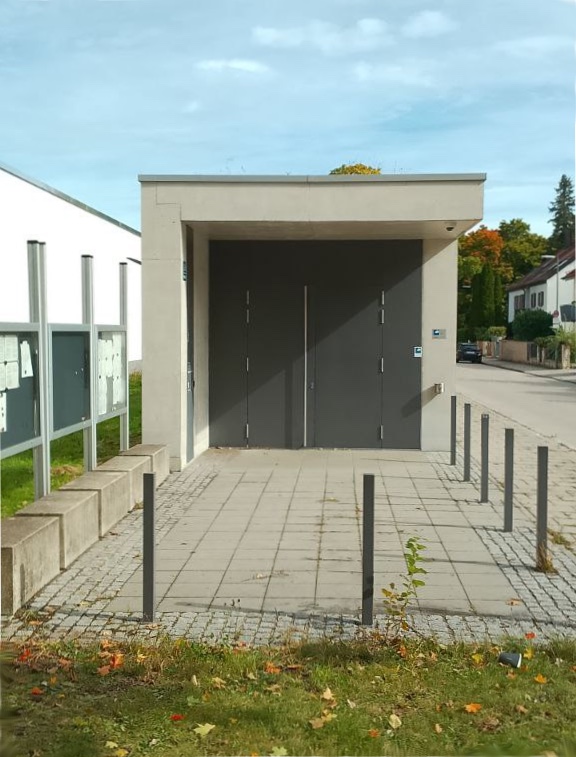
Underground court room entrance part of Munich-Stadelheim prison on October 8, 2025
On the topics of revenue and profit targets, Bellenhaus claimed these were always and exclusively coordinated and jointly falsified between him, the head of the Dubai subsidiary, and von Erffa via Telegram or telephone. Nothing, it seems, underscores true innocence better than encrypted chat bubbles that were never presented as evidence and are presumably lost forever. Other contacts? Yes, Marsalek and von Knoop, also via Telegram. However, when it came to meetings with other key players, his memory, previously surprisingly precise, suddenly became shrouded in an impenetrable fog. The so-called "core team" was given an invisibility cloak, and some names stubbornly refused to come back to the key witness after his decimal places digression.
Operational security at Wirecard Dubai was, according to Bellenhaus, a creative mixture of NordVPN, an "Enigma Box," and private VPNs – some from Amazon, the favorite retailer for compliance questions. He described the Enigma Box as a router that built a tunnel to an exit point; this was "practical for watching German television abroad," an explanation he seriously offered as the former Dubai managing director. Telegram calls would thereby become especially private. A Swiss Army knife, then, for obfuscation and for watching the Bundesliga – the latter apparently too fast for NordVPN, which is why German talk shows ran better through Bellenhaus' Enigma Box in Dubai. A completely normal practice about which no further questions should be asked,
During the reality check on Third-Party Acquiring (TPA) business, Bellenhaus remained stubborn: Despite numerous witnesses and even a Marsalek letter to the court a year and a half ago, he maintained that "there was no real TPA business".
When asked about the exact deployment date of this Enigma Box, Bellenhaus explained to the court that the judges "didn't understand it" – a surely confidence-building measure, especially after years of dodging the questionnaire. He marketed the technology as a combination of a privacy tool and traffic routing. A practical solution if one wants to leave as few digital footprints as possible.
During the reality check on Third-Party Acquiring (TPA) business, Bellenhaus remained stubborn: Despite numerous witnesses and even a Marsalek letter to the court a year and a half ago, he maintained that "there was no real TPA business." Al-Alam? "No real activities, at no point in time." Which service providers were involved ? "None," stated the northern Bavarian super-witness, unchanged. To Bellenhaus, the cast of this TPA gang of robbers was exclusively Marsalek, Dr. Braun, von Erffa, Manu Sahu, Shanmugaratnam, and Henry O’Sullivan. With this presentation, the curtain fell for the break.
Servers, MacBooks, and Bitcoin: The Key Witness's Trail Obfuscation
Money laundering oversight at Wirecard was surprisingly "friendly," according to Bellenhaus. He described a friendly relationship with the responsible officer Kohlpainter, including dinners in Dubai. The conversations were "professional," but details remained elegantly empty. Personal favors ? Denied. The description was friendly, professional, and just vague enough to be useless for clarification – also regarding the compliance officer's visits to Dubai.
Regarding the deception of the auditors, Bellenhaus claimed absolute sole responsibility for the entire TPA complex – he alone was allegedly the point of contact. Exchange occurred with von Erffa, Marsalek, and Knoop. Internal reports did go to Elsner, Zitzmann, and Theodore, but he did not want these to be considered control instances. For TPA controls, he referred exclusively to a Dubai audit team, which was, of course, located only with him. In summary: Bellenhaus stages himself as the single only responsible central actor of a TPA business that he - and the public prosecutors - claims never existed, which he falsified allegedly soley by the order of others – and for exactly this role, he was made a key "crown" witness for the Munich public prosecutor's office and released from detention about 1.5 years ago. Got it finally what's going on in here in Munich ?
June 2020, the final phase of Wirecard, brought also bizarre questionnaire revelations here in the courtroom. Oliver Bellenhaus speaks of customer meetings, deposits, and preparations for remand prison that included "buying a non-electric toothbrush and toothpaste" – odd, since everything is confiscated upon incarceration at the prison gates anyway. A nice PR gesture that nevertheless resonated with some in the room. Far more explosive were his admissions of accessing numerous Wirecard servers even after June 18, 2020, partly via third parties and the cloud. Every access changes data, Bellenhaus remarks, likely referring to file timestamps. He had also changed access rights multiple times and even completely terminated them. An ideal method to turn the investigators' forensic work into a detective masterpiece itself.
Questioned about data deletion, Bellenhaus reacted brusquely – how could one even suggest that. However, he confirmed contact with Marsalek after the collapse. On June 19, 2020, around 8:20 PM, he departed from Dubai not directly to Germany, but first to Switzerland, where he stayed a few days, only then did he go Munich. A travel itinerary of panic, behind which the defense already sensed data manipulation from down the hall.
The absolute highlight of the day was Bellenhaus' revelation that he had sold his former company MacBook on eBay. He flashed the corresponding ad in the courtroom like a magician pulling a rabbit from a hat. The photo showed a MacBook Pro from 2019 with an Arabic keyboard – a strange choice for a German-English Dubai director. Swiss authorities had allegedly confiscated it, "analyzed" it, and later returned it to his wife, who reset it and sold it. To the judge's question, "And the data ?" Bellenhaus replied dryly: "No idea." His defense lawyer jumped in hastily, claiming a mutual legal assistance request between Munich and Switzerland in mid 2020.
His defense lawyer jumped in hastily, claiming a mutual legal assistance request between Munich and Switzerland in mid 2020. Strange is however, that the judge could not recall any corresponding remarks in his reservoir of Wirecard documents regarding the missing Swiss Macbook data, he finds all this, quote, "pretty strange".
Offshore, Crypto, and the Great Evasion
On matters of assets, Bellenhaus remained evasive. He denied any private connections to Julius Bär Bank but conceded that he had maintained accounts for clients and for himself at Standard Chartered and Swissquote. He stated his annual salary was around €180,000, plus additional roles in subsidiary companies – a nicely diversified bundle of explanations.
Things became even more interesting on the topic of crypto: Bellenhaus stated that he had owned "around 30 Bitcoins" and had even "mined Bitcoin" himself, quoting, "when that was still possible." Technically, however, this mining has been extremely resource-intensive from the very beginning, a fact that has not changed significantly since – details he elegantly skates over. His 30 Bitcoins, meanwhile, represented a tidy fortune of approximately €200,000 to €500,000 in 2019 and/or 2020.
A company that the defense labeled as an embezzlement scheme was dismissed by him as completely normal – a claim allegedly confirmed by Munich prosecutor Lemmers. This is the same female prosecutor, now of international renown, who handled the money laundering report filed by Germany's FIU customs authority on July 15, 2020, targeting Bellenhaus' own Levantine Foundation in Liechtenstein. She let that report vanish into a drawer, as it arrived on that very same day that Oliver Bellenhaus was made the key witness for Munich's public prosecutors office.
At the end of 2019, Bellenhaus states, he founded his own company AdAugusta with startup capital of €400,000 and a registered office in the tax-advantageous jurisdiction of Labuan – attracted, he said, by the "high-risk-friendly mentality" there. He boasted of the deep "big-data know-how" he acquired during his totally boring Wirecard days, skills with a variety of applications, some more audit-proof than others. When discussing offshore connections, he named Clearwater Capital Ltd. and Clearwater International, casually adding that one of these Clearwater entities was "the headquarters of Scientology." A remarkable side note that underscored just how surreal the trial has become at certain points.
Concerning the financing of large projects, Bellenhaus became ultimately vague. Had the sovereign wealth state fund from Abu Dhabi invested in Wirecard? Was he in any way involved in investment talks or arrangements? Bellenhaus answers with a shrug: "Just ask SoftBank, or Dr. Braun." Basta.
The day's conclusion: equipment was sold, data obfuscation was conducted, and the for all prosecutorial indictments plus the entire Wirecard scandal so crucial TPA business continues to feel like an existing non-existent punchline that has lost its punch and line.
Leave a comment:
Send
Send
Recommended:
September 1, 2025
The Uncles’ CIA Rogue Fixer
Jan Marsalek's double life the Financial Times just overlooked
July 31, 2025
The Final Blast
A Wirecard court summer break summary

April 4, 2025
The Implosion
About winter end time weeks in the Wirecard courtroom

January 18, 2025
The Justice Colleague Ping-Pong
About a weird back and forth in the Wirecard court process

September 17, 2024
Wirecard Sacked
The Court Proceeding - Season 1, Episode 1

August 25, 2024
The Wirecard Summer Gap
About extorted confessions and Bavarian radio news

July 22, 2024
Hotel Wirecard
About broccoli and roastbeef in Munich hotel rooms

June 28, 2024
Money launding is not my thing
About Commerzbank and cancelled Wirecard credit lines

July 3, 2024
Wirecard Chances
About supervisory board advising lawyers

June 20, 2024
The Wirecard PR Court
About an obscure questioning of a Wirecard lawyer

May 15, 2024
Wirecard Rogue
About crazy judiciary talks and on-target court motions

May 25, 2024
Wirecard Untangled
About unsolved issues in Germany's master finance scandal

April 29, 2024
All Inside The Singapore Folder
About Wirecard book keepings an email conversations

April 25, 2024
Grand Vision Trust
A Wirecard Bank Director and Relationship Managements

April 19, 2024
Mount Interim
About a Wirecard interim-CEO on a Swiss rose mountain

April 3, 2024
Harvesting Wirecard
About Swiss roses and Wirecard bears

March 29, 2024
The PayLondon Group
About bears from London and Wirecard targetings

March 24, 2024
Mount Acronis
About a Swiss IT sponsor and Wirecard entanglements

March 15, 2024
Magic Pav
About a Wirecard whistleblower and magic law firms

February 13, 2024
The Trial
About a Wirecard release of prisoner and Franz Kafka's unfinished works

November 15, 2023
The Grand Orchestra
About Wirecard's share price and dolphins against sharks

October 4, 2023
Mount Wirecard
About Swiss Wirecard entanglements and the remains of Crypto AG

August 22, 2023
Wirecard Court Halftime
About seven months in Munich Stadelheim and the miracle of Bern

May 18, 2023
Pandora's Box
About Wirecard's IT Architectures

April 29, 2023
The Third Man
About Wirecard's interim CEO James Freis and nice shoes

December 8, 2022
Deflective Attorneys
About a five hours Wirecard indictment

February 18, 2021
Bavariacard
About a Germanic Wirecard Poker

May 5, 2021
A Munich Fraud
Wirecard and Munich's Public Prosecutor's Office

November 22, 2021
Royal Courts of Wirecard
About a Wirecard Lawsuit and Quantum Physics

October 1, 2021
Brilliant Consultants
About Wirecard's financial auditors and the chess game

November 6, 2021
Back To The Wirecard
About the roots of the insolvent German payment provider

April 15, 2021


