A Catholic Real Estate
About a home for the youth in Munich and Saint Augustine
June 8, 2025
1749478015


Dark Mode
There is a Caritas house in Munich where young people come and go. At least until spring 2025, when the Catholic Caritas association decided to sell its property near the well-known intersection of Augustenstraße and Zieblandstraße.


The residential building is home to mostly young people who can afford to live there — a rare opportunity in Munich. It is a meeting place for trainees, students, and young migrants. For many years, young people from challenging social backgrounds have also found affordable accommodations in the ideal social environment of Augustenstraße. After decades of sophisticated urban planning, smaller stores of all kinds have accumulated here. The area has remained attractive and authentic — an ideal environment for young people who are otherwise situated in much more remote, high-rise apartment buildings in dull outlying districts.
Strolling up and down Augustenstrasse has a calming effect on the mind and soul. Unlike other areas of Munich, it is not showy or trendy. You can find everything from a small car dealership and a generations-old sewing machine store to quaint antique shops, chic and small kebab stores, Asian and Indian food groceries, snack bars, and inviting cafés with small theaters in the back - or even ones with original seatings and sofas from the 1960s.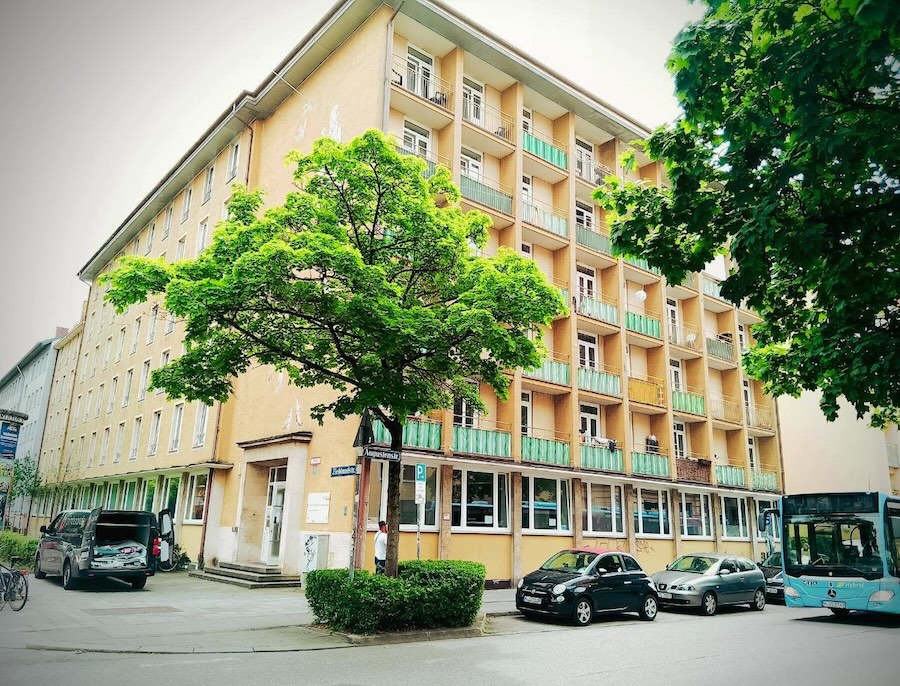
The Caritas Youth Housing at Augustenstrasse in Munich The Technical University of Munich is right next door, five world-famous museums are just a few minutes away. Living here means being able to immerse yourself in a broad spectrum of true diversity, which is a bit unusual for Munich.
Famous Christian scholar and ancient bishop Augustine - who perhaps gave his name to the street on which the Catholic dormitory for young people is located — would certainly be satisfied with his street's surroundings 1,700 years after his death, were it not for the aforementioned sale of the dormitory.
Caritas announced that the entire site will be sold directly to an interested party, prompting the collection of millions of euros. The tenancy rights will be secured for an additional three years. In other words, the young people can stay until mid-2028 at the latest. After that, the dormitory will likely be demolished and replaced with a modern, expensive multi-family apartment building — a prospect that would probably horrify the ancient Saint Augustine.
Whether the current Catholic Bishop of Munich, Cardinal Reinhard Marx, 1700 years later, is just as appalled by the sale of the dormitory remains somewhat open at present. The sale terms and conditions are being examined, is what Munich's Catholic Ordinariate has proclaimed. What exactly this means remains uncertain. There are a number of opportunities for today's colleague Marx of the ancient Augustine of yesteryear to intervene in the sale of the site. At the end of the 1970s, comprehensive basic regulations for church ministry were passed,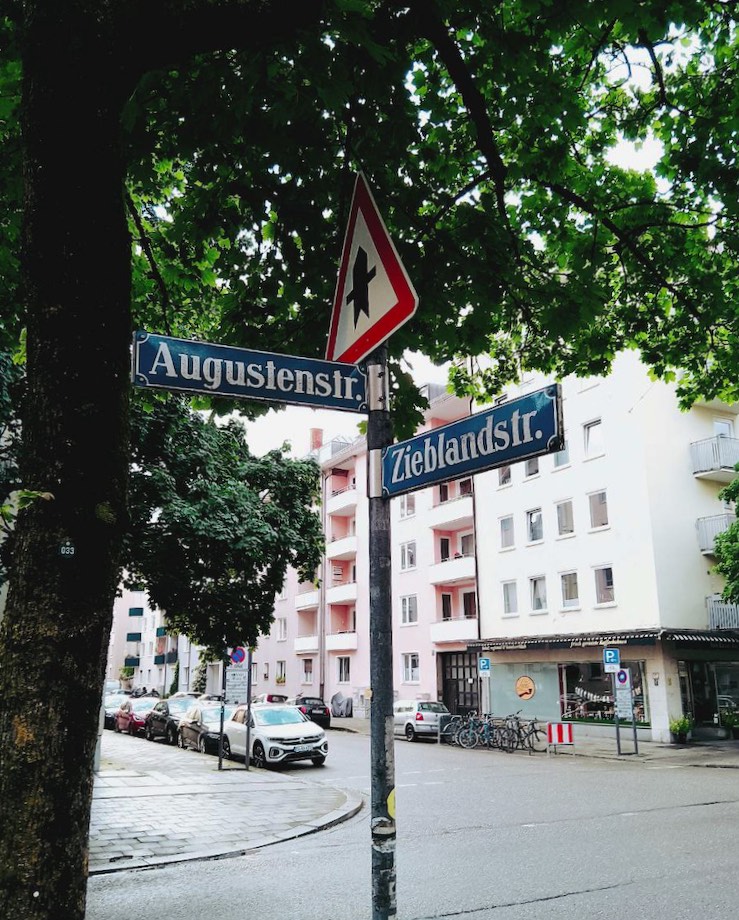 which were only legally adopted 23 years later, but since then local bishops have extensive rights and a say in a number of Caritas decisions - including and especially via diocesan finance councils, as well as in personnel decisions.
Also, the Bishop of Munich, Reinhard Cardinal Marx, has a long-standing theological focus on the Church's social doctrine. In other words, he is an expert in exactly that discipline which asks how the Church should engage in the world. For years, Cardinal Marx has tirelessly emphasized the need to support socially disadvantaged people. He advocates for redistributing money from the wealthy to the poor through taxes, for example.
Furthermore, it was the Cardinal from Munich himself who, around 10 years ago, finally managed to publish the asset registers of the Archdiocese of Munich and Freising for the first time in modern Church history, contrary to the Church's longstanding tradition of secrecy. It was revealed that the archdiocese around Munich alone has total assets amounting to a whopping 6.3 billion (not million !) euros. These assets include a wide range of land and real estate, as well as hundreds of millions of euros in bonds and company shares. In light of these facts and the first public calls to preserve the dormitory, it will be interesting to see how the Munich diocese will react to the sale of the Caritas dormitory. There seems to be real tension in the air.
Altogether perhaps not entirely dissimilar to the tension in Augustine's life. Around the year 380, he initially found the Bible to be far too crude and brittle compared to other texts of the time. Instead of devoting himself to Christian doctrine, the ancient bishop spent a long time studying and teaching a philosophical discipline that dealt with the distinction between good and evil, light and dark, good and bad. Only then did he immerse himself in biblical messages.
A not entirely nonsensical regression, probably needed when looking at the sale of the Caritas residential home on Munich's Augustenstrasse, one might think.

Copied
00:00
The residential building is home to mostly young people who can afford to live there — a rare opportunity in Munich. It is a meeting place for trainees, students, and young migrants. For many years, young people from challenging social backgrounds have also found affordable accommodations in the ideal social environment of Augustenstraße. After decades of sophisticated urban planning, smaller stores of all kinds have accumulated here. The area has remained attractive and authentic — an ideal environment for young people who are otherwise situated in much more remote, high-rise apartment buildings in dull outlying districts.
Strolling up and down Augustenstrasse has a calming effect on the mind and soul. Unlike other areas of Munich, it is not showy or trendy. You can find everything from a small car dealership and a generations-old sewing machine store to quaint antique shops, chic and small kebab stores, Asian and Indian food groceries, snack bars, and inviting cafés with small theaters in the back - or even ones with original seatings and sofas from the 1960s.
The Caritas Youth Housing at Augustenstrasse in Munich
Famous Christian scholar and ancient bishop Augustine - who perhaps gave his name to the street on which the Catholic dormitory for young people is located — would certainly be satisfied with his street's surroundings 1,700 years after his death, were it not for the aforementioned sale of the dormitory.
Caritas announced that the entire site will be sold directly to an interested party, prompting the collection of millions of euros. The tenancy rights will be secured for an additional three years. In other words, the young people can stay until mid-2028 at the latest. After that, the dormitory will likely be demolished and replaced with a modern, expensive multi-family apartment building — a prospect that would probably horrify the ancient Saint Augustine.
Whether the current Catholic Bishop of Munich, Cardinal Reinhard Marx, 1700 years later, is just as appalled by the sale of the dormitory remains somewhat open at present. The sale terms and conditions are being examined, is what Munich's Catholic Ordinariate has proclaimed. What exactly this means remains uncertain. There are a number of opportunities for today's colleague Marx of the ancient Augustine of yesteryear to intervene in the sale of the site. At the end of the 1970s, comprehensive basic regulations for church ministry were passed,
Also, the Bishop of Munich, Reinhard Cardinal Marx, has a long-standing theological focus on the Church's social doctrine. In other words, he is an expert in exactly that discipline which asks how the Church should engage in the world. For years, Cardinal Marx has tirelessly emphasized the need to support socially disadvantaged people. He advocates for redistributing money from the wealthy to the poor through taxes, for example.
Furthermore, it was the Cardinal from Munich himself who, around 10 years ago, finally managed to publish the asset registers of the Archdiocese of Munich and Freising for the first time in modern Church history, contrary to the Church's longstanding tradition of secrecy. It was revealed that the archdiocese around Munich alone has total assets amounting to a whopping 6.3 billion (not million !) euros. These assets include a wide range of land and real estate, as well as hundreds of millions of euros in bonds and company shares. In light of these facts and the first public calls to preserve the dormitory, it will be interesting to see how the Munich diocese will react to the sale of the Caritas dormitory. There seems to be real tension in the air.
Altogether perhaps not entirely dissimilar to the tension in Augustine's life. Around the year 380, he initially found the Bible to be far too crude and brittle compared to other texts of the time. Instead of devoting himself to Christian doctrine, the ancient bishop spent a long time studying and teaching a philosophical discipline that dealt with the distinction between good and evil, light and dark, good and bad. Only then did he immerse himself in biblical messages.
A not entirely nonsensical regression, probably needed when looking at the sale of the Caritas residential home on Munich's Augustenstrasse, one might think.
Leave a comment:
Send
Send
Recommended:

May 4, 2025
When The Cat's Away
Germany's Bish Operation

June 16, 2022
The Thing With the Bread
About pyramid priesthoods and the history of bread

July 24, 2020
The Art of Deception
About Michelangelo and The Sixtine Chapel

May 7, 2019
An urgently needed Pope change
About pervert attitudes and productive dialogues

October 18, 2018
A Deafening Silence
About an expressive quietness of Pope Francis

June 10, 2017
Disgraceful
About the connection between Pope Francis and George Soros

April 23, 2017
A Poor Catholic Meal
About the empty bread basket on the other side of the street

April 17, 2017
A tragic bishop from Munich
About A.I. and the church social romantics

April 9, 2017
What Pope-Posters from Rome teach us
About left-liberal church elites and their biased media

September 26, 2017
A new way of becoming a celebrity
About how Pope Francis turned into an American Football fan

March 10, 2017
Pilgrimage to Jerusalem
A short story on ecumenism

March 3, 2017
Hebrew or Greek ?
About the differences of two cultures
Recommended:
When The Cat's Away
Germany's Bish Operation


