Mein Threesome Kampf
How Bavarian justices, Rudolf Hess and Karl Haushofer wrote the Nazi blueprint book
December 12, 2025
1788597448


Dark Mode
Listen to this article
Mein Threesome Kampf


Every German schoolchild is taught the same story: in 1924, after the failed Beer Hall Putsch, Adolf Hitler sat alone in a prison cell in Landsberg am Lech and wrote Mein Kampf, the work of a solitary, demonic genius.
That story is largely a lie.
It began with one photograph from Adolf Hitler's prison stay following his failed putsch from November 1923 in Munich. Hitler and his then best friend and confidant Rudolf Hess in a flower-decorated cell, clean shirts, wicker chair, framed pictures on the wall. More student flat than actual prison.
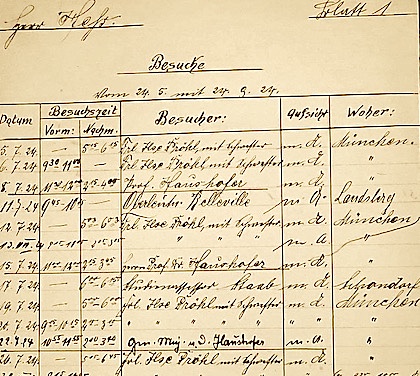
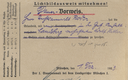
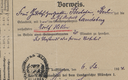
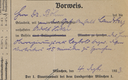
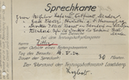
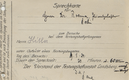
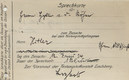
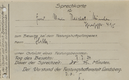
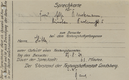
Here is what actually happened between April and December 1924. After Hitler banned the earlier flood of visitors in July, aside from further legal and personal visits, one outsider still received weekly permission from the Bavarian prison authorities: Professor Karl Haushofer, the father of German Geopolitik, hardcore Darwinist, too. More than thirty visits are logged as “wissenschaftliche Unterrichtung”, academic instruction.
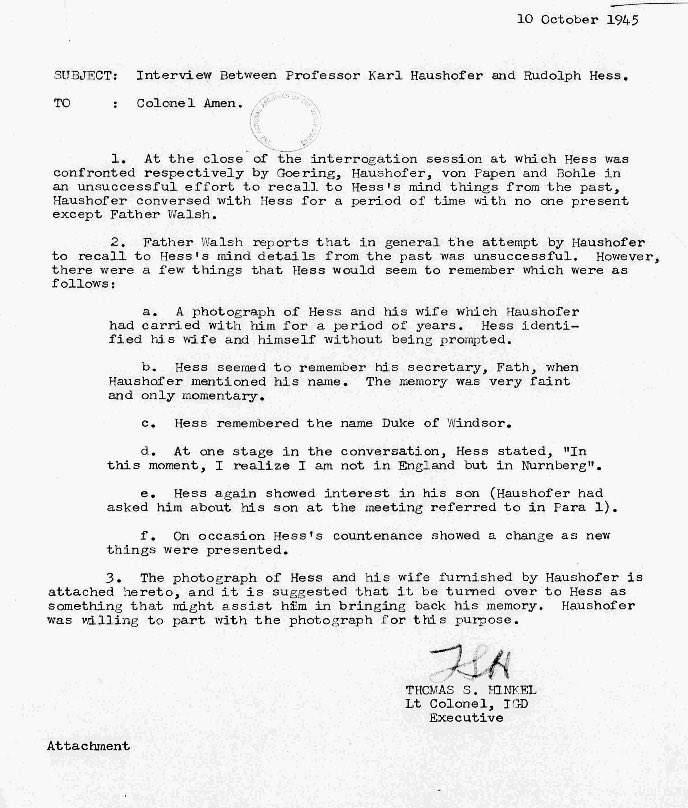
Rudolf Hess sat beside Hitler, took notes, and typed every evening on a state-supplied typewriter. The core foreign-policy ideas, Lebensraum, territorial expansion, autarky, radical Darwinism were hammered out in those hour-long seminars in the summer of 1924. Each evening Hess transformed Hitler’s rambling monologues into actual chapters - hammering them onto paper with his prison typewriter, providing the structure and editing grammar. Hitler never wrote a coherent chapter himself and later admitted it. Not enough, Karl Haushofer's geopolitical convictions directly infused Mein Kampf 's foreign policy sections, which Haushofer himself admitted to during his Nuremberg interrogations in 1945:
Q: Isn't it true that Hess collaborated with Hitler in writing “Mein Kampf?"
Haushofer: As far as I know, Hess actually dictated many chapters of that book. Hess was able to type, while Hitler was not.
Q: Then, do I understand that you would discuss these matters with Hess and then Hess in turn would discuss them with Hitler and that is how they got the book?
Haushofer: In matters where I saw that neither Hitler nor Hess had any geographical idea. I tried to visit Hess and tried to explain [it] to him...
Karl Haushofer during his 1945 interrogation at the Nuremberg Trial (page 6) / Original at NARA
This was no oversight and no coincidence. The Landsberg “university” was deliberately created and protected by a tightly knit group of Bavarian officials who treated the national-socialist putschists with velvet gloves while crushing all political and even genetic opponents with an iron fist. The very same Bavarian justice men who turned a prison sentence into a state-funded ideological workshop would, within a few years, occupy the highest legal positions in the Third Reich. Their signatures on visitor permits, typewriter authorizations, and lenient sentences in 1924 were the first building blocks of the machinery that would later enable industrialised mass murder:
These were not anonymous bureaucrats. These were the very men who, from the same desks and with the same signatures, would go on to build the legal framework of the Third Reich. The Bavarian justice system did not merely fail to stop National Socialism in 1924. It actively midwifed it. For eighty years the German public has been fed the lone-genius myth while Google labels documented history as fantasy, Xs 'Community Notes' blocks sourced corrections for years, and the Bavarian archives scatter the Hess testimony files across depots during a so-called "renovation" that conveniently ends in part "as late as 2030".
4 visits
7 visits
2 visits
2 visits
100 visits
101 visits
63 visits
21 visits
16 visits
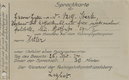
18 visits
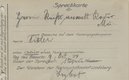
3 visits
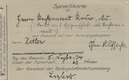
4 visits
'Mein Kampf' was not the work of one madman in a cell. It was a state-sponsored legal collaboration between a professor, a deputy, and a failed putschist, midwifed by the Bavarian justice system that would later staff the Third Reich.
Even Rudolf Hess tried to hide this during his initial interrogations in 1945, claiming first memory loss. Not much later, he stated in court that this was, quote, "tactical in nature."
The cradle of National Socialism was not a beer hall in Munich. It was a flower-decorated prison cell in Landsberg am Lech near Lake Ammersee, paid for by the Free State of Bavaria.

Copied
That story is largely a lie.
It began with one photograph from Adolf Hitler's prison stay following his failed putsch from November 1923 in Munich. Hitler and his then best friend and confidant Rudolf Hess in a flower-decorated cell, clean shirts, wicker chair, framed pictures on the wall. More student flat than actual prison.
Link: Copies of Rudolf Hess' visitor logs during his prison stay at Landsberg am Lech
(contain proof of multiple 'Prof. Haushofer' prison visits)
(contain proof of multiple 'Prof. Haushofer' prison visits)
Here is what actually happened between April and December 1924. After Hitler banned the earlier flood of visitors in July, aside from further legal and personal visits, one outsider still received weekly permission from the Bavarian prison authorities: Professor Karl Haushofer, the father of German Geopolitik, hardcore Darwinist, too. More than thirty visits are logged as “wissenschaftliche Unterrichtung”, academic instruction.
Link: Copies of some of Rudolf Hess' interrogations at the Nuremberg trial, 1945
Rudolf Hess sat beside Hitler, took notes, and typed every evening on a state-supplied typewriter. The core foreign-policy ideas, Lebensraum, territorial expansion, autarky, radical Darwinism were hammered out in those hour-long seminars in the summer of 1924. Each evening Hess transformed Hitler’s rambling monologues into actual chapters - hammering them onto paper with his prison typewriter, providing the structure and editing grammar. Hitler never wrote a coherent chapter himself and later admitted it. Not enough, Karl Haushofer's geopolitical convictions directly infused Mein Kampf 's foreign policy sections, which Haushofer himself admitted to during his Nuremberg interrogations in 1945:
Q: Isn't it true that Hess collaborated with Hitler in writing “Mein Kampf?"
Haushofer: As far as I know, Hess actually dictated many chapters of that book. Hess was able to type, while Hitler was not.
Q: Then, do I understand that you would discuss these matters with Hess and then Hess in turn would discuss them with Hitler and that is how they got the book?
Haushofer: In matters where I saw that neither Hitler nor Hess had any geographical idea. I tried to visit Hess and tried to explain [it] to him...
Karl Haushofer during his 1945 interrogation at the Nuremberg Trial (page 6) / Original at NARA
This was no oversight and no coincidence. The Landsberg “university” was deliberately created and protected by a tightly knit group of Bavarian officials who treated the national-socialist putschists with velvet gloves while crushing all political and even genetic opponents with an iron fist. The very same Bavarian justice men who turned a prison sentence into a state-funded ideological workshop would, within a few years, occupy the highest legal positions in the Third Reich. Their signatures on visitor permits, typewriter authorizations, and lenient sentences in 1924 were the first building blocks of the machinery that would later enable industrialised mass murder:
| Name | Role | Fate Post-1933 | Key Actions |
|---|---|---|---|
| Franz Gürtner | Bavarian Minister of Justice 1922–1932 | Reich Minister of Justice 1933–1941 | Set the political tone for the extraordinarily lenient treatment of national-socialist putschists while most other prisoners were treated with Bavarian brutality |
| Regierungsrat Dr. Hans Frank | Senior official in the Bavarian Justice Ministry 1923–1926 | Hitler’s personal lawyer, Butcher of Poland | Implicated in oversight failures and influence peddling, Governor-General of occupied Poland, called "Butcher of Poland", hanged at Nuremberg |
| Dr. Otto Leybold | Director of Landsberg Fortress Prison in 1924 | died in 1933 at age 68 | Personally signed every single one of Haushofer’s weekly visit permits, authorised the typewriter for Hess, allowed extra furniture, flowers, private dictation sessions, beer deliveries, and open cells. Issued reports about Hitler as "reasonable, frugal, modest, and polite" |
| Landgerichtsdirektor Georg Kreuzinger | Presiding judge at the 1924 trial | key judge at Landgericht München I | Presided the Munich People’s Court against Hitler and co-conspirators, handed Hitler the mildest possible sentence (Festungshaft instead of Zuchthaus), ensured the trial itself became a propaganda stage, guaranteed the prison regime remained comfortable. Served as a judge in the Landgericht München I (Munich Regional Court) until at least the late 1930s, handling civil and criminal cases under the increasingly politicized system (Sondergerichte) |
Table: The men who turned a prison sentence into the founding seminar of the Third Reich
These were not anonymous bureaucrats. These were the very men who, from the same desks and with the same signatures, would go on to build the legal framework of the Third Reich. The Bavarian justice system did not merely fail to stop National Socialism in 1924. It actively midwifed it. For eighty years the German public has been fed the lone-genius myth while Google labels documented history as fantasy, Xs 'Community Notes' blocks sourced corrections for years, and the Bavarian archives scatter the Hess testimony files across depots during a so-called "renovation" that conveniently ends in part "as late as 2030".
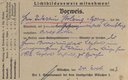
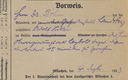
Visitor Logs (Sprechkarten) from Adolf Hitler's Landsberg Imprisonment
Chronological selection of representative visitor cards (Nov 1923 – Nov 1924)
Chronological selection of representative visitor cards (Nov 1923 – Nov 1924)
November 1923
Early visits, post-arrest
4 visits 
December 1923
Christmas period
7 visits
January 1924
Trial in motion
2 visits
February 1924
Trial in motion
2 visits
March 1924
Pre-verdict
0 visits
April 1924
Many post-verdict visits
100 visits
May 1924
Flood of visitors
101 visits
June 1924
Visitors reduced
63 visits
July 1924
Even fewer visitors
21 visits
August 1924
Summer visitors
16 visits
September 1924
Summer visitors
18 visits
October 1924
Fall visitors
3 visits
November 1924
Pardon period
4 visits
'Mein Kampf' was not the work of one madman in a cell. It was a state-sponsored legal collaboration between a professor, a deputy, and a failed putschist, midwifed by the Bavarian justice system that would later staff the Third Reich.
Even Rudolf Hess tried to hide this during his initial interrogations in 1945, claiming first memory loss. Not much later, he stated in court that this was, quote, "tactical in nature."
Rudolf Hess testimony during the Nuremburg trial, 1945
The cradle of National Socialism was not a beer hall in Munich. It was a flower-decorated prison cell in Landsberg am Lech near Lake Ammersee, paid for by the Free State of Bavaria.
Leave a comment:
Send
Send
Recommended:
4 May 2026
The Missing Pieces
A Completed National-Socialist Jigsaw Puzzle
12 January 2026
The Geopolitics Influencer
Karl Haushofer's Nazi blueprint

25 September 2023
Munich
About consulting organisations and the history of Germany's secret capital

22 October 2024
Ballas
About Dallas in Bavaria and dirty political attacks

3 August 2025
NordStream Refilled
The Gas Pipeline Saga Unveiled - Episode 1

15 December 2024
Giorgia and The Magician
About a political fairy tale from Italy and a novel by Thomas Mann

16 January 2025
NordStream Refilled
About high-flying Poseidon planes over the NordStream pipelines

26 January 2024
A Southeastern Blitzkrieg
About Germany's civil war and the origins of the term Blitzkrieg

11 November 2022
A Bavarian Justice-Aikido
About a Bavarian martial justice scandal and knights from Jerusalem

28 March 2022
One Damn American Thing After Another
About William Barr and Dominion Energy

2 February 2022
SwedenLeaks
About Wikileaks persecutions and Swedish Knullkompis

28 November 2021
From Washington with Love
About an American indictment and the Church in England

18 February 2021
Bavariacard
About a Germanic Wirecard Poker

24 April 2020
Blaming Russia with Boomerang
About the biggest political scandal in the history of the United States

25 July 2019
Saving Lieutenant Mueller
About how a decorated Vietnam war hero turned into the head of a political terror unit

8 September 2019
A Difficult Birth
About Barack Obama's strange birth certificate

6 January 2021
Uncle Joe's Cabin
About Joe Biden's corruption scandals and the beginning of the civil war

11 March 2020
A Crowded Strike
About Crowdstrike and ill-led IT analyses

20 January 2019


