The Cold War Matryoshka
Jan Marsalek, the Russian-spy poster and the ignored CIA messages
November 6, 2026
1794044219


Dark Mode
Jan Marsalek, former chief operating officer of the Wirecard group that went bust in mid-2020, and one of the most wanted men on earth, has been turned in Western Europe into a matryoshka with Moscow's face painted on every layer. Der Spiegel asks whether he is an agent of Russia, and then marks its own homework: yes. Reuters promotes him from fraudster to Russian spymaster. ZDF bills a film Russia's top spy. A German telling now doing the rounds as Das Doppelleben des Wirecard-Vorstands offers the same double life the rest of the chorus prefers, the one that faces east. At the Old Bailey in London, in March 2025, a Bulgarian cell was convicted of spying for Russia. Marsalek was cast as the man in Moscow who ran them, but nobody got round to charging him personally whatsoever.
The Financial Times, meanwhile, is holding the more awkward matryoshka. It read the messages aloud in an episode of the Hot Money podcast, and then did what the FT had already done in 2018: filed them under strange, and moved on. The quotations are in The Uncles' CIA Rogue Fixer. Open as many of the larger dolls as you like, the little one buried inside is always the same.
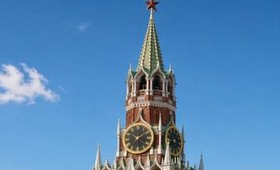

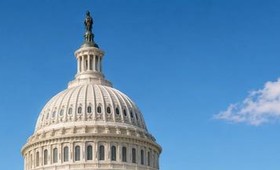

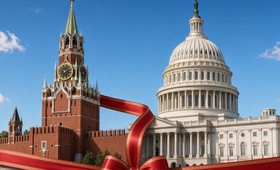
The Doll with One Face
The public version is by now a reliable piece of theatre. Marsalek, Wirecard's operating chief, vanishes in June 2020 as the company collapses. He turns up in Moscow, on the strength of travel records, chats, and the digging of journalists and police. From there, British prosecutors say, he ran Orlin Roussev and a Bulgarian ring spying across Europe for Russian intelligence. When the Old Bailey convicted three of them on 7 March 2025, the headlines wrote themselves. Reuters: a fugitive who "was a Russian spy directing espionage operations across Europe, according to British authorities." Spiegel, ZDF, the Austrian papers and the documentary circuit had been on that road for years. Open the doll. Inside, endlessly, is another doll, and on its forehead someone has stamped Moscow, GRU and FSB, and nothing else.
Munich, when it finally spoke on the subject after four years of the Wirecard criminal trial, went to the other extreme and stayed just as blind. On 14 October 2026 the chamber called claims that Marsalek had worked for Russian intelligence "completely unconfirmed," mere "vague reports in various press articles," and declined to look at his communications at all. London convicts a spy ring and plants him in Moscow's hand, then somehow forgets to charge Jan Marsalek personally, in any way at all. Munich's doll is a different toy. After four years it announces that his Russian entanglements were mere talk, bolts every door, and leaves the public a Bavarian doll from which every Moscow, FSB and GRU label has been carefully washed off.
Neither pose fits the record, in which Marsalek talks to both of the other sides, and works with them. A courtroom can face east. It can also refuse to face anywhere. What it cannot do, on this file, is claim to have read the real papers.
Fourteen Months Later
The date that should have stopped the sequel is 17 August 2021. Wirecard had been insolvent for fourteen months. Marsalek was a fugitive. The same Telegram traffic London used to paint him as Moscow's man shows him, in that very period, under the FSB's thumb: wrestling, as he told Roussev, with "the cash crypto guy and the FSB," and needing the service's blessing for something as small as a cleaning lady. Helen Warrell, who covered the trial for the Financial Times, describes a life in Moscow that was fenced in and supervised, a man forever having to prove his use to the FSB and the GRU. That is the captivity story, and it is in the chats.
It is not the only thing in the chats. Three days after the Kabul airlift began, Marsalek wrote to Roussev:
Roussev replied that his father had spent years flying in "exotic locations," including running guns into Africa. Marsalek's answer was the line of a man enjoying the part: "America needs you. Pax Americana rests on your broad and manly shoulders." Then came aircraft types, cost, timing, landing rights and the state of the airport. "Just discussing with the Americans," he wrote. "Apparently, since 11am today, the airport is OK. And 15 military aircraft took off today, but it can change any moment." This is not a joke from a Bavarian regulars' table. It is an operations chat, dated, and it was read into a sentencing hearing at the Old Bailey in May 2025 because Roussev's lawyer wanted it on the record.
The London prosecution wanted that chat back off the record, and quickly. There was, it told the judge in spring 2025, no evidence the CIA had ever made such a request, and no humanitarian motive either. These were men who took work from whoever was paying. Court filings reported by Reuters go one step further. The client, prosecutors said, was not the US government directly but Constellis, a US-American private security firm. We report that as what was put to the London court, not as a finding that the messages might have been invented. The messages are Marsalek's. He attributes the request to "friends at the CIA" and says he is "just discussing with the Americans," while in the same breath he is wrestling the supposed arch-enemy, the Moscow state machine, over a cleaning lady and a crypto payment.
Sam Jones, who reported the Financial Times series, leaves three possibilities open, and they are the honest ones. Marsalek was duped, and the people on the other end had nothing to do with the CIA. He was lying, to impress Roussev or to muddy the water. Or it was true, and he really was trying to arrange flights for people at the CIA, or for people close to it. A serious newspaper would have held the audience at that fork and kept reporting. What the audience got, before and after, was the ceremonial portrait instead: Spymaster of Moscow, suitable for a corridor in Buckingham Palace.
The Uncles, Filed under Miscellaneous
The Western door was not a one-off crack in the summer of Kabul. It was already open in the winter of 2018, when Marsalek was still, often enough, at his desk in Aschheim, and nobody at Wirecard had fled anywhere.
An anonymous tip sent the Financial Times a chain of ProtonMail messages. Someone in Hong Kong had been copied by mistake. A reporter collected hard copies, and they were faxed to London, which is a charming way to handle a leak in the 21st century. In them Marsalek introduces himself to a circle that signs itself "The Uncles," and asks for help moving Austria's embassy from Tel Aviv to Jerusalem: an informal channel to the American position, and a hand in "shaping the domestic dialogue" in Vienna.
The FT people say they set the links aside. Fraud was the Wirecard story, the embassy gambit looked odd, and at the FT odd is apparently filed at once under miscellaneous. Seven years later, with the Kabul messages on the desk, Jones wondered whether there had been a network after all, "a group with links to the CIA that Marsalek had somehow found his way into." His own conclusion, late and quiet, is the sentence the series title then gives away: "This isn't just a Russia thing anymore."
It is worth being dull about the dates, because the Marsalek narrative lives by blurring them. The former CIA officer and the former ambassador are in the 2018 emails, before the escape, not in a telegram from Moscow in 2021. The request Marsalek attributes to friends at the CIA is the later one, August 2021, when the press already had him in Russia and under the FSB's eye. Put together, the picture is worse for the poster, not better. Western intelligence circles and retired American diplomats were in his inbox while he was still a DAX board member. A year after he ran, and while he was apparently living at the FSB's pleasure, he was still taking on what he described as work for the Americans. The ambassadors did not suddenly discover him in a Moscow flat. The relationship, on the Financial Times' own account, was older than the legend.
The Sequel to the Illusion
None of this makes Marsalek a Western hero, and we are not advertising him as one. The London evidence that he tasked a spy ring, talked weapons, diamonds and drones, and bargained with Russian services belongs in the same file. A man can run Moscow's errands and still pick up the phone for people who once worked in Langley and at the State Department. That is not a paradox. It is the oldest trade in the business. The cold-coffee war is something else: the dogged insistence, on every mass-media channel, that the trade only runs one way.
The projection is the product. For the West, Marsalek is Moscow's creature, proof that the enemy sits over there and that our own services simply cannot catch him in Russia. In Moscow the same man does nicely as a trophy and a mirror: the West's fraudster, now ours, proof that the rot sits in Munich and London. Each side holds up the matryoshka that flatters it. Each side has a reason to leave the Uncles unnamed, and to leave the August 2021 chat buried in a court file the British prosecution is praised for wiping. The audience, shown only the exchange of caricatures, never has to consider that circles in Washington and circles in Moscow spent years in the same correspondence, with the same fugitive.
It is a sequel, and it is an anachronism: a Cold War revival staged so that the overlap itself is not allowed on the programme. The revival can actually end only when the file is at last read in both directions. Only then, when a former CIA officer, a former American ambassador and a request Marsalek attributed to the CIA are treated as part of the case, and no longer as a patch of fog in the way.
Until then the public will not be fully told about Jan Marsalek, or about Wirecard either. It will be drowned, headline by headline, in a conflict that the people who actually write to each other left a long time ago.


Copied
The Financial Times, meanwhile, is holding the more awkward matryoshka. It read the messages aloud in an episode of the Hot Money podcast, and then did what the FT had already done in 2018: filed them under strange, and moved on. The quotations are in The Uncles' CIA Rogue Fixer. Open as many of the larger dolls as you like, the little one buried inside is always the same.
The Doll with One Face
1
In Western Europe Jan Marsalek has become a matryoshka with Moscow's face on every layer. Spiegel, Reuters and ZDF call him a Russian spy. In March 2025 the Old Bailey convicted a Bulgarian cell of spying for Russia and cast him as the man who ran it. Nobody charged him. Munich, four years in, calls the Russian story mere talk and hands back a doll with the labels washed off.
In Western Europe Jan Marsalek has become a matryoshka with Moscow's face on every layer. Spiegel, Reuters and ZDF call him a Russian spy. In March 2025 the Old Bailey convicted a Bulgarian cell of spying for Russia and cast him as the man who ran it. Nobody charged him. Munich, four years in, calls the Russian story mere talk and hands back a doll with the labels washed off.
Fourteen Months Later
2
On 17 August 2021, a fugitive under the FSB's thumb, down to the cleaning lady, Marsalek asked Roussev for rogue aircraft out of Kabul. The request, he wrote, came from friends at the CIA. London said there was no evidence, and pointed to the US firm Constellis. The messages are still his. The audience got the Buckingham Palace portrait instead.
On 17 August 2021, a fugitive under the FSB's thumb, down to the cleaning lady, Marsalek asked Roussev for rogue aircraft out of Kabul. The request, he wrote, came from friends at the CIA. London said there was no evidence, and pointed to the US firm Constellis. The messages are still his. The audience got the Buckingham Palace portrait instead.
The Uncles
3
The Western door was already open in the winter of 2018, while Marsalek was still at his desk in Aschheim. Emails to a circle called the Uncles, a former CIA officer and a former US ambassador among them, asked for help moving Austria's embassy to Jerusalem. The Financial Times faxed the leak to London and filed it under miscellaneous.
The Western door was already open in the winter of 2018, while Marsalek was still at his desk in Aschheim. Emails to a circle called the Uncles, a former CIA officer and a former US ambassador among them, asked for help moving Austria's embassy to Jerusalem. The Financial Times faxed the leak to London and filed it under miscellaneous.
The Sequel to the Illusion
4
A man can run Moscow's errands and still take calls from people who used to work in Washington. That is the oldest trade. The cold-coffee war is the insistence that it only runs one way. The sequel ends when the file is read in both directions, and the Uncles are no longer a patch of fog.
A man can run Moscow's errands and still take calls from people who used to work in Washington. That is the oldest trade. The cold-coffee war is the insistence that it only runs one way. The sequel ends when the file is read in both directions, and the Uncles are no longer a patch of fog.
The Doll with One Face
The public version is by now a reliable piece of theatre. Marsalek, Wirecard's operating chief, vanishes in June 2020 as the company collapses. He turns up in Moscow, on the strength of travel records, chats, and the digging of journalists and police. From there, British prosecutors say, he ran Orlin Roussev and a Bulgarian ring spying across Europe for Russian intelligence. When the Old Bailey convicted three of them on 7 March 2025, the headlines wrote themselves. Reuters: a fugitive who "was a Russian spy directing espionage operations across Europe, according to British authorities." Spiegel, ZDF, the Austrian papers and the documentary circuit had been on that road for years. Open the doll. Inside, endlessly, is another doll, and on its forehead someone has stamped Moscow, GRU and FSB, and nothing else.
Jan Marsalek, the Wirecard executive who went on the run five years ago after the dramatic implosion of the German payments company, was a Russian spy directing espionage operations across Europe, according to British authorities.
Michael Holden, "Wirecard fugitive Jan Marsalek: from financial fraudster to Russian spymaster?" (Reuters, 7 March 2025)
Michael Holden, "Wirecard fugitive Jan Marsalek: from financial fraudster to Russian spymaster?" (Reuters, 7 March 2025)
Munich, when it finally spoke on the subject after four years of the Wirecard criminal trial, went to the other extreme and stayed just as blind. On 14 October 2026 the chamber called claims that Marsalek had worked for Russian intelligence "completely unconfirmed," mere "vague reports in various press articles," and declined to look at his communications at all. London convicts a spy ring and plants him in Moscow's hand, then somehow forgets to charge Jan Marsalek personally, in any way at all. Munich's doll is a different toy. After four years it announces that his Russian entanglements were mere talk, bolts every door, and leaves the public a Bavarian doll from which every Moscow, FSB and GRU label has been carefully washed off.
Neither pose fits the record, in which Marsalek talks to both of the other sides, and works with them. A courtroom can face east. It can also refuse to face anywhere. What it cannot do, on this file, is claim to have read the real papers.
Fourteen Months Later
The date that should have stopped the sequel is 17 August 2021. Wirecard had been insolvent for fourteen months. Marsalek was a fugitive. The same Telegram traffic London used to paint him as Moscow's man shows him, in that very period, under the FSB's thumb: wrestling, as he told Roussev, with "the cash crypto guy and the FSB," and needing the service's blessing for something as small as a cleaning lady. Helen Warrell, who covered the trial for the Financial Times, describes a life in Moscow that was fenced in and supervised, a man forever having to prove his use to the FSB and the GRU. That is the captivity story, and it is in the chats.
It is not the only thing in the chats. Three days after the Kabul airlift began, Marsalek wrote to Roussev:
Interesting request for our sort of friends at the CIA. They urgently need aircraft to fly out contractors from Afghanistan. Apparently, all dodgy airlift companies in Russia and Turkey, etc are already sold out or refuse to fly because insurance won't cover the loss of an aircraft. Do you know anyone who's a bit rogue and operates large-scale aeroplanes?
Jan Marsalek to Orlin Roussev, 17 August 2021, as read in the Financial Times podcast Hot Money, episode 8, "Matryoshka"
Jan Marsalek to Orlin Roussev, 17 August 2021, as read in the Financial Times podcast Hot Money, episode 8, "Matryoshka"
Roussev replied that his father had spent years flying in "exotic locations," including running guns into Africa. Marsalek's answer was the line of a man enjoying the part: "America needs you. Pax Americana rests on your broad and manly shoulders." Then came aircraft types, cost, timing, landing rights and the state of the airport. "Just discussing with the Americans," he wrote. "Apparently, since 11am today, the airport is OK. And 15 military aircraft took off today, but it can change any moment." This is not a joke from a Bavarian regulars' table. It is an operations chat, dated, and it was read into a sentencing hearing at the Old Bailey in May 2025 because Roussev's lawyer wanted it on the record.
The London prosecution wanted that chat back off the record, and quickly. There was, it told the judge in spring 2025, no evidence the CIA had ever made such a request, and no humanitarian motive either. These were men who took work from whoever was paying. Court filings reported by Reuters go one step further. The client, prosecutors said, was not the US government directly but Constellis, a US-American private security firm. We report that as what was put to the London court, not as a finding that the messages might have been invented. The messages are Marsalek's. He attributes the request to "friends at the CIA" and says he is "just discussing with the Americans," while in the same breath he is wrestling the supposed arch-enemy, the Moscow state machine, over a cleaning lady and a crypto payment.
Sam Jones, who reported the Financial Times series, leaves three possibilities open, and they are the honest ones. Marsalek was duped, and the people on the other end had nothing to do with the CIA. He was lying, to impress Roussev or to muddy the water. Or it was true, and he really was trying to arrange flights for people at the CIA, or for people close to it. A serious newspaper would have held the audience at that fork and kept reporting. What the audience got, before and after, was the ceremonial portrait instead: Spymaster of Moscow, suitable for a corridor in Buckingham Palace.
The Uncles, Filed under Miscellaneous
The Western door was not a one-off crack in the summer of Kabul. It was already open in the winter of 2018, when Marsalek was still, often enough, at his desk in Aschheim, and nobody at Wirecard had fled anywhere.
An anonymous tip sent the Financial Times a chain of ProtonMail messages. Someone in Hong Kong had been copied by mistake. A reporter collected hard copies, and they were faxed to London, which is a charming way to handle a leak in the 21st century. In them Marsalek introduces himself to a circle that signs itself "The Uncles," and asks for help moving Austria's embassy from Tel Aviv to Jerusalem: an informal channel to the American position, and a hand in "shaping the domestic dialogue" in Vienna.
One of them is a very senior former CIA officer, somebody who oversaw active operations in a certain theatre of war. Another one is a former US ambassador. We're talking here about people who are basically ex-US military, ex-US intelligence, all talking together online and calling themselves as a group the Uncles.
Paul Murphy, then of the Financial Times, in Hot Money, episode 8. The paper has not named them.
Paul Murphy, then of the Financial Times, in Hot Money, episode 8. The paper has not named them.
The FT people say they set the links aside. Fraud was the Wirecard story, the embassy gambit looked odd, and at the FT odd is apparently filed at once under miscellaneous. Seven years later, with the Kabul messages on the desk, Jones wondered whether there had been a network after all, "a group with links to the CIA that Marsalek had somehow found his way into." His own conclusion, late and quiet, is the sentence the series title then gives away: "This isn't just a Russia thing anymore."
It is worth being dull about the dates, because the Marsalek narrative lives by blurring them. The former CIA officer and the former ambassador are in the 2018 emails, before the escape, not in a telegram from Moscow in 2021. The request Marsalek attributes to friends at the CIA is the later one, August 2021, when the press already had him in Russia and under the FSB's eye. Put together, the picture is worse for the poster, not better. Western intelligence circles and retired American diplomats were in his inbox while he was still a DAX board member. A year after he ran, and while he was apparently living at the FSB's pleasure, he was still taking on what he described as work for the Americans. The ambassadors did not suddenly discover him in a Moscow flat. The relationship, on the Financial Times' own account, was older than the legend.
Hot Money, the Financial Times podcast
The Sequel to the Illusion
None of this makes Marsalek a Western hero, and we are not advertising him as one. The London evidence that he tasked a spy ring, talked weapons, diamonds and drones, and bargained with Russian services belongs in the same file. A man can run Moscow's errands and still pick up the phone for people who once worked in Langley and at the State Department. That is not a paradox. It is the oldest trade in the business. The cold-coffee war is something else: the dogged insistence, on every mass-media channel, that the trade only runs one way.
The projection is the product. For the West, Marsalek is Moscow's creature, proof that the enemy sits over there and that our own services simply cannot catch him in Russia. In Moscow the same man does nicely as a trophy and a mirror: the West's fraudster, now ours, proof that the rot sits in Munich and London. Each side holds up the matryoshka that flatters it. Each side has a reason to leave the Uncles unnamed, and to leave the August 2021 chat buried in a court file the British prosecution is praised for wiping. The audience, shown only the exchange of caricatures, never has to consider that circles in Washington and circles in Moscow spent years in the same correspondence, with the same fugitive.
It is a sequel, and it is an anachronism: a Cold War revival staged so that the overlap itself is not allowed on the programme. The revival can actually end only when the file is at last read in both directions. Only then, when a former CIA officer, a former American ambassador and a request Marsalek attributed to the CIA are treated as part of the case, and no longer as a patch of fog in the way.
Until then the public will not be fully told about Jan Marsalek, or about Wirecard either. It will be drowned, headline by headline, in a conflict that the people who actually write to each other left a long time ago.
Click the cover to get the free book
Leave a comment:
Send
Send
Recommended:

30 October 2026
Munich Shuts Every Door
And Koblenz Suddenly Sends Its Own Indictment Back
24 October 2026
Behind the Stadelheim Wall
Reading Markus Braun’s Prison Interview

12 August 2026
The Load Balancing Eclipse
A Koblenz prosecutor in Munich and the network the Wirecard gallery campaign prefers not to see
6 August 2026
The Endless Justice Round
Interrogation of a Wirecard supervisor board member

16 June 2026
The Wirecard Implosion
Anatomy of a Judiciary Disaster

23 March 2026
Timeline Wirecard Reports
A timeline of all Wirecard-related articles

27 November 2025
The KPMG Witness
Testimony of a KPMG managing partner

20 December 2025
The ProtonMail Phantom
About a Wirecard judge and Swiss blockades

9 October 2025
The eBay Laptop
A Bavarian crown witness and missing Swiss data

1 September 2025
The Uncles’ CIA Rogue Fixer
Jan Marsalek's double life the Financial Times just overlooked

31 July 2025
The Final Blast
A Wirecard court summer break summary

4 April 2025
The Implosion
About winter end time weeks in the Wirecard courtroom

18 January 2025
The Justice Colleague Ping-Pong
About a weird back and forth in the Wirecard court process

17 September 2024
Wirecard Sacked
The Court Proceeding - Season 1, Episode 1

25 August 2024
The Wirecard Summer Gap
About extorted confessions and Bavarian radio news

22 July 2024
Hotel Wirecard
About broccoli and roastbeef in Munich hotel rooms

28 June 2024
Money launding is not my thing
About Commerzbank and cancelled Wirecard credit lines

3 July 2024
Wirecard Chances
About supervisory board advising lawyers

20 June 2024
The Wirecard PR Court
About an obscure questioning of a Wirecard lawyer

15 May 2024
Wirecard Rogue
About crazy judiciary talks and on-target court motions

25 May 2024
Wirecard Untangled
About unsolved issues in Germany's master finance scandal
29 April 2024
All Inside The Singapore Folder
About Wirecard book keepings an email conversations

25 April 2024
Grand Vision Trust
A Wirecard Bank Director and Relationship Managements

19 April 2024
Mount Interim
About a Wirecard interim-CEO on a Swiss rose mountain

3 April 2024
Harvesting Wirecard
About Swiss roses and Wirecard bears

29 March 2024
The PayLondon Group
About bears from London and Wirecard targetings

24 March 2024
Mount Acronis
About a Swiss IT sponsor and Wirecard entanglements

15 March 2024
Magic Pav
About a Wirecard whistleblower and magic law firms
13 February 2024
The Trial
About a Wirecard release of prisoner and Franz Kafka's unfinished works
4 October 2023
Mount Wirecard
About Swiss Wirecard entanglements and the remains of Crypto AG
22 August 2023
Wirecard Court Halftime
About seven months in Munich Stadelheim and the miracle of Bern
18 May 2023
Pandora's Box
About Wirecard's IT Architectures
29 April 2023
The Third Man
About Wirecard's interim CEO James Freis and nice shoes
8 December 2022
Deflective Attorneys
About a five hours Wirecard indictment

18 February 2021
Bavariacard
About a Germanic Wirecard Poker
5 May 2021
A Munich Fraud
Wirecard and Munich's Public Prosecutor's Office
22 November 2021
Royal Courts of Wirecard
About a Wirecard Lawsuit and Quantum Physics

1 October 2021
Brilliant Consultants
About Wirecard's financial auditors and the chess game
6 November 2021
Back To The Wirecard
About the roots of the insolvent German payment provider
15 April 2021


