Munich Shuts Every Door
And Koblenz Suddenly Sends Its Own Indictment Back
October 30, 2026
1793698763


Dark Mode
In June 2020 the payment processor Wirecard collapsed because 1.9 billion euros had supposedly never existed. Its former CEO Markus Braun has been on trial for it in Munich since December 2022. Only in November 2025, more than five years after Braun’s arrest, did the Koblenz Public Prosecutor General’s Office strike with “Operation Chargeback”: against a network alleged to have charged other people’s credit cards on a massive scale through shell companies. Among those indicted there is former Wirecard manager Brigitte Häuser-Axtner. Braun’s defense wanted to wait and see what Koblenz would bring to light about the business surrounding Wirecard. But first the Munich chamber didn’t want to wait for Koblenz, and then it didn’t want to hear anything at all.
Now, out of the blue, it turns out that Koblenz itself is supposedly not that far along either: the Koblenz Regional Court sent the indictment back and abruptly lifted all arrest warrants, perfectly timed at the end of October 2026. The mainstream Poltergeist outlets are spreading this news so eagerly that, as usual, the simplest facts get drowned out in the racket.





Act 1: No Waiting for Koblenz
On 8 October 2026 the 4th Criminal Chamber of Munich Regional Court I rejected the defense’s motion to suspend the trial of Markus Braun and his co-defendants, which has now been running for almost four years. A suspension would not have been a short break; it would have meant restarting the main trial from scratch. After 285 hearing days and six years of pre-trial detention for Braun, presiding judge Markus Födisch had not the slightest interest in that. His goal: closing arguments and sentencing demands still in November.
The defense wanted to wait for the Koblenz “Operation Chargeback” proceedings. At their center is Brigitte Häuser-Axtner, a former sales manager at Wirecard Asia and a longtime confidante of the fugitive Jan Marsalek. She was arrested in Singapore on 4 November 2025, extradited to Germany at the end of March 2026 and indicted in July 2026; she had been in custody ever since. In August, Koblenz senior public prosecutor Susanne Schüler testified at length in Munich about networks, load balancing, facade websites and overlapping personnel.
The chamber’s reasoning, passed along almost word for word by dpa and co., could hardly have been simpler: Häuser-Axtner had already been summoned in the spring and had refused to testify, so there was nothing to wait for. That the actual scope of the Koblenz investigation – indictment, data, Schüler’s testimony – only became tangible afterwards? Checked off, back in early October 2026 in Munich.
Act 2: Three Hours of Rejections
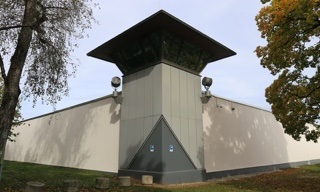
A good week later, on 14 October, came the big cleanup in the underground high-security courtroom at Stadelheim prison. For three hours the presiding judge read out why practically every one of the defense’s outstanding motions to take evidence was being rejected – some of them had been on the table for more than two years. The chamber saw no need for witnesses from the Austrian investigations of the SOKO AG Pharma task force, none for the files on Martin Weiss and Egisto Ott, and none for the British spy ring around Orlin Roussev. Nor was it interested in Marsalek’s telecommunications devices in Britain, which the British authorities refuse to hand over anyway, or in any intelligence communications relating to Marsalek. Investigating Marsalek’s further crimes, the chamber said, was simply not its job.
Particularly remarkable: claims that Marsalek worked for Russian intelligence were “completely unconfirmed” and based merely “on vague reports in various press articles.” Quite a transformation for a man who only a few years ago was paraded around the country as the ultimate Putin villain.
Act 3: The Credible Fugitive
On 28 October, by now in the new Palace of Justice on Dachauer Straße, a short morning was enough to clear away further important defense motions. There was no connection between Allied Wallet, the merchants and Wirecard, it was all speculation, and founder Ahmad “Andy” Khawaja had credibly denied all of it, the chamber said at first. Just a few pages later, the chamber itself found that Allied Wallet had been integrated through Wirecard Bank as a so-called payment facilitator. So the connection did exist after all – just not where anyone would have had to look for it, or for reality, for that matter.
And the credible witness? He was under house arrest in Lithuania, faces two indictments in the United States and is considered a fugitive there. In 2019 he and Allied Wallet reached a settlement with the US Federal Trade Commission (FTC) over processing payments for scams that cost consumers more than $110 million. In 2021 an indictment followed in Boston, alleging that more than $150 million had been slipped past Visa and Mastercard. On top of that comes an indictment in Washington over illegal campaign contributions. And the juiciest part: the Boston indictment explicitly names Wirecard AG as one of the banks through which Allied Wallet processed payments. Precisely the connection Munich brushed aside as speculation.
And on it went, ever so diligently: according to the chamber, more than 1,000 emails relating to Oliver Bellenhaus and Allied Wallet cannot be found, which is why nobody should keep looking for them either. Why evidence surrounding crown witness Bellenhaus has been treated differently ever since the indictment was filed was, once again, not worth a single word to the chamber.
Act 4: Koblenz Pulls the Handbrake
And then, also on 28 October, the news from Koblenz: the 15th Criminal Chamber of the Koblenz Regional Court has sent the nearly 2,400-page “Operation Chargeback” indictment back to the Public Prosecutor General’s Office. It is demanding “substantial further investigations and data analyses”, because it has not been fully established whether the case involves computer fraud or ordinary fraud. For the time being, the chamber cannot find a strong suspicion for either offense. All nine arrest warrants were lifted, including the one against Häuser-Axtner. The trial, planned to begin in November, is now up in the air.
The Koblenz Public Prosecutor General’s Office is fighting back. It intends to appeal the lifting of the nine arrest warrants and “largely does not share” the Regional Court’s view. The further investigations demanded are contradictory and barely feasible, it says; otherwise the proceedings could possibly outlast the lifespans of everyone involved. After all, the case concerns allegedly more than 19 million fake subscriptions, over four million affected cardholders in 193 countries and estimated damages of more than 300 million euros. One rubs one’s eyes: a prosecuting authority declares that thorough fact-finding could outlive everyone involved. Munich is already one step ahead. There, the chamber has solved the problem elegantly by not investigating any further at all. Meanwhile Markus Braun’s lifetime has been ticking away behind the Stadelheim wall for more than six years.
A quick reminder: in November 2025 the Koblenz Public Prosecutor General’s Office was still announcing its suspicion “that the accused compromised four major German payment service providers in order to process payments.” In its press release on the indictment of August 2026 it went one better: it classified the offenses as “commercial, gang-based computer fraud,” committed in the orbit of a criminal organization aimed at the “infiltration of the German financial system and the creation of a shadow financial system.” Of all things, it is precisely this computer fraud that the Koblenz Regional Court now can’t even make out as a strong suspicion anymore.
After the latest announcement from Koblenz, the mainstream Poltergeist outlets promptly bobbed their heads like a row of nodding dogs on a parcel shelf, all in chorus: “U-turn,” “setback,” “Court picks indictment apart”. Overnight the news was chased through every channel, and the audience was invited to marvel. What was reliably missing were a few very simple facts.
First: in Germany, pre-trial detention is not a permanent state. It may only continue beyond six months if the Higher Regional Court allows it because of the particular difficulty or particular scope of the investigation. Some of the accused in the Koblenz case had already been in custody for around eleven months. A court that hands an indictment back for further investigation and pushes the start of the trial into the indefinite future simply cannot justify that detention any longer. Lifting the warrants is therefore less a surprising U-turn than a legal consequence.
Second: this is precisely the case Munich did not want to wait for. The defense asked for a postponement until Koblenz brought clarity; the chamber refused. Now Koblenz itself declares that the course of the alleged offenses in its own case has not yet been sufficiently investigated. The questions Munich didn’t want to wait on are therefore by no means answered – they are more open than ever.
Third: the yardstick. In Koblenz, around eleven months are enough to declare detention no longer proportionate. In Munich, Markus Braun has been in pre-trial detention for more than six years – in proceedings in which the Bavarian chamber shuts every door that might lead to real fact-finding.
Also remarkable is what Koblenz is relying on: “the latest findings from recently conducted interrogations.” Which interrogations those are, the court doesn’t say. And the whole flock of Poltergeists doesn’t ask either.
It does not take much imagination to wonder what is going on here. For years, Munich’s Wirecard prosecutors and investigators have circled the wagons around their version of events. Then Koblenz turns up, a full five years after the Wirecard collapse of mid-2020, with networks, data and the name Häuser-Axtner, all of it far too close to the public for Munich’s comfort. And now, after almost a year of custody and prosecution driven by Koblenz, not Munich, the Koblenz Regional Court suddenly finds that very indictment largely unfit for trial. The universe has a sense of humor: the Bavarian judicial comedy, in full swing for years, has now hit the fan and gone on a multi-state tour.
What Remains
Munich wants closing arguments in November and intends to build its verdict on the existing case file – without Koblenz, without Austria, without the British phones, without Allied Wallet and without a critical look at the crown witness. Meanwhile the Koblenz sister court of Munich’s Wirecard comedy-barn Regional Court announces, with great fanfare and fuss, that of all things the very proceedings meant to shed light on the networks around Wirecard are supposedly not yet ripe for trial – and declares the detention periods over while it’s at it.
Whether the Munich verdict will rest on a sufficiently broad factual foundation therefore remains, once again, wide open. The Bavarian chamber did not stop to consider that question. And the mainstream Poltergeist outlets will, as usual, shriek the Munich verdict into the world as the final word – no matter how many doors had to stay bolted shut with a loud bang to get there.


Copied
Now, out of the blue, it turns out that Koblenz itself is supposedly not that far along either: the Koblenz Regional Court sent the indictment back and abruptly lifted all arrest warrants, perfectly timed at the end of October 2026. The mainstream Poltergeist outlets are spreading this news so eagerly that, as usual, the simplest facts get drowned out in the racket.
No Waiting for Koblenz
1
On 8 October 2026 the 4th Criminal Chamber of Munich Regional Court I refused to suspend the Wirecard trial. The defense wanted to wait for the Koblenz “Operation Chargeback” proceedings against former Wirecard manager Brigitte Häuser-Axtner. After 285 hearing days and six years of pre-trial detention for Markus Braun, the chamber is aiming for closing arguments and sentencing demands in November.
On 8 October 2026 the 4th Criminal Chamber of Munich Regional Court I refused to suspend the Wirecard trial. The defense wanted to wait for the Koblenz “Operation Chargeback” proceedings against former Wirecard manager Brigitte Häuser-Axtner. After 285 hearing days and six years of pre-trial detention for Markus Braun, the chamber is aiming for closing arguments and sentencing demands in November.
Three Hours of Rejections
2
On 14 October, in the high-security courtroom at Stadelheim prison, the presiding judge spent three hours reading out why practically every outstanding defense motion to take evidence was being rejected: no witnesses from Austria, no files on Martin Weiss and Egisto Ott, no Marsalek devices from Britain. Claims that Marsalek worked for Russian intelligence were “completely unconfirmed.”
On 14 October, in the high-security courtroom at Stadelheim prison, the presiding judge spent three hours reading out why practically every outstanding defense motion to take evidence was being rejected: no witnesses from Austria, no files on Martin Weiss and Egisto Ott, no Marsalek devices from Britain. Claims that Marsalek worked for Russian intelligence were “completely unconfirmed.”
The Credible Fugitive
3
On 28 October the chamber cleared away the Allied Wallet motions: no connection to Wirecard, and founder Andy Khawaja had credibly denied it all. Yet Khawaja faces two indictments in the United States and is considered a fugitive there, and the Boston indictment explicitly names Wirecard AG as one of the banks through which Allied Wallet processed payments.
On 28 October the chamber cleared away the Allied Wallet motions: no connection to Wirecard, and founder Andy Khawaja had credibly denied it all. Yet Khawaja faces two indictments in the United States and is considered a fugitive there, and the Boston indictment explicitly names Wirecard AG as one of the banks through which Allied Wallet processed payments.
Koblenz Pulls the Handbrake
4
That same day, the 15th Criminal Chamber of the Koblenz Regional Court sent the nearly 2,400-page “Operation Chargeback” indictment back to the Public Prosecutor General’s Office and lifted all nine arrest warrants, including the one against Häuser-Axtner. This is precisely the case Munich did not want to wait for. The questions Munich didn’t want to wait on are more open than ever.
That same day, the 15th Criminal Chamber of the Koblenz Regional Court sent the nearly 2,400-page “Operation Chargeback” indictment back to the Public Prosecutor General’s Office and lifted all nine arrest warrants, including the one against Häuser-Axtner. This is precisely the case Munich did not want to wait for. The questions Munich didn’t want to wait on are more open than ever.
Act 1: No Waiting for Koblenz
On 8 October 2026 the 4th Criminal Chamber of Munich Regional Court I rejected the defense’s motion to suspend the trial of Markus Braun and his co-defendants, which has now been running for almost four years. A suspension would not have been a short break; it would have meant restarting the main trial from scratch. After 285 hearing days and six years of pre-trial detention for Braun, presiding judge Markus Födisch had not the slightest interest in that. His goal: closing arguments and sentencing demands still in November.
The defense wanted to wait for the Koblenz “Operation Chargeback” proceedings. At their center is Brigitte Häuser-Axtner, a former sales manager at Wirecard Asia and a longtime confidante of the fugitive Jan Marsalek. She was arrested in Singapore on 4 November 2025, extradited to Germany at the end of March 2026 and indicted in July 2026; she had been in custody ever since. In August, Koblenz senior public prosecutor Susanne Schüler testified at length in Munich about networks, load balancing, facade websites and overlapping personnel.
The chamber’s reasoning, passed along almost word for word by dpa and co., could hardly have been simpler: Häuser-Axtner had already been summoned in the spring and had refused to testify, so there was nothing to wait for. That the actual scope of the Koblenz investigation – indictment, data, Schüler’s testimony – only became tangible afterwards? Checked off, back in early October 2026 in Munich.
Act 2: Three Hours of Rejections
A good week later, on 14 October, came the big cleanup in the underground high-security courtroom at Stadelheim prison. For three hours the presiding judge read out why practically every one of the defense’s outstanding motions to take evidence was being rejected – some of them had been on the table for more than two years. The chamber saw no need for witnesses from the Austrian investigations of the SOKO AG Pharma task force, none for the files on Martin Weiss and Egisto Ott, and none for the British spy ring around Orlin Roussev. Nor was it interested in Marsalek’s telecommunications devices in Britain, which the British authorities refuse to hand over anyway, or in any intelligence communications relating to Marsalek. Investigating Marsalek’s further crimes, the chamber said, was simply not its job.
Particularly remarkable: claims that Marsalek worked for Russian intelligence were “completely unconfirmed” and based merely “on vague reports in various press articles.” Quite a transformation for a man who only a few years ago was paraded around the country as the ultimate Putin villain.
Act 3: The Credible Fugitive
On 28 October, by now in the new Palace of Justice on Dachauer Straße, a short morning was enough to clear away further important defense motions. There was no connection between Allied Wallet, the merchants and Wirecard, it was all speculation, and founder Ahmad “Andy” Khawaja had credibly denied all of it, the chamber said at first. Just a few pages later, the chamber itself found that Allied Wallet had been integrated through Wirecard Bank as a so-called payment facilitator. So the connection did exist after all – just not where anyone would have had to look for it, or for reality, for that matter.
And the credible witness? He was under house arrest in Lithuania, faces two indictments in the United States and is considered a fugitive there.
What remains? Munich wants closing arguments in November and intends to build its verdict on the existing case file – without Koblenz, without Austria, without the British phones, without Allied Wallet and without a critical look at the crown witness
And on it went, ever so diligently: according to the chamber, more than 1,000 emails relating to Oliver Bellenhaus and Allied Wallet cannot be found, which is why nobody should keep looking for them either. Why evidence surrounding crown witness Bellenhaus has been treated differently ever since the indictment was filed was, once again, not worth a single word to the chamber.
Act 4: Koblenz Pulls the Handbrake
And then, also on 28 October, the news from Koblenz: the 15th Criminal Chamber of the Koblenz Regional Court has sent the nearly 2,400-page “Operation Chargeback” indictment back to the Public Prosecutor General’s Office. It is demanding “substantial further investigations and data analyses”, because it has not been fully established whether the case involves computer fraud or ordinary fraud. For the time being, the chamber cannot find a strong suspicion for either offense. All nine arrest warrants were lifted, including the one against Häuser-Axtner. The trial, planned to begin in November, is now up in the air.
The Koblenz Public Prosecutor General’s Office is fighting back. It intends to appeal the lifting of the nine arrest warrants and “largely does not share” the Regional Court’s view. The further investigations demanded are contradictory and barely feasible, it says; otherwise the proceedings could possibly outlast the lifespans of everyone involved. After all, the case concerns allegedly more than 19 million fake subscriptions, over four million affected cardholders in 193 countries and estimated damages of more than 300 million euros. One rubs one’s eyes: a prosecuting authority declares that thorough fact-finding could outlive everyone involved. Munich is already one step ahead. There, the chamber has solved the problem elegantly by not investigating any further at all. Meanwhile Markus Braun’s lifetime has been ticking away behind the Stadelheim wall for more than six years.
A quick reminder: in November 2025 the Koblenz Public Prosecutor General’s Office was still announcing its suspicion “that the accused compromised four major German payment service providers in order to process payments.” In its press release on the indictment of August 2026 it went one better: it classified the offenses as “commercial, gang-based computer fraud,” committed in the orbit of a criminal organization aimed at the “infiltration of the German financial system and the creation of a shadow financial system.” Of all things, it is precisely this computer fraud that the Koblenz Regional Court now can’t even make out as a strong suspicion anymore.
The Koblenz Public Prosecutor General’s Office classifies the alleged unauthorized use of third-party credit card data on the fake websites as commercial, gang-based computer fraud [...]. The accused are also charged with having participated in a criminal organization based abroad that was aimed at the continued commission of fraud and money laundering offenses as well as the infiltration of the German financial system and the creation of a shadow financial system.
Koblenz Public Prosecutor General’s Office, "„Operation Chargeback“ – Generalstaatsanwaltschaft Koblenz hat Anklage zur Wirtschaftsstrafkammer des Landgerichts Koblenz erhoben" [“Operation Chargeback” – Koblenz Public Prosecutor General’s Office files indictment with the Commercial Criminal Chamber of the Koblenz Regional Court] (press release, 18 August 2026; own translation)
Koblenz Public Prosecutor General’s Office, "„Operation Chargeback“ – Generalstaatsanwaltschaft Koblenz hat Anklage zur Wirtschaftsstrafkammer des Landgerichts Koblenz erhoben" [“Operation Chargeback” – Koblenz Public Prosecutor General’s Office files indictment with the Commercial Criminal Chamber of the Koblenz Regional Court] (press release, 18 August 2026; own translation)
After the latest announcement from Koblenz, the mainstream Poltergeist outlets promptly bobbed their heads like a row of nodding dogs on a parcel shelf, all in chorus: “U-turn,” “setback,” “Court picks indictment apart”. Overnight the news was chased through every channel, and the audience was invited to marvel. What was reliably missing were a few very simple facts.
First: in Germany, pre-trial detention is not a permanent state. It may only continue beyond six months if the Higher Regional Court allows it because of the particular difficulty or particular scope of the investigation. Some of the accused in the Koblenz case had already been in custody for around eleven months. A court that hands an indictment back for further investigation and pushes the start of the trial into the indefinite future simply cannot justify that detention any longer. Lifting the warrants is therefore less a surprising U-turn than a legal consequence.
Second: this is precisely the case Munich did not want to wait for. The defense asked for a postponement until Koblenz brought clarity; the chamber refused. Now Koblenz itself declares that the course of the alleged offenses in its own case has not yet been sufficiently investigated. The questions Munich didn’t want to wait on are therefore by no means answered – they are more open than ever.
Third: the yardstick. In Koblenz, around eleven months are enough to declare detention no longer proportionate. In Munich, Markus Braun has been in pre-trial detention for more than six years – in proceedings in which the Bavarian chamber shuts every door that might lead to real fact-finding.
Also remarkable is what Koblenz is relying on: “the latest findings from recently conducted interrogations.” Which interrogations those are, the court doesn’t say. And the whole flock of Poltergeists doesn’t ask either.
It does not take much imagination to wonder what is going on here. For years, Munich’s Wirecard prosecutors and investigators have circled the wagons around their version of events. Then Koblenz turns up, a full five years after the Wirecard collapse of mid-2020, with networks, data and the name Häuser-Axtner, all of it far too close to the public for Munich’s comfort. And now, after almost a year of custody and prosecution driven by Koblenz, not Munich, the Koblenz Regional Court suddenly finds that very indictment largely unfit for trial. The universe has a sense of humor: the Bavarian judicial comedy, in full swing for years, has now hit the fan and gone on a multi-state tour.
What Remains
Munich wants closing arguments in November and intends to build its verdict on the existing case file – without Koblenz, without Austria, without the British phones, without Allied Wallet and without a critical look at the crown witness. Meanwhile the Koblenz sister court of Munich’s Wirecard comedy-barn Regional Court announces, with great fanfare and fuss, that of all things the very proceedings meant to shed light on the networks around Wirecard are supposedly not yet ripe for trial – and declares the detention periods over while it’s at it.
Whether the Munich verdict will rest on a sufficiently broad factual foundation therefore remains, once again, wide open. The Bavarian chamber did not stop to consider that question. And the mainstream Poltergeist outlets will, as usual, shriek the Munich verdict into the world as the final word – no matter how many doors had to stay bolted shut with a loud bang to get there.
Click the cover to get the free book
Leave a comment:
Send
Send
Recommended:
24 October 2026
Behind the Stadelheim Wall
Reading Markus Braun’s Prison Interview

12 August 2026
The Load Balancing Eclipse
A Koblenz prosecutor in Munich and the network the Wirecard gallery campaign prefers not to see

6 August 2026
The Endless Justice Round
Interrogation of a Wirecard supervisor board member

16 June 2026
The Wirecard Implosion
Anatomy of a Judiciary Disaster

23 March 2026
Timeline Wirecard Reports
A timeline of all Wirecard-related articles

27 November 2025
The KPMG Witness
Testimony of a KPMG managing partner

20 December 2025
The ProtonMail Phantom
About a Wirecard judge and Swiss blockades

9 October 2025
The eBay Laptop
A Bavarian crown witness and missing Swiss data

1 September 2025
The Uncles’ CIA Rogue Fixer
Jan Marsalek's double life the Financial Times just overlooked

31 July 2025
The Final Blast
A Wirecard court summer break summary

4 April 2025
The Implosion
About winter end time weeks in the Wirecard courtroom

18 January 2025
The Justice Colleague Ping-Pong
About a weird back and forth in the Wirecard court process

17 September 2024
Wirecard Sacked
The Court Proceeding - Season 1, Episode 1

25 August 2024
The Wirecard Summer Gap
About extorted confessions and Bavarian radio news

22 July 2024
Hotel Wirecard
About broccoli and roastbeef in Munich hotel rooms

28 June 2024
Money launding is not my thing
About Commerzbank and cancelled Wirecard credit lines

3 July 2024
Wirecard Chances
About supervisory board advising lawyers

20 June 2024
The Wirecard PR Court
About an obscure questioning of a Wirecard lawyer

15 May 2024
Wirecard Rogue
About crazy judiciary talks and on-target court motions

25 May 2024
Wirecard Untangled
About unsolved issues in Germany's master finance scandal
29 April 2024
All Inside The Singapore Folder
About Wirecard book keepings an email conversations

25 April 2024
Grand Vision Trust
A Wirecard Bank Director and Relationship Managements

19 April 2024
Mount Interim
About a Wirecard interim-CEO on a Swiss rose mountain

3 April 2024
Harvesting Wirecard
About Swiss roses and Wirecard bears

29 March 2024
The PayLondon Group
About bears from London and Wirecard targetings

24 March 2024
Mount Acronis
About a Swiss IT sponsor and Wirecard entanglements

15 March 2024
Magic Pav
About a Wirecard whistleblower and magic law firms

13 February 2024
The Trial
About a Wirecard release of prisoner and Franz Kafka's unfinished works

4 October 2023
Mount Wirecard
About Swiss Wirecard entanglements and the remains of Crypto AG

22 August 2023
Wirecard Court Halftime
About seven months in Munich Stadelheim and the miracle of Bern

18 May 2023
Pandora's Box
About Wirecard's IT Architectures

29 April 2023
The Third Man
About Wirecard's interim CEO James Freis and nice shoes
8 December 2022
Deflective Attorneys
About a five hours Wirecard indictment

18 February 2021
Bavariacard
About a Germanic Wirecard Poker
5 May 2021
A Munich Fraud
Wirecard and Munich's Public Prosecutor's Office

22 November 2021
Royal Courts of Wirecard
About a Wirecard Lawsuit and Quantum Physics

1 October 2021
Brilliant Consultants
About Wirecard's financial auditors and the chess game

6 November 2021
Back To The Wirecard
About the roots of the insolvent German payment provider
15 April 2021


