The Endless Pause
A morning in court reveals a weekend answering merchants who, officially, never called
November 11, 2026
1794515315


Dark Mode
At half past nine the witness chair in the Stadelheim courtroom was empty in an exemplary way. The witness was supposed to be sitting in it. He is from England, from the orbit of Wirecard UK & Ireland, that corporate contraption whose 2019 Christmas emails the court will read aloud in about an hour, with a sworn English interpreter. His travel expenses, the judge said, had long been settled. The same cannot be said of the witness. His phone has been switched off for two days. His last known contribution to German criminal justice was the announcement that he could "contribute nothing to finding the truth".
One Markus among several
Presiding judge Markus Födisch read out what the witness had still managed to produce before he evidently found the off switch on his phone. He had known defendant Dr Braun personally, the judge said, and had addressed him as Markus. The witness who failed to appear had himself worked in Wirecard's "Referral Program", where he merely commissioned other people. Dr Braun's defence counsel was on her feet at once. There had been several Markuses at Wirecard. This witness and Dr Braun shared no personal acquaintance.


Födisch sticks to his account. The witness had claimed to know Dr Braun personally. Braun reaches for the microphone and laughs. He does not know the man. He let his lawyer go on explaining.
Then came the question the morning had been built around. Would the defence withdraw its announced further motion to hear the witness who had not come? The answer arrived with a small laugh into the microphone: absolutely not. Least of all because a man one cannot reach wrongly believes he knows Dr Braun. Födisch pointed out that the proceedings might then be delayed, that further dates would be needed, and that this would not be in the client's interest. After six years of pre-trial detention, the chamber's continued performance of concern for the client's calendar is somehow almost touching. If one did not have entirely different reasons for it.
Ten minutes, roughly
Straight away, at 9.45, the court rose. Ten minutes' break. Something had to be printed. The judges withdrew. At 10.20 they were back. In Stadelheim a minute is an elastic unit, closer to the geology of tectonic plates than to an actual clock.
What followed was the 2019 Christmas programme of precisely that Irish corporate contraption whose witness had, at short notice, gone full blockade. An English interpreter was sworn in. Judge and interpreter then took turns reading sheets 183 to 186 of case file II-1. This is how one turns a file reference into a radio play in this room. The subject was a brokerage agreement between Wirecard UK & Ireland and a party called Ruprecht.
On 18 December 2019 Dagmar Schneider wrote to Alan White. Attached, the agreement and the board resolution. Also, ten million euros had gone to Ruprecht that same day, as the contract required and the board had approved. The loan agreement itself did not yet exist. They had only noticed its absence that morning. The money had in the meantime been transferred on loan. Could someone please draw the contract up. The reply from the inner circle was a model of corporate governance: small circle, please, and quietly.
Who, someone asks at one point in the email chain, actually manages all this? Answer: Oliver. Meaning the Munich prosecution's crown witness, Oliver Bellenhaus.
Merry Christmas, thirty million
The interpreter still had a few more emails. On 27 December, with Jan Marsalek in copy, someone hoped for a merry Christmas and mentioned, in the same breath, that a further 30 million euros had gone to Ruprecht as additional security. The business of Al-Alam in Dubai, where Oliver Bellenhaus was managing director, was being transferred to Ruprecht. Everyone at Wirecard had agreed. The loan agreement would follow shortly. On 30 December Alan White wrote back, grateful, and asked a small question about the new loan. Three months, six months, two years? Volumes with Al-Alam, Oliver Bellenhaus still managing director there, were going to shrink, which apparently meant larger sums would be needed. And what about Citadelle, White asked, the trustee at the time of the still missing 1.9 billion euros.
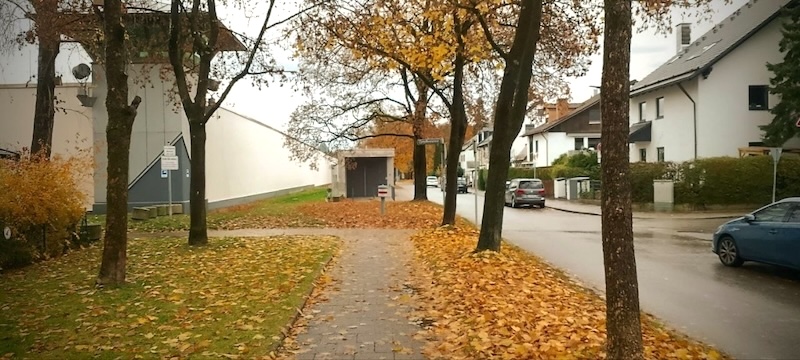
Judge Födisch follows up. A request the chamber sent towards Singapore in 2023, he notes, still has no answer. The matter sits with the thoroughly Munich public prosecutor Lemmers, and this is how she dealt with it. There is an order of hers on the point, dated 28 January 2026. Singapore, seat of the trustee who for a long time sat on the non-existent-existing 1.9 billion, was and remains a slow postal district. About as slow as the witness from England who, a few days ago, apparently fled into the sauna.
Then the next pause. Thirty minutes this time, and announced as such, which almost counted as punctuality.
She picked up
After the break the defence read out its new motion, and the morning finally acquired a real point. The point has a name. Brigitte Häuser-Axtner, for years the woman at Wirecard's Asia desk, whom Munich so persistently preferred not to hear at all, was flat out on the weekend of the collapse. Merchant after merchant was on the line. She answered the requests without a pause, the whole weekend, the office on alert. On Monday morning she went to sit down and carry on, only to find that her access to the computer had suddenly been blocked.
One rubs one's eyes, although by now one really ought to stop. For years the prosecution and the great chorus of the official Wirecard story have rested on one gigantic ghost: the merchants tied to the TPA business who never got in touch. Supposedly no complaint, no call, no unsettled trader wanting to know where the settlements had gone. Silence counted as proof of absence. Whoever does not knock was never there, so the third-party business was pure air. That is the narrative of the indictment. Asked why the absence of any report counted as an indication, the answer on the file was almost touching. One would have expected a complaint. On 6 August 2025 Lemmers put it roughly like this: with a proper understanding of the TPA structure, a disruption of payments would have produced claims by the creditors. Since there never were any such claims, there can have been no third-party business either.
Häuser-Axtner's account, read out by Dr Braun's defence, says that people did not merely knock. They knocked in quantity. On the weekend Wirecard went down, and at a very short list of people in the building: Jan Marsalek, Oliver Bellenhaus and Häuser-Axtner herself. She did not spend those two days waiting for a complaint that never came. She spent them answering the complaints. On Monday someone, or something, switched her off. The Koblenz prosecution stands as the bearer of the evidence on this part of the file, minuted after Häuser-Axtner had been arrested and questioned through the work done in Koblenz.
So the merchant who never called had quite a full weekend. This is not a nuance. It is, properly speaking, the overturn of the story.
Three points around a ghost
The rest of the motion is built around that ghost. The chamber's decision to keep Braun in detention was taken, the defence went on, before the taking of evidence had finished. The existence of the TPA business is not a side matter. It is the matter. The same accounts, the same statements, the same behaviour mean one thing if a real business lay underneath, and something else entirely if it did not. Judging from indications, while refusing to settle that question, is how this trial has learned to read the clock.
Beside that she set out three points.
First, the prosecution has still produced no real proof, of the kind that will bear weight, that Dr Braun took part in a fraud. The claim that he belonged to the group that committed it rests solely on crown witness Oliver Bellenhaus. Whether Bellenhaus takes this from his own work, or projects it onto Braun, remains entirely open. The defence says he lied in order to protect himself and to enrich himself. Confrontational questioning on the point has been refused throughout, by Bellenhaus and by the lawyer at his side.
Second, neither the court nor the defence knows what actually happened. They know what Bellenhaus believes. The crown witness's many contradictions are not slips. They are the statements that exonerate Braun.
Third, there is no objective proof that Braun knew of a fraud. Every conclusion the chamber draws can therefore only be an indication. Money that was not sitting in the named accounts is not money that never existed. Trust confirmations may very well have existed. An overstated balance sheet requires, as a small preliminary, an overstatement. Calling credit balances "objectively worthless" because nothing moved on them is a slogan, not a sum.
And then the motive the indictment has never quite looked in the eye. Had the TPA business been real and then collapsed, the loss would have been real too. Braun personally held 7 per cent of it, a share the defence put at 133 million euros, plus property and a bank loan pledged to that same future. Braun had, in short, an expensive reason to stop a loss. The charge is that he did not intervene, and knowingly swallowed the loss, or even helped carry it. An assessment of the evidence that leaves out this contradiction has mislaid ordinary logic. As long as the question of the TPA business stays open, fraudulent intent is not made out.
The prosecution called the payment flows money laundering without setting out the proof. The insolvency administrator takes the view that the TPA business does not exist, and the prosecution is happy to lean on his findings. A first serious look at the flows themselves, the defence said, citing among others the statements of Braun's successor and interim chief executive James Freis, never took place. The merchants were not warned, neither before the insolvency nor after it. They called all the same, as one now knows thanks to Koblenz.
79 pages, to be read in silence
At 12.08 the reading broke off. Defence counsel had delivered the preface of the long motion in full, in court.
The chamber placed the evidentiary motion of 11 November 2026 on the file. The brief itself, dated 12 November, runs to 79 pages. It is to be introduced by self-reading. That is the court's polite way of saying that nobody in the room has to hear it out loud. Efficient, in its fashion. The ten-minute break had already shown what this room most likes to do with time.
Födisch, and the by now somewhat chalk-pale row of judges, look ahead. Tomorrow, one ruling, or two. Perhaps the witness will turn up after all, though he does not answer the phone, the presiding judge guessed.
Almost pleading, the question put at once to crown witness Bellenhaus: "You will surely still have something to say about all of this tomorrow, won't you?" He had no interest in stretching the hearing by further months on account of the new motion.
All the same, the courtroom was already doing the arithmetic. Further dates may yet be added. After Christmas, if it has to be.
Copied
One Markus among several
Presiding judge Markus Födisch read out what the witness had still managed to produce before he evidently found the off switch on his phone. He had known defendant Dr Braun personally, the judge said, and had addressed him as Markus. The witness who failed to appear had himself worked in Wirecard's "Referral Program", where he merely commissioned other people. Dr Braun's defence counsel was on her feet at once. There had been several Markuses at Wirecard. This witness and Dr Braun shared no personal acquaintance.
00:00
Födisch sticks to his account. The witness had claimed to know Dr Braun personally. Braun reaches for the microphone and laughs. He does not know the man. He let his lawyer go on explaining.
Then came the question the morning had been built around. Would the defence withdraw its announced further motion to hear the witness who had not come? The answer arrived with a small laugh into the microphone: absolutely not. Least of all because a man one cannot reach wrongly believes he knows Dr Braun. Födisch pointed out that the proceedings might then be delayed, that further dates would be needed, and that this would not be in the client's interest. After six years of pre-trial detention, the chamber's continued performance of concern for the client's calendar is somehow almost touching. If one did not have entirely different reasons for it.
Ten minutes, roughly
Straight away, at 9.45, the court rose. Ten minutes' break. Something had to be printed. The judges withdrew. At 10.20 they were back. In Stadelheim a minute is an elastic unit, closer to the geology of tectonic plates than to an actual clock.
What followed was the 2019 Christmas programme of precisely that Irish corporate contraption whose witness had, at short notice, gone full blockade. An English interpreter was sworn in. Judge and interpreter then took turns reading sheets 183 to 186 of case file II-1. This is how one turns a file reference into a radio play in this room. The subject was a brokerage agreement between Wirecard UK & Ireland and a party called Ruprecht.
On 18 December 2019 Dagmar Schneider wrote to Alan White. Attached, the agreement and the board resolution. Also, ten million euros had gone to Ruprecht that same day, as the contract required and the board had approved. The loan agreement itself did not yet exist. They had only noticed its absence that morning. The money had in the meantime been transferred on loan. Could someone please draw the contract up. The reply from the inner circle was a model of corporate governance: small circle, please, and quietly.
Who, someone asks at one point in the email chain, actually manages all this? Answer: Oliver. Meaning the Munich prosecution's crown witness, Oliver Bellenhaus.
Merry Christmas, thirty million
The interpreter still had a few more emails. On 27 December, with Jan Marsalek in copy, someone hoped for a merry Christmas and mentioned, in the same breath, that a further 30 million euros had gone to Ruprecht as additional security. The business of Al-Alam in Dubai, where Oliver Bellenhaus was managing director, was being transferred to Ruprecht. Everyone at Wirecard had agreed. The loan agreement would follow shortly. On 30 December Alan White wrote back, grateful, and asked a small question about the new loan. Three months, six months, two years? Volumes with Al-Alam, Oliver Bellenhaus still managing director there, were going to shrink, which apparently meant larger sums would be needed. And what about Citadelle, White asked, the trustee at the time of the still missing 1.9 billion euros.
Underground entrance to Stadelheim prison court room on November 11, 2026
Judge Födisch follows up. A request the chamber sent towards Singapore in 2023, he notes, still has no answer. The matter sits with the thoroughly Munich public prosecutor Lemmers, and this is how she dealt with it. There is an order of hers on the point, dated 28 January 2026. Singapore, seat of the trustee who for a long time sat on the non-existent-existing 1.9 billion, was and remains a slow postal district. About as slow as the witness from England who, a few days ago, apparently fled into the sauna.
Then the next pause. Thirty minutes this time, and announced as such, which almost counted as punctuality.
She picked up
After the break the defence read out its new motion, and the morning finally acquired a real point. The point has a name. Brigitte Häuser-Axtner, for years the woman at Wirecard's Asia desk, whom Munich so persistently preferred not to hear at all, was flat out on the weekend of the collapse. Merchant after merchant was on the line. She answered the requests without a pause, the whole weekend, the office on alert. On Monday morning she went to sit down and carry on, only to find that her access to the computer had suddenly been blocked.
One rubs one's eyes, although by now one really ought to stop. For years the prosecution and the great chorus of the official Wirecard story have rested on one gigantic ghost: the merchants tied to the TPA business who never got in touch. Supposedly no complaint, no call, no unsettled trader wanting to know where the settlements had gone. Silence counted as proof of absence. Whoever does not knock was never there, so the third-party business was pure air. That is the narrative of the indictment. Asked why the absence of any report counted as an indication, the answer on the file was almost touching. One would have expected a complaint. On 6 August 2025 Lemmers put it roughly like this: with a proper understanding of the TPA structure, a disruption of payments would have produced claims by the creditors. Since there never were any such claims, there can have been no third-party business either.
Häuser-Axtner's account, read out by Dr Braun's defence, says that people did not merely knock. They knocked in quantity. On the weekend Wirecard went down, and at a very short list of people in the building: Jan Marsalek, Oliver Bellenhaus and Häuser-Axtner herself. She did not spend those two days waiting for a complaint that never came. She spent them answering the complaints. On Monday someone, or something, switched her off. The Koblenz prosecution stands as the bearer of the evidence on this part of the file, minuted after Häuser-Axtner had been arrested and questioned through the work done in Koblenz.
So the merchant who never called had quite a full weekend. This is not a nuance. It is, properly speaking, the overturn of the story.
Three points around a ghost
The rest of the motion is built around that ghost. The chamber's decision to keep Braun in detention was taken, the defence went on, before the taking of evidence had finished. The existence of the TPA business is not a side matter. It is the matter. The same accounts, the same statements, the same behaviour mean one thing if a real business lay underneath, and something else entirely if it did not. Judging from indications, while refusing to settle that question, is how this trial has learned to read the clock.
Beside that she set out three points.
First, the prosecution has still produced no real proof, of the kind that will bear weight, that Dr Braun took part in a fraud. The claim that he belonged to the group that committed it rests solely on crown witness Oliver Bellenhaus. Whether Bellenhaus takes this from his own work, or projects it onto Braun, remains entirely open. The defence says he lied in order to protect himself and to enrich himself.
A serious look at the flows themselves, the defence said, citing among others the statements of Braun's successor and interim chief executive James Freis, never took place.
Second, neither the court nor the defence knows what actually happened. They know what Bellenhaus believes. The crown witness's many contradictions are not slips. They are the statements that exonerate Braun.
Third, there is no objective proof that Braun knew of a fraud. Every conclusion the chamber draws can therefore only be an indication. Money that was not sitting in the named accounts is not money that never existed. Trust confirmations may very well have existed. An overstated balance sheet requires, as a small preliminary, an overstatement. Calling credit balances "objectively worthless" because nothing moved on them is a slogan, not a sum.
And then the motive the indictment has never quite looked in the eye. Had the TPA business been real and then collapsed, the loss would have been real too. Braun personally held 7 per cent of it, a share the defence put at 133 million euros, plus property and a bank loan pledged to that same future. Braun had, in short, an expensive reason to stop a loss. The charge is that he did not intervene, and knowingly swallowed the loss, or even helped carry it. An assessment of the evidence that leaves out this contradiction has mislaid ordinary logic. As long as the question of the TPA business stays open, fraudulent intent is not made out.
The prosecution called the payment flows money laundering without setting out the proof. The insolvency administrator takes the view that the TPA business does not exist, and the prosecution is happy to lean on his findings. A first serious look at the flows themselves, the defence said, citing among others the statements of Braun's successor and interim chief executive James Freis, never took place. The merchants were not warned, neither before the insolvency nor after it. They called all the same, as one now knows thanks to Koblenz.
79 pages, to be read in silence
At 12.08 the reading broke off. Defence counsel had delivered the preface of the long motion in full, in court.
The chamber placed the evidentiary motion of 11 November 2026 on the file. The brief itself, dated 12 November, runs to 79 pages. It is to be introduced by self-reading. That is the court's polite way of saying that nobody in the room has to hear it out loud. Efficient, in its fashion. The ten-minute break had already shown what this room most likes to do with time.
Födisch, and the by now somewhat chalk-pale row of judges, look ahead. Tomorrow, one ruling, or two. Perhaps the witness will turn up after all, though he does not answer the phone, the presiding judge guessed.
Almost pleading, the question put at once to crown witness Bellenhaus: "You will surely still have something to say about all of this tomorrow, won't you?" He had no interest in stretching the hearing by further months on account of the new motion.
All the same, the courtroom was already doing the arithmetic. Further dates may yet be added. After Christmas, if it has to be.
Leave a comment:
Send
Send
Recommended:

30 October 2026
Munich Shuts Every Door
And Koblenz Suddenly Sends Its Own Indictment Back
24 October 2026
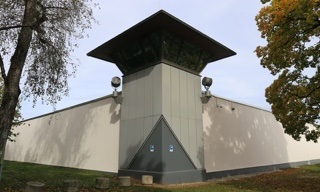
Behind the Stadelheim Wall
Reading Markus Braun’s Prison Interview

12 August 2026
The Load Balancing Eclipse
A Koblenz prosecutor in Munich and a network the Wirecard campaign prefers not to see
6 August 2026
The Endless Justice Round
Interrogation of a Wirecard supervisor board member

16 June 2026
The Wirecard Implosion
Anatomy of a Judiciary Disaster

23 March 2026
Timeline Wirecard Reports
A timeline of all Wirecard-related articles

27 November 2025
The KPMG Witness
Testimony of a KPMG managing partner

20 December 2025
The ProtonMail Phantom
About a Wirecard judge and Swiss blockades

9 October 2025
The eBay Laptop
A Bavarian crown witness and missing Swiss data

1 September 2025
The Uncles’ CIA Rogue Fixer
Jan Marsalek's double life the Financial Times just overlooked

31 July 2025
The Final Blast
A Wirecard court summer break summary

4 April 2025
The Implosion
About winter end time weeks in the Wirecard courtroom

18 January 2025
The Justice Colleague Ping-Pong
About a weird back and forth in the Wirecard court process

17 September 2024
Wirecard Sacked
The Court Proceeding - Season 1, Episode 1

25 August 2024
The Wirecard Summer Gap
About extorted confessions and Bavarian radio news
22 July 2024
Hotel Wirecard
About broccoli and roastbeef in Munich hotel rooms

28 June 2024
Money launding is not my thing
About Commerzbank and cancelled Wirecard credit lines

3 July 2024
Wirecard Chances
About supervisory board advising lawyers

20 June 2024
The Wirecard PR Court
About an obscure questioning of a Wirecard lawyer

15 May 2024
Wirecard Rogue
About crazy judiciary talks and on-target court motions

25 May 2024
Wirecard Untangled
About unsolved issues in Germany's master finance scandal
29 April 2024
All Inside The Singapore Folder
About Wirecard book keepings an email conversations

25 April 2024
Grand Vision Trust
A Wirecard Bank Director and Relationship Managements

19 April 2024
Mount Interim
About a Wirecard interim-CEO on a Swiss rose mountain

3 April 2024
Harvesting Wirecard
About Swiss roses and Wirecard bears

29 March 2024
The PayLondon Group
About bears from London and Wirecard targetings

24 March 2024
Mount Acronis
About a Swiss IT sponsor and Wirecard entanglements

15 March 2024
Magic Pav
About a Wirecard whistleblower and magic law firms

13 February 2024
The Trial
About a Wirecard release of prisoner and Franz Kafka's unfinished works

4 October 2023
Mount Wirecard
About Swiss Wirecard entanglements and the remains of Crypto AG

22 August 2023
Wirecard Court Halftime
About seven months in Munich Stadelheim and the miracle of Bern
18 May 2023
Pandora's Box
About Wirecard's IT Architectures
29 April 2023
The Third Man
About Wirecard's interim CEO James Freis and nice shoes
8 December 2022
Deflective Attorneys
About a five hours Wirecard indictment

18 February 2021
Bavariacard
About a Germanic Wirecard Poker
5 May 2021
A Munich Fraud
Wirecard and Munich's Public Prosecutor's Office
22 November 2021
Royal Courts of Wirecard
About a Wirecard Lawsuit and Quantum Physics

1 October 2021
Brilliant Consultants
About Wirecard's financial auditors and the chess game

6 November 2021
Back To The Wirecard
About the roots of the insolvent German payment provider
15 April 2021


