The Geopolitics Influencer
Karl Haushofer's Nazi blueprint
January 12, 2026
1778712214


Dark Mode
Listen to this article
The Geopolitics Influencer


In the annals of history, few figures cast as long and enigmatic a shadow as Professor Karl Haushofer, the German geopolitician whose ideas profoundly shaped the ideological foundations of the Nazi regime. Often overlooked in favor of more infamous names like Adolf Hitler and Rudolf Hess, Haushofer's role in crafting the expansionist doctrines of the Third Reich reveals a chilling collaboration that began in a Bavarian prison cell in 1924.
Haushofer's Formative Years and the Japan Mission (1908–1910)
Born in Munich in 1869, Karl Haushofer was a Bavarian career military officer (Hauptmann) and academic. In November 1908, he was dispatched by the German General Staff to Tokyo as a military attaché to study the Imperial Japanese Army and advise on artillery. Traveling with his wife Martha via India and Southeast Asia, he arrived in February 1909 and was received by Emperor Meiji, all while his young son Albrecht was left at home in ... Garmisch-Partenkirchen,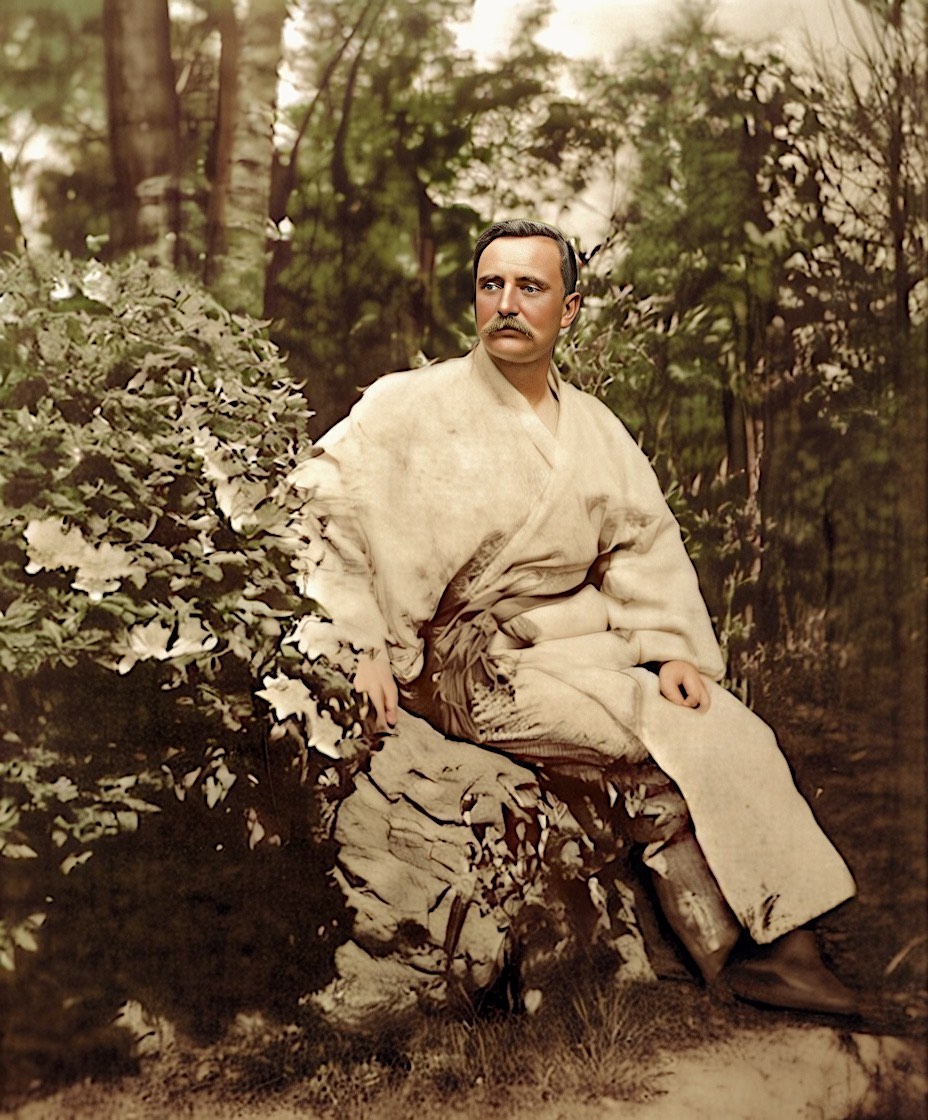 not too far away from the future locational control center of Adolf Hitler's high-rise Festung Berghof in the Bavarian Alps.
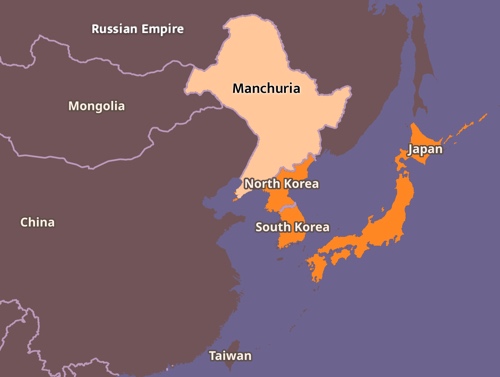
Japan's 1905 victory over Russia, including the annexation of Manchuria, deeply impressed Karl Haushofer and his early-feminist wifey. The war fostered a sense of nationalism and pride in Japan, further legitimizing military influence in governmental affairs in Eastern Asia. It was the first time an Asian nation had not only defeated a former colonial power from the West and the white people, but had also taken significant territory from it. Japan’s victory in 1905 and its subsequent occupation of Russian lands resonated across Asia and the Pacific, inspiring movements for independence from European colonial rule - particularly in India, Indonesia, Burma, the Philippines, and Vietnam.
It also exposed flaws in Russian military leadership and logistics, leading to significant political changes in Russia, including a first 1905 Russian Revolution. Russia was facing severe economic challenges, characterized by industrial growth that strained labor conditions, high unemployment, and rising food prices. The vast divide between the wealthy elite and the impoverished peasantry fueled discontent. Tsar Nicholas II’s autocratic rule stifled political dissent, leaving many Russians craving reforms.
The first Russian Revolution and October Manifesto of 1905 (not 1917!)
A peaceful protest led by Father Georgy Gapon marched to the Winter Palace in St. Petersburg on Sunday, January 22, 1905, seeking reforms and the right to assembly. The Tsar's troops opened fire on the protestors, killing and wounding hundreds, which galvanized public anger and initiated a wave of strikes and protests across the country. Following this first "Bloody Sunday", various groups - including workers, students, and soldiers - participated in strikes and uprisings throughout the Russian empire, demanding political and social reforms.
In response to the growing unrest, Russia's Tsar Nicholas II issued the October Manifesto in 1905, which promised civil liberties and the establishment of a legislative body: the Duma. The Duma was intended to provide a semblance of representation, although it was heavily controlled by the Tsar in the years to come until the second, real November revolution occurred in 1917, lead by Lenin and the Bolsheviks.
Karl Haushofer meanwhile - along with his Prussian and Bavarian military leaders - apparently saw in Japan's self-perceived superiority a model for densely populated "superior" nations like Germany needing Lebensraum (living space) by conquering vast territories such as Russia.
The Prison "Seminar" in Landsberg (1924): Forging Mein Kampf
After the failed Beer Hall Putsch, Hitler and Hess received lenient Festungshaft (fortress detention) in Landsberg Prison—comfortable quarters with visitors, typewriters, and even beer deliveries, enabled by sympathetic Bavarian officials.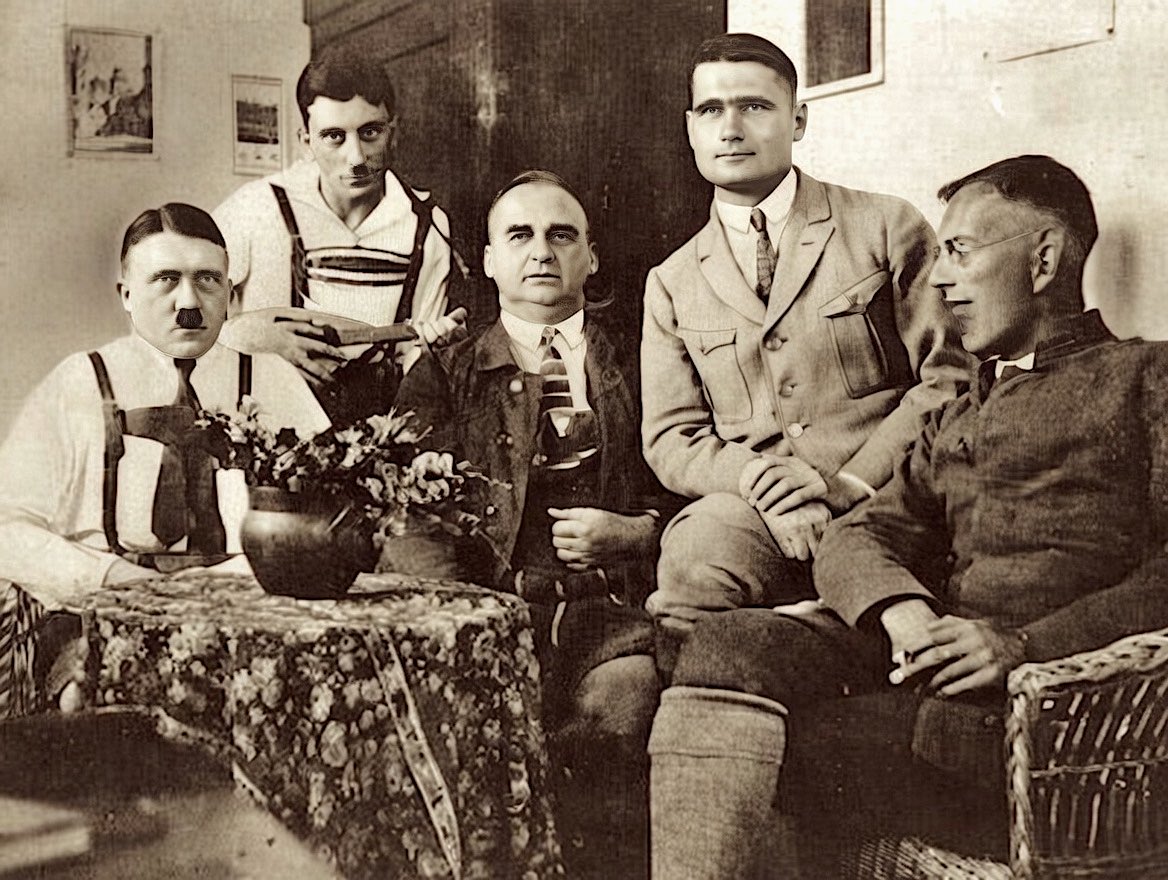 And Prof. Karl Haushofer quickly became part of that 1924 Landsberg prison socialite gang.
Rudolph Hess, Prof. Karl Haushofer's former student, arranged frequent Landsberg visits (over 30 documented); Haushofer drove every week from Munich to Landsberg prison and was allowed to hold morning and afternoon sessions with his two prison students. These were intensive lectures on geopolitics, autarky, alliances (e.g., with Japan), and conquest of Russia. Hess typed notes daily; Hitler dictated. Each evening Hess transformed Hitler’s rambling monologues into actual chapters - hammering them onto paper with his prison typewriter, providing the structure and editing grammar. Hitler never wrote a coherent chapter himself and later admitted it. Not enough, Karl Haushofer's geopolitical convictions directly infused Mein Kampf 's foreign policy sections, which Haushofer himself admitted to during his Nuremberg interrogations in 1945:
Q: Isn't it true that Hess collaborated with Hitler in writing “Mein Kampf?"
Haushofer: As far as I know, Hess actually dictated many chapters of that book. Hess was able to type, while Hitler was not.
Q: Then, do I understand that you would discuss these matters with Hess and then Hess in turn would discuss them with Hitler and that is how they got the book?
Haushofer: In matters where I saw that neither Hitler nor Hess had any geographical idea. I tried to visit Hess and tried to explain to him the basis of Ratzel's book, dealing with political geography, second edition. I pointed out edition number two because then a third edition came out, which was amplified by a Viennese geography expert, Oberhammer, who had modernized this edition.
Q: Did you find that in all instances that the correct version that you gave would be adapted by Hitler?
Haushofer: I always had the impression by his speeches that he never really understood them.
Q: But did you have the idea that he had made an attempt to adopt your teachings?
Haushofer: He sometimes made attempts, but, you see, I remember quite well, whenever Hess understood such a thing and tried to explain it to Hitler, Hitler usually came out with one of his new ideas about an autobahn or anything else which had nothing to do with it, while Hess just stood there and did not say any more about it.
Karl Haushofer during his 1945 interrogation at the Nuremberg Trial (page 6) / Original at NARA
The year 1924 marked not only the edition of Mein Kampf at Landsberg prison, but also the publication of Karl Haushofer's most famous work, Geopolitics of the Pacific Ocean . In it, he urged Japan and Germany to cooperate with the ultimate goal of uniting with Russia, China, and India to combat the Atlantic powers of England, France, and the United States. The book was quickly translated into Japanese and Russian, a first Russo-Japanese convention was signed in 1925. Haushofer was clearly not only a mentor to Hitler and Hess in the crafting of Mein Kampf ,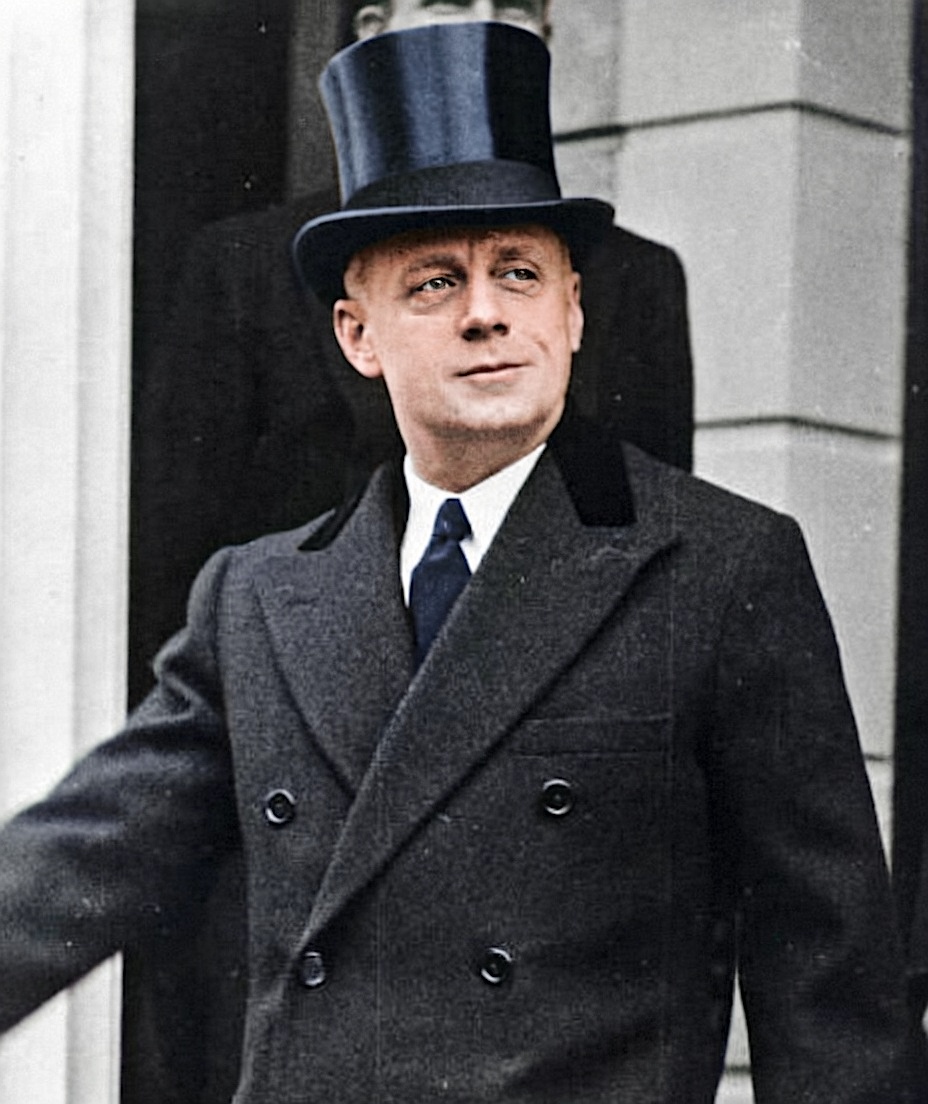 but also a shaper of global politics of tremendous proportions and the de facto blueprint maker for the first phase of Nazi foreign geopolitics after 1933.
Haushofer's and Hess's British connections - along with Neville Chamberlain's anti-Semitic stance and his fierce opposition of further Jewish emigration into Palestine - very likely peddled the infamous Munich peace agreement from September 1938 in the years before, guaranteeing free annexation of the Sudetenland and parts of Czechoslovakia for Germany without much international resistance. However, the internal dynamics of the Nazi circle in connection with the invasion of Poland were never really brought into focus, which is when Haushofer and Hess were slowly sidelined; then entirely after 1941 with Germany's declaration of war on Russia.
Radical military leaders had already been in charge since 1939, but after the success of the Blitzkrieg in Poland and the severing of almost all international relations, there seemed to quickly surface one primary goal for Nazi Germany: to liberate Russia from its Bolshevik leaders. Lenin and the initial wave of Bolshevik leaders were, ironically, in the very beginning financed and supported by none other than the German Emperor in Berlin, as we know now.
The forces that caused the German Empire to collapse in 1919 and the German Emperor to flee to the Netherlands were once again to become the true reasons for war after 1939, not just Lebensraum and geo-continental block politics any longer. Just five months after Germany declared war on Russia,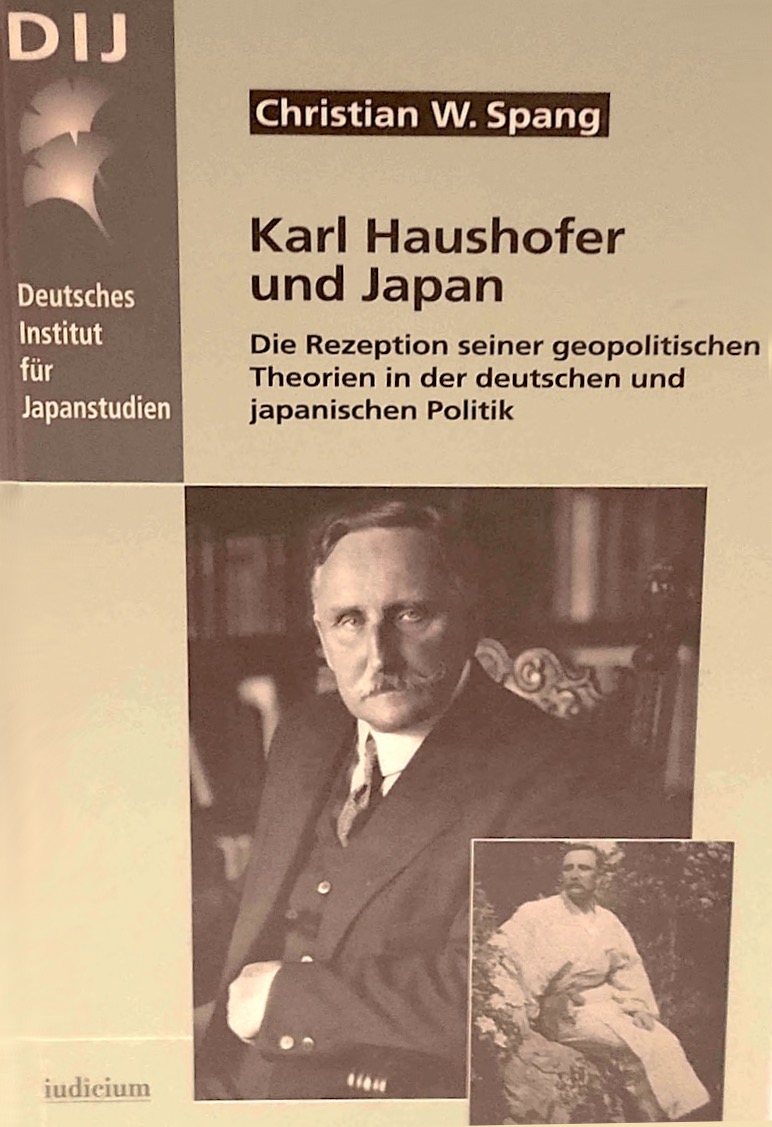 Japan attacked Pearl Harbor in early December 1941. Some believe that this Japanese attack had its intellectual origin in none other than Karl Haushofer.
As early as 1924, Haushofer had advised Japan to annex the southern and western Pacific island states and declare them part of the Japanese sphere of influence. Japan's military leaders and diplomats even adopted some of Haushofer's German word tones into the Japanese language. While Japanese military circles acknowledged the USA's undeniable industrial and economic superiority at that time, they were convinced mainly through Haushofer's influence that a new phase of scientific geopolitics had begun now. And in this new era, a country's alleged superior geographical characteristics would tip the scales in Japan's favor in a war with the US, so they seriously thought.
Joachim von Ribbentrop, who was ousted as Germany's Ambassador to Britain a good 6 months before the Peace Agreement in Munich, and his role after 1938, is widely underestimated until today. Haushofer himself stated clearly that Ribbentrop had a tremendous influence on Hitler. In fact, Ribbentrop earned much more influence once back in Hitler's vicinity after leaving his Ambassador post in early February of 1938 to become the Reich's Foreign Minister. Not only Joachim von Ribbentrop's role is underestimated until today, but also that of Rudolph Hess, that of Karl Haushofer and of Munich in general - a city that quickly re-emerged as a global political-military influence peddling hotspot after 1945.
Family Ties: Clarifying Heritage and Tragedies
Contrary to some misconceptions, Karl Haushofer's father was not Jewish. Max Haushofer (1839–1901), was a Christian landscape painter and professor with no documented Jewish heritage. The family held a critical stance toward Christianity, favoring secular Darwinism. Apparently, in full alignment with Adolf Hitler somehow, who desired to study art at the University of Vienna and remained a painter all his life.
However, Karl Haushofer's wife, the early women's rights advocate Martha Mayer-Doss (1877–1946), grew up in a Jewish milieu. Her father, Georg Ludwig Mayer-Doss (1847–1919), was a Jewish industrialist from prominent German-Jewish families. The Mayers were court factors in the Palatinate for generations - a region in the mid-west of Germany that once belonged to the Kingdom of Bavaria.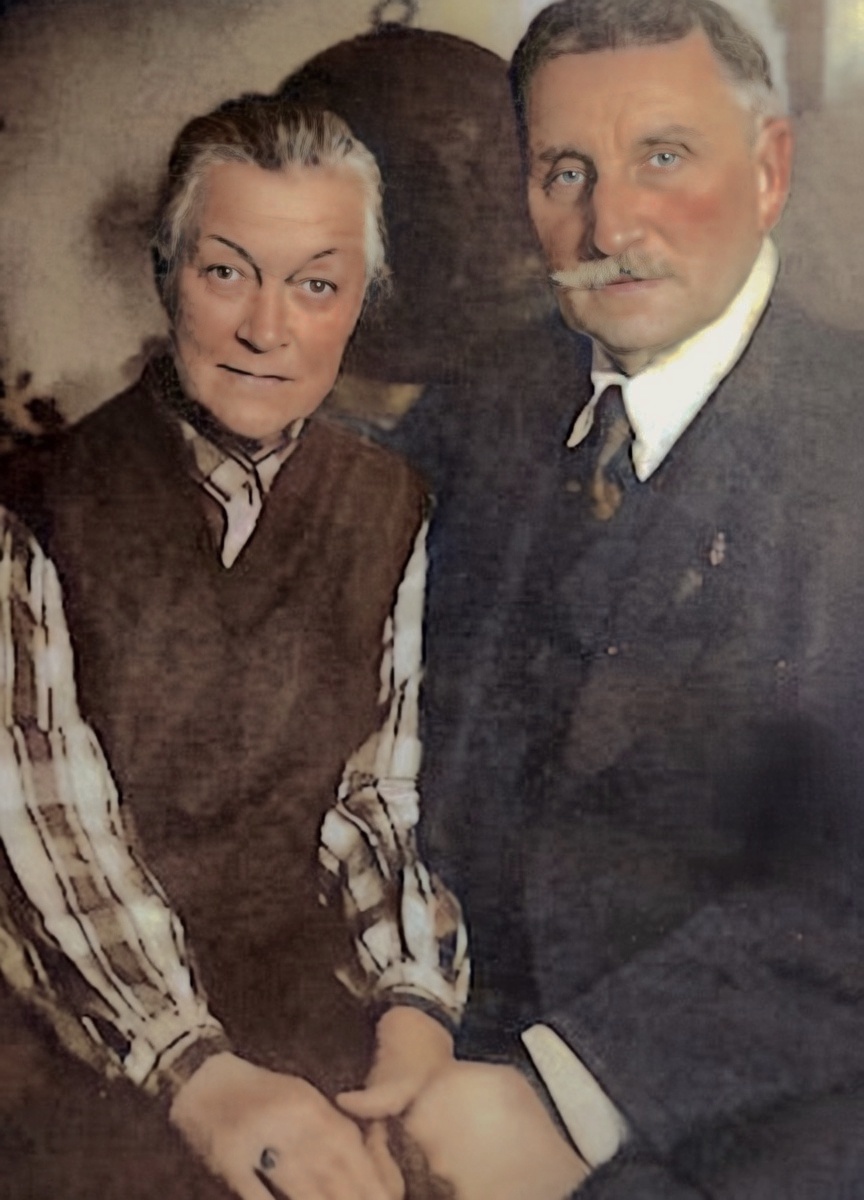 Georg Ludwig Mayer-Doss was baptized after his marriage and thus converted to Christianity as an adult, at least officially.
Richy rich Georg Ludwig Mayer-Doss retired early, settled in Garmisch-Partenkirchen, built a villa (where Karl Haushofer's son Albrecht spent time during his parents' 1908–1910 Far East trip), and acquired estates like Gut Hartschimmels Hof near Andechs and the Partnachalm - all not too far from Hitler's future so-called Berghof in the Bavarian Alps. Mayer-Doss had significant wealth and connections to England via a sister who married there.
Under the 1935 Nuremberg Laws, Martha was classified as half-Jewish (Mischling first degree), placing the family at risk. Their sons, including Karl Haushofer's son Albrecht, were quarter-Jews (Mischling second degree). Hess's intervention granted them "honorary Aryan" status, allowing Haushofer to continue his work despite his own anti-Semitic views—an ironic navigation of Nazi racial policies.
Important to mention is that according to Jewish laws and traditions, children of a Jewish mother are considered fully Jewish.
Albrecht Haushofer and the Deputy Fuehrer
Haushofer's son Albrecht, initially a regime diplomat and geographer who was clearly indoctrinated by the ideas of his father Karl, grew disillusioned. Albrecht was close to Rudolph Hess and briefed already in August of 1940 on the Deputy Fuehrer's plan of a clandestine plane flight to England for negotiations to avoid a full-fledged war with Russia.
Albrecht Haushofer grew suspicious among Nazi leaders when Hess actually took off on a single mission, leaving his plane mid-air and parachuting down to England on May 10, 1941 - where he was quickly arrested instead of being able to lead peace negotiations there.
Allegedly also involved in the German Resistance and linked to the July 20, 1944, plot to assassinate Hitler, Albrecht Haushofer was arrested in December 1944 and, at least according to documents, executed by the SS on April 23, 1945, in Berlin-Moabit prison as Soviet forces advanced. His "Moabit Sonnets," written in prison, reflect themes of guilt, fate, and opposition to the war.
Subjectively, the Jewish ancestry was not central to the Haushofer family's identity, as Martha and Albrecht viewed it more through a lens of pragmatism rather than cultural or religious significance. Yet, it underscores the cynical contradictions within the Nazi elite - even until today, one is inclined to state.
The regime's cynicism stemmed from Versailles humiliation, economic collapse, Hitler's nationalism, rabid anti-Semitism ironically fueled by Karl Haushofer - whose own wife was Jewish - militarism, and geopolitics. Propaganda and fanaticism for racial purity and expansion fueled it until 1945 defeat. Haushofer's ideas echoed in Axis pacts and Barbarossa, but the core was limitless ideological madness. Karl and Martha Haushofer committed suicide in 1946.
This history warns how intellectuals can enable monsters, out to cause destruction and mass murder. Which maybe the reason why information like these rarely appear in other reports.

Copied
Haushofer's Formative Years and the Japan Mission (1908–1910)
Born in Munich in 1869, Karl Haushofer was a Bavarian career military officer (Hauptmann) and academic. In November 1908, he was dispatched by the German General Staff to Tokyo as a military attaché to study the Imperial Japanese Army and advise on artillery. Traveling with his wife Martha via India and Southeast Asia, he arrived in February 1909 and was received by Emperor Meiji, all while his young son Albrecht was left at home in ... Garmisch-Partenkirchen,
Karl Haushofer in Japan, ca. 1910
Japan's 1905 victory over Russia, including the annexation of Manchuria, deeply impressed Karl Haushofer and his early-feminist wifey. The war fostered a sense of nationalism and pride in Japan, further legitimizing military influence in governmental affairs in Eastern Asia. It was the first time an Asian nation had not only defeated a former colonial power from the West and the white people, but had also taken significant territory from it. Japan’s victory in 1905 and its subsequent occupation of Russian lands resonated across Asia and the Pacific, inspiring movements for independence from European colonial rule - particularly in India, Indonesia, Burma, the Philippines, and Vietnam.
It also exposed flaws in Russian military leadership and logistics, leading to significant political changes in Russia, including a first 1905 Russian Revolution. Russia was facing severe economic challenges, characterized by industrial growth that strained labor conditions, high unemployment, and rising food prices. The vast divide between the wealthy elite and the impoverished peasantry fueled discontent. Tsar Nicholas II’s autocratic rule stifled political dissent, leaving many Russians craving reforms.
The first Russian Revolution and October Manifesto of 1905 (not 1917!)
A peaceful protest led by Father Georgy Gapon marched to the Winter Palace in St. Petersburg on Sunday, January 22, 1905, seeking reforms and the right to assembly. The Tsar's troops opened fire on the protestors, killing and wounding hundreds, which galvanized public anger and initiated a wave of strikes and protests across the country. Following this first "Bloody Sunday", various groups - including workers, students, and soldiers - participated in strikes and uprisings throughout the Russian empire, demanding political and social reforms.
Japan's war victory over the Russian Empire, 1905
In response to the growing unrest, Russia's Tsar Nicholas II issued the October Manifesto in 1905, which promised civil liberties and the establishment of a legislative body: the Duma. The Duma was intended to provide a semblance of representation, although it was heavily controlled by the Tsar in the years to come until the second, real November revolution occurred in 1917, lead by Lenin and the Bolsheviks.
Karl Haushofer meanwhile - along with his Prussian and Bavarian military leaders - apparently saw in Japan's self-perceived superiority a model for densely populated "superior" nations like Germany needing Lebensraum (living space) by conquering vast territories such as Russia.
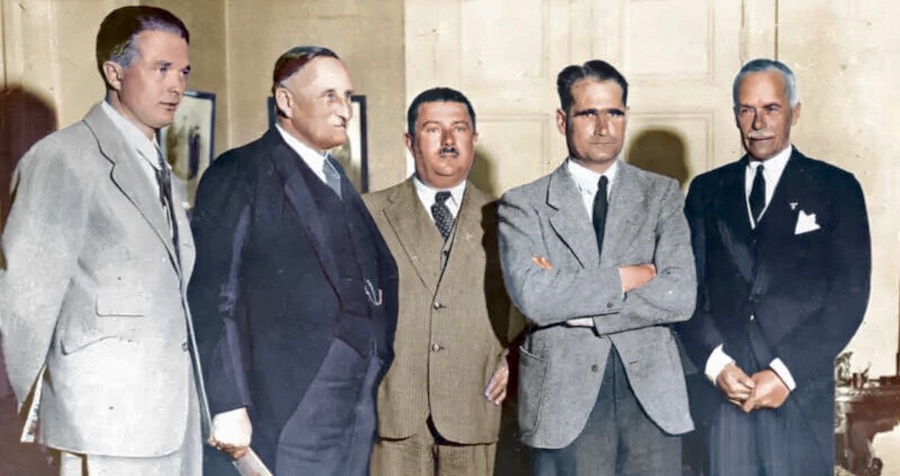
Alfred Leitgen, Karl Haushofer, Gerhard Wagner, Rudolf Hess and Prinz zu Wied on May 13, 1935
after having been received by King Carl Gustaf V. in Stockholm, Sweden
after having been received by King Carl Gustaf V. in Stockholm, Sweden
The Prison "Seminar" in Landsberg (1924): Forging Mein Kampf
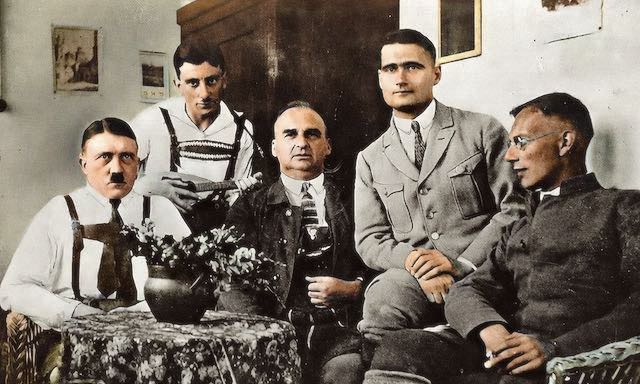
After the failed Beer Hall Putsch, Hitler and Hess received lenient Festungshaft (fortress detention) in Landsberg Prison—comfortable quarters with visitors, typewriters, and even beer deliveries, enabled by sympathetic Bavarian officials.
Hitler, Hess and others in Landsberg Prison, 1924
Rudolph Hess, Prof. Karl Haushofer's former student, arranged frequent Landsberg visits (over 30 documented); Haushofer drove every week from Munich to Landsberg prison and was allowed to hold morning and afternoon sessions with his two prison students. These were intensive lectures on geopolitics, autarky, alliances (e.g., with Japan), and conquest of Russia. Hess typed notes daily; Hitler dictated. Each evening Hess transformed Hitler’s rambling monologues into actual chapters - hammering them onto paper with his prison typewriter, providing the structure and editing grammar. Hitler never wrote a coherent chapter himself and later admitted it. Not enough, Karl Haushofer's geopolitical convictions directly infused Mein Kampf 's foreign policy sections, which Haushofer himself admitted to during his Nuremberg interrogations in 1945:
Q: Isn't it true that Hess collaborated with Hitler in writing “Mein Kampf?"
Haushofer: As far as I know, Hess actually dictated many chapters of that book. Hess was able to type, while Hitler was not.
Q: Then, do I understand that you would discuss these matters with Hess and then Hess in turn would discuss them with Hitler and that is how they got the book?
Haushofer: In matters where I saw that neither Hitler nor Hess had any geographical idea. I tried to visit Hess and tried to explain to him the basis of Ratzel's book, dealing with political geography, second edition. I pointed out edition number two because then a third edition came out, which was amplified by a Viennese geography expert, Oberhammer, who had modernized this edition.
Q: Did you find that in all instances that the correct version that you gave would be adapted by Hitler?
Haushofer: I always had the impression by his speeches that he never really understood them.
Q: But did you have the idea that he had made an attempt to adopt your teachings?
Haushofer: He sometimes made attempts, but, you see, I remember quite well, whenever Hess understood such a thing and tried to explain it to Hitler, Hitler usually came out with one of his new ideas about an autobahn or anything else which had nothing to do with it, while Hess just stood there and did not say any more about it.
Karl Haushofer during his 1945 interrogation at the Nuremberg Trial (page 6) / Original at NARA
The year 1924 marked not only the edition of Mein Kampf at Landsberg prison, but also the publication of Karl Haushofer's most famous work, Geopolitics of the Pacific Ocean . In it, he urged Japan and Germany to cooperate with the ultimate goal of uniting with Russia, China, and India to combat the Atlantic powers of England, France, and the United States. The book was quickly translated into Japanese and Russian, a first Russo-Japanese convention was signed in 1925. Haushofer was clearly not only a mentor to Hitler and Hess in the crafting of Mein Kampf ,
Joachim von Ribbentrop in London, ca. 1937
Haushofer's and Hess's British connections - along with Neville Chamberlain's anti-Semitic stance and his fierce opposition of further Jewish emigration into Palestine - very likely peddled the infamous Munich peace agreement from September 1938 in the years before, guaranteeing free annexation of the Sudetenland and parts of Czechoslovakia for Germany without much international resistance. However, the internal dynamics of the Nazi circle in connection with the invasion of Poland were never really brought into focus, which is when Haushofer and Hess were slowly sidelined; then entirely after 1941 with Germany's declaration of war on Russia.
Radical military leaders had already been in charge since 1939, but after the success of the Blitzkrieg in Poland and the severing of almost all international relations, there seemed to quickly surface one primary goal for Nazi Germany: to liberate Russia from its Bolshevik leaders. Lenin and the initial wave of Bolshevik leaders were, ironically, in the very beginning financed and supported by none other than the German Emperor in Berlin, as we know now.
The forces that caused the German Empire to collapse in 1919 and the German Emperor to flee to the Netherlands were once again to become the true reasons for war after 1939, not just Lebensraum and geo-continental block politics any longer. Just five months after Germany declared war on Russia,
Linked: Excerpts from 'Karl Haushofer and Japan',
Spang, 2013
Spang, 2013
As early as 1924, Haushofer had advised Japan to annex the southern and western Pacific island states and declare them part of the Japanese sphere of influence. Japan's military leaders and diplomats even adopted some of Haushofer's German word tones into the Japanese language. While Japanese military circles acknowledged the USA's undeniable industrial and economic superiority at that time, they were convinced mainly through Haushofer's influence that a new phase of scientific geopolitics had begun now. And in this new era, a country's alleged superior geographical characteristics would tip the scales in Japan's favor in a war with the US, so they seriously thought.
Dear Professor, I need not remind you that it is you who, through years of tireless work, both in universities and in journals and books, have preached and called for cooperation. This three-power pact stems entirely from your ideas, which you have repeatedly discussed in your articles on geopolitics. I am convinced that, despite the long time required, your goal will be realized in concrete form.
Yendō Yoshikazu, Head of Japan's Institute of Total War, in a letter from October 15, 1940 to Karl Haushofer (Source: Christian Spang, "Karl Haushofer and Japan", page 628)
Yendō Yoshikazu, Head of Japan's Institute of Total War, in a letter from October 15, 1940 to Karl Haushofer (Source: Christian Spang, "Karl Haushofer and Japan", page 628)
Joachim von Ribbentrop, who was ousted as Germany's Ambassador to Britain a good 6 months before the Peace Agreement in Munich, and his role after 1938, is widely underestimated until today. Haushofer himself stated clearly that Ribbentrop had a tremendous influence on Hitler. In fact, Ribbentrop earned much more influence once back in Hitler's vicinity after leaving his Ambassador post in early February of 1938 to become the Reich's Foreign Minister. Not only Joachim von Ribbentrop's role is underestimated until today, but also that of Rudolph Hess, that of Karl Haushofer and of Munich in general - a city that quickly re-emerged as a global political-military influence peddling hotspot after 1945.
Family Ties: Clarifying Heritage and Tragedies
Contrary to some misconceptions, Karl Haushofer's father was not Jewish. Max Haushofer (1839–1901), was a Christian landscape painter and professor with no documented Jewish heritage. The family held a critical stance toward Christianity, favoring secular Darwinism. Apparently, in full alignment with Adolf Hitler somehow, who desired to study art at the University of Vienna and remained a painter all his life.
However, Karl Haushofer's wife, the early women's rights advocate Martha Mayer-Doss (1877–1946), grew up in a Jewish milieu. Her father, Georg Ludwig Mayer-Doss (1847–1919), was a Jewish industrialist from prominent German-Jewish families. The Mayers were court factors in the Palatinate for generations - a region in the mid-west of Germany that once belonged to the Kingdom of Bavaria.
Martha and Karl Haushofer
Richy rich Georg Ludwig Mayer-Doss retired early, settled in Garmisch-Partenkirchen, built a villa (where Karl Haushofer's son Albrecht spent time during his parents' 1908–1910 Far East trip), and acquired estates like Gut Hartschimmels Hof near Andechs and the Partnachalm - all not too far from Hitler's future so-called Berghof in the Bavarian Alps. Mayer-Doss had significant wealth and connections to England via a sister who married there.
Under the 1935 Nuremberg Laws, Martha was classified as half-Jewish (Mischling first degree), placing the family at risk. Their sons, including Karl Haushofer's son Albrecht, were quarter-Jews (Mischling second degree). Hess's intervention granted them "honorary Aryan" status, allowing Haushofer to continue his work despite his own anti-Semitic views—an ironic navigation of Nazi racial policies.
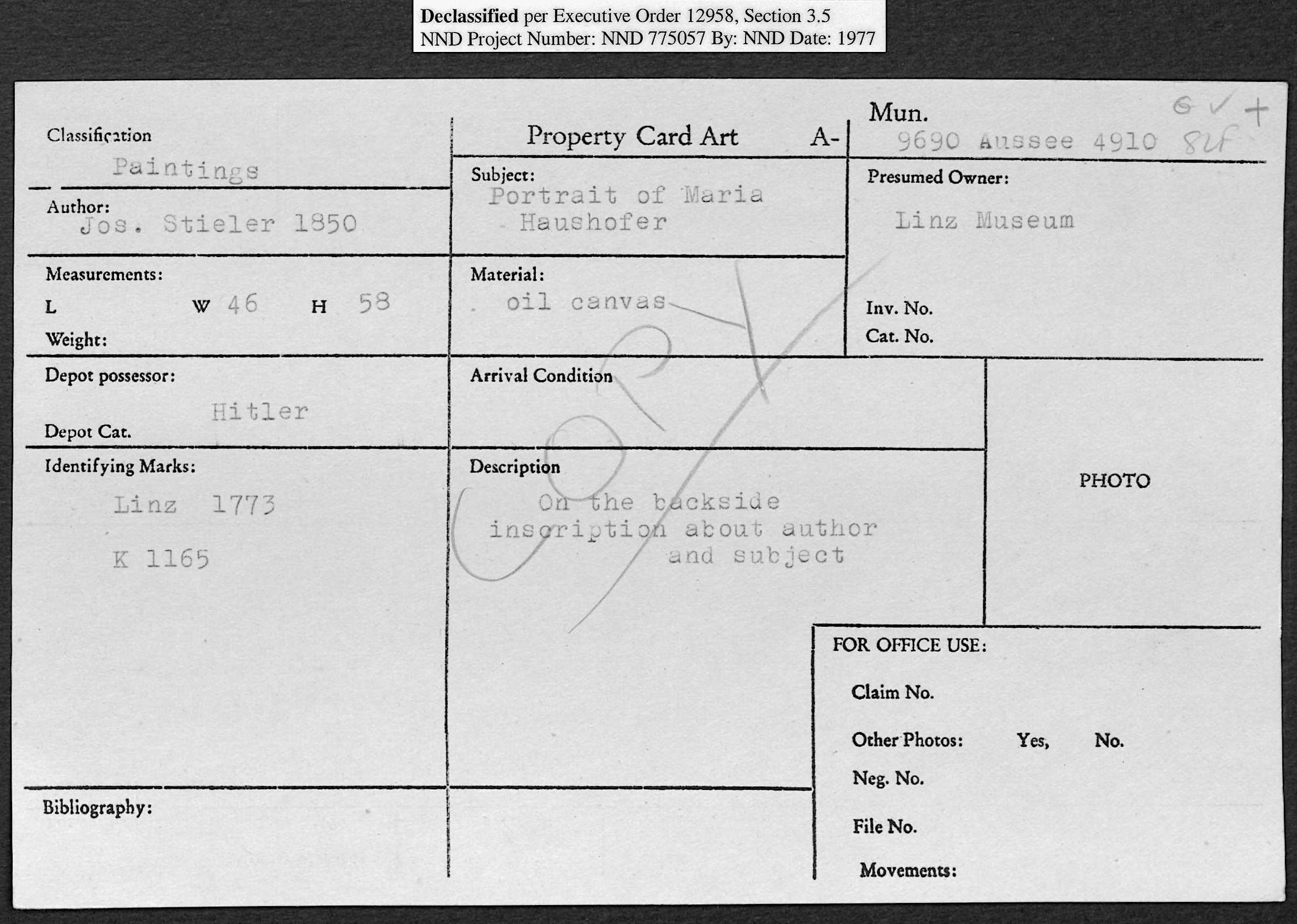
Property Card, 1945: portrait of Karl Haushofer's sister and famous painter Maria is registered property of 'Hitler'
Important to mention is that according to Jewish laws and traditions, children of a Jewish mother are considered fully Jewish.
Albrecht Haushofer and the Deputy Fuehrer
Haushofer's son Albrecht, initially a regime diplomat and geographer who was clearly indoctrinated by the ideas of his father Karl, grew disillusioned. Albrecht was close to Rudolph Hess and briefed already in August of 1940 on the Deputy Fuehrer's plan of a clandestine plane flight to England for negotiations to avoid a full-fledged war with Russia.
Albrecht Haushofer grew suspicious among Nazi leaders when Hess actually took off on a single mission, leaving his plane mid-air and parachuting down to England on May 10, 1941 - where he was quickly arrested instead of being able to lead peace negotiations there.
Allegedly also involved in the German Resistance and linked to the July 20, 1944, plot to assassinate Hitler, Albrecht Haushofer was arrested in December 1944 and, at least according to documents, executed by the SS on April 23, 1945, in Berlin-Moabit prison as Soviet forces advanced. His "Moabit Sonnets," written in prison, reflect themes of guilt, fate, and opposition to the war.
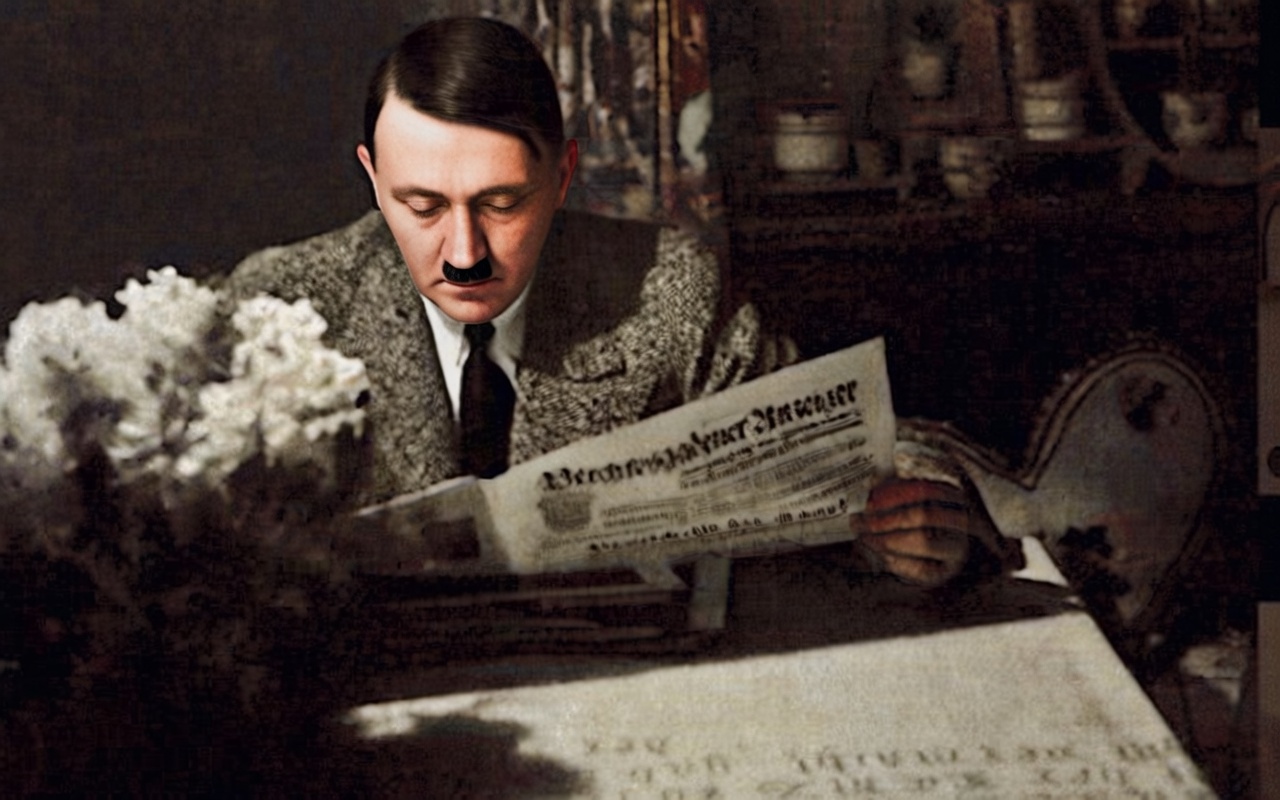
Hitler reading local Bavarian 'Berchtesgaden News'
Subjectively, the Jewish ancestry was not central to the Haushofer family's identity, as Martha and Albrecht viewed it more through a lens of pragmatism rather than cultural or religious significance. Yet, it underscores the cynical contradictions within the Nazi elite - even until today, one is inclined to state.
The regime's cynicism stemmed from Versailles humiliation, economic collapse, Hitler's nationalism, rabid anti-Semitism ironically fueled by Karl Haushofer - whose own wife was Jewish - militarism, and geopolitics. Propaganda and fanaticism for racial purity and expansion fueled it until 1945 defeat. Haushofer's ideas echoed in Axis pacts and Barbarossa, but the core was limitless ideological madness. Karl and Martha Haushofer committed suicide in 1946.
This history warns how intellectuals can enable monsters, out to cause destruction and mass murder. Which maybe the reason why information like these rarely appear in other reports.
Leave a comment:
Send
Send
Recommended:

May 4, 2026
The Missing Pieces
A Completed National-Socialist Jigsaw Puzzle
December 12, 2025
Mein Threesome Kampf
How Bavarian justices, Rudolf Hess and Karl Haushofer wrote the Nazi blueprint book

October 22, 2024
Ballas
About Dallas in Bavaria and dirty political attacks

September 25, 2023
Munich
About consulting organisations and the history of Germany's secret capital

August 3, 2025
NordStream Refilled
The Gas Pipeline Saga Unveiled - Episode 1

December 15, 2024
Giorgia and The Magician
About a political fairy tale from Italy and a novel by Thomas Mann
January 16, 2025
NordStream Refilled
About high-flying Poseidon planes over the NordStream pipelines

January 26, 2024
A Southeastern Blitzkrieg
About Germany's civil war and the origins of the term Blitzkrieg

November 11, 2022
A Bavarian Justice-Aikido
About a Bavarian martial justice scandal and knights from Jerusalem

March 28, 2022
One Damn American Thing After Another
About William Barr and Dominion Energy

February 2, 2022
SwedenLeaks
About Wikileaks persecutions and Swedish Knullkompis

November 28, 2021
From Washington with Love
About an American indictment and the Church in England

February 18, 2021
Bavariacard
About a Germanic Wirecard Poker

April 24, 2020
Blaming Russia with Boomerang
About the biggest political scandal in the history of the United States

July 25, 2019


